
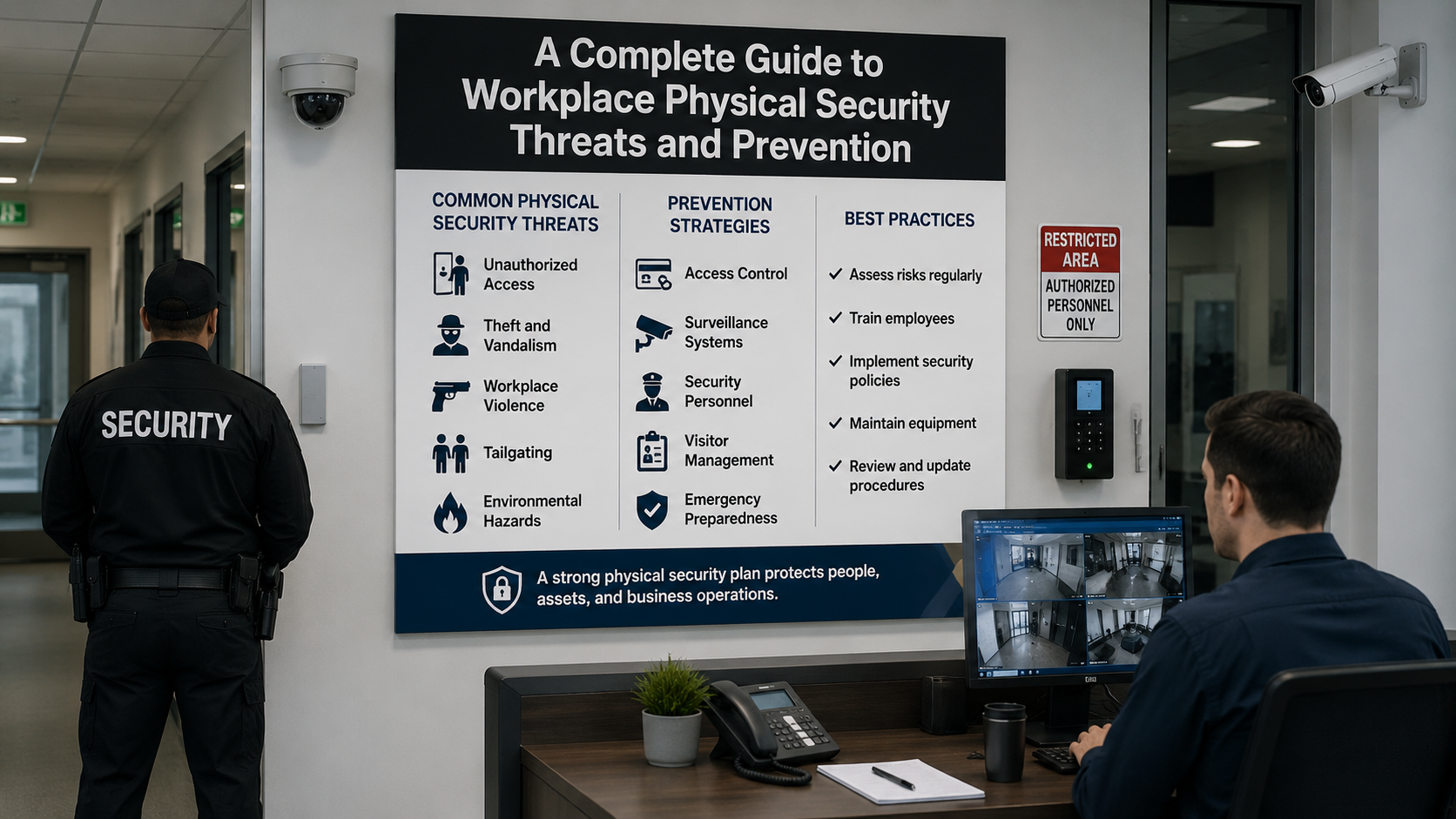
Issues like unauthorized access and workplace violence, theft, vandalism, and even infrastructure sabotage—these incidents can mess with day-to-day operations, put employee safety at risk, and hurt business reputation pretty quickly. Because of that, organizations really need proactive security strategies, and they should blend technology with employee awareness and real-time monitoring, so risks get reduced in a practical way.
A solid workplace physical security program doesn’t just shield employees and assets. It also supports business continuity, and it helps operational resilience, at the same time.
At the same time, with the rapid advancement of smart technologies and interconnected workplace systems, organizations are running into new security challenges, that need modern prevention strategies. Traditional locks and security guards, by themselves are not enough anymore to handle the threats that keep evolving. Now businesses need integrated security frameworks that stitch together surveillance systems, AI-powered analytics, cybersecurity coordination, and employee preparedness programs.
Also, workplace safety expectations from employees, clients, and regulatory authorities keep rising. If companies don’t treat physical security as a priority, they can end up with legal liabilities, reputational damage, operational disruptions, and financial losses. Putting money into workplace security, well it creates a safer environment but it also boosts employee confidence, productivity, and organizational trust, overall.
What is Workplace Physical Security Threats?
Workplace physical security threats refer to risks that can harm employees, visitors, facilities, equipment, or business operations through physical actions or unauthorized access.
Common workplace security threats include:
- Unauthorized facility access
- Workplace violence and active threats
- Theft and vandalism
- Insider threats
- Terrorism and sabotage
- Natural disasters and emergencies
- Infrastructure and utility disruptions
Without proper prevention strategies, these threats can lead to financial losses, operational downtime, and safety concerns.
Why Workplace Physical Security Matters
Physical security is essential for maintaining a safe and productive work environment.
Effective workplace security helps organizations:
- Protect employees and visitors
- Prevent unauthorized access
- Reduce theft and property damage
- Improve emergency preparedness
- Maintain operational continuity
- Strengthen legal and regulatory compliance
In today’s risk environment, businesses can no longer rely solely on traditional security methods.
1. Implement Access Control Systems
Access control is one of the most important workplace security measures.
Modern organizations use:
- Smart ID badges
- Biometric authentication systems
- Keycard access control
- Visitor management systems
- Mobile-based entry systems
These technologies help restrict unauthorized access to sensitive areas and improve facility security.
2. Use Video Surveillance and Real-Time Monitoring
Advanced surveillance systems play a critical role in workplace security.
Modern CCTV and AI-powered monitoring systems help organizations:
- Detect suspicious activity in real time
- Monitor high-risk areas continuously
- Improve incident investigation capabilities
- Support rapid emergency response
AI-powered analytics can also identify unusual behavior and send automated alerts to security teams.
3. Strengthen Workplace Violence Prevention
Workplace violence remains a major concern for businesses globally.
Organizations should establish violence prevention programs that include:
- Employee reporting systems
- Threat assessment procedures
- Emergency response protocols
- Security awareness training
- Mental health and employee support programs
Preparedness and early threat identification can significantly reduce risks.
4. Develop Emergency Response Plans
Every organization should have structured emergency response procedures for different security incidents.
Emergency plans should include:
- Evacuation procedures
- Shelter-in-place guidance
- Emergency communication systems
- Medical response coordination
- Crisis management workflows
Regular emergency drills help employees respond more effectively during real incidents.
5. Protect Critical Infrastructure and Assets
Businesses rely heavily on physical infrastructure such as servers, power systems, warehouses, and operational facilities.
Organizations should secure:
- Data centers and server rooms
- Manufacturing facilities
- Utility systems and generators
- Storage areas and inventory zones
Physical asset protection is essential for maintaining operational continuity.
6. Integrate Cybersecurity with Physical Security
Modern threats increasingly combine physical and digital attacks.
Organizations should integrate cybersecurity and physical security strategies to protect:
- Access control systems
- Surveillance networks
- Operational technology systems
- Employee credentials and sensitive data
A combined security approach improves overall organizational resilience.
7. Train Employees on Security Awareness
Employees are a critical part of workplace security.
Security training programs should educate employees about:
- Identifying suspicious behavior
- Reporting security concerns
- Emergency evacuation procedures
- Access control policies
- Cybersecurity and phishing awareness
Well-trained employees help organizations detect and prevent threats early.
8. Use AI-Powered Security Intelligence
Artificial intelligence is transforming workplace security in 2026.
AI-driven systems can:
- Analyze surveillance footage in real time
- Detect unusual movement or behavior
- Predict potential security risks
- Automate threat alerts and reporting
AI-powered monitoring improves situational awareness and helps organizations respond faster during incidents.
9. Conduct Regular Security Risk Assessments
Businesses should continuously evaluate workplace vulnerabilities and operational risks.
Security assessments should analyze:
- Facility access points
- Employee safety risks
- Infrastructure vulnerabilities
- Emergency preparedness levels
- Physical and cybersecurity integration gaps
Regular assessments help organizations strengthen prevention strategies proactively.
10. Strengthen Visitor and Contractor Management
Visitors and third-party contractors can create additional security risks if not managed properly.
Organizations should implement:
- Visitor registration systems
- Identity verification processes
- Temporary access controls
- Escort policies for restricted areas
Effective visitor management improves workplace safety and accountability.
Industries Most Vulnerable to Physical Security Threats
Several industries face elevated workplace security risks, including:
- Manufacturing and industrial facilities
- Healthcare and pharmaceutical organizations
- Financial institutions and banks
- Logistics and transportation companies
- Energy and infrastructure sectors
- Technology and data center operations
For these industries, physical security directly impacts operational continuity and business resilience.
The Future of Workplace Physical Security
As security threats continue to evolve, businesses will increasingly adopt advanced technologies and predictive intelligence systems.
Future workplace security strategies will focus on:
- AI-powered surveillance systems
- Smart building security integration
- Predictive threat intelligence
- Automated emergency response systems
- Integrated physical and cyber risk management
Organizations investing in these technologies will be better prepared to manage future security challenges.
FAQ’s
1. What are insider threats in workplace security?
Insider threats refer to security risks caused by employees, contractors, or individuals with authorized access who intentionally or unintentionally compromise workplace safety or sensitive assets.
2. Which industries face the highest workplace physical security risks?
Industries such as manufacturing, healthcare, banking, logistics, energy, infrastructure, and technology operations often face higher workplace security risks due to critical assets and operational exposure.
Conclusion
Workplace physical security, honestly, has become a kind of critical priority for organizations working in today’s increasingly complex risk environment. If they put in access control systems, AI monitoring tools, emergency response planning, employee training, and an integrated security approach, then risks can get reduced and workforce safety can really improve.
By 2026, organizations that focus on proactive physical security plus operational resilience will probably be more ready to protect employees, safeguard assets, and keep business continuity even when security threats start changing.
In the end, workplace physical security is not only about guarding buildings or equipment. It’s also about protecting people, protecting trust, and supporting long-term organizational stability.
Share on WhatsApp