
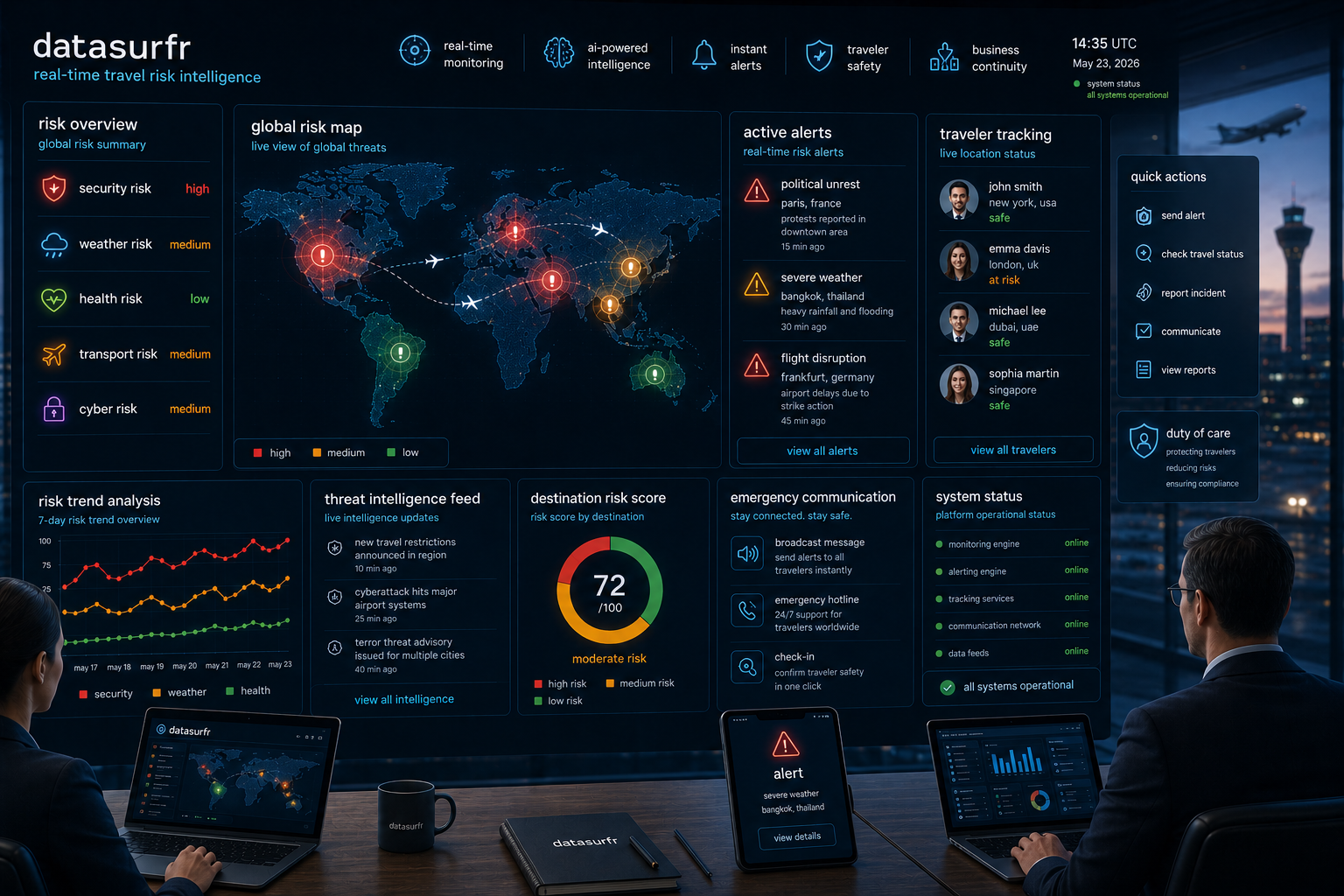
In today’s interconnected world, global disruptions can impact business travel within minutes. From geopolitical conflicts and extreme weather events to pandemics, cyberattacks, and transportation failures, enterprises face growing challenges in protecting employees and maintaining operational continuity during travel.
As organizations expand across international markets, monitoring travel risks has become a critical part of corporate security and business resilience strategies. Enterprises are now using advanced technologies, real-time intelligence platforms, and AI-powered monitoring systems to track threats and respond quickly during emergencies.
In 2026, effective travel risk monitoring is no longer optional — it is essential for ensuring employee safety, reducing disruption, and supporting business continuity during unpredictable global events.
Why Travel Risk Monitoring Is Important for Enterprises
Business travelers are increasingly exposed to rapidly changing risks that can disrupt operations and threaten employee safety. A single emergency can lead to delayed travel, stranded employees, interrupted supply chains, and financial losses.
Common global disruptions affecting corporate travel include:
- Political unrest and geopolitical tensions
- Severe weather and natural disasters
- Flight cancellations and airport disruptions
- Health emergencies and disease outbreaks
- Cyberattacks targeting transportation systems
- Transportation strikes and infrastructure failures
Without proper monitoring systems, organizations may struggle to respond quickly and protect employees during crises.
What Is Travel Risk Monitoring?
Travel risk monitoring is the continuous process of identifying, analysing, and tracking threats that may affect employees traveling for work.
Modern travel risk management systems combine real-time intelligence, automation, and predictive analytics to help organizations monitor:
- Traveler locations and itineraries
- Emerging global threats
- Transportation disruptions
- Local security incidents
- Government travel advisories
- Health and environmental risks
This allows businesses to take proactive action before disruptions escalate.
How Enterprises Monitor Travel Risks in Real Time
1. AI-Powered Threat Intelligence Platforms
Artificial intelligence has transformed travel risk management in recent years. AI-powered systems analyse large volumes of data from global news sources, social media, weather systems, and government advisories in real time.
These platforms help organizations:
- Detect emerging threats faster
- Predict potential disruptions
- Generate automated risk alerts
- Improve crisis response decision-making
AI-driven monitoring enables businesses to respond proactively rather than react after incidents occur.
2. Real-Time Travel Alerts
Real-time alerts are one of the most important tools used during emergencies. Organizations receive instant notifications about risks affecting travelers and travel routes.
Alerts may include:
- Political protests or civil unrest
- Severe weather warnings
- Airport shutdowns and delays
- Road closures and transportation strikes
- Health and safety advisories
Immediate access to information helps organizations protect employees and minimize operational disruption.
3. GPS-Based Traveler Tracking
Many enterprises use traveler tracking systems to monitor employee locations during business trips.
Live tracking helps security teams:
- Identify employees in affected areas
- Coordinate emergency assistance quickly
- Provide evacuation or rerouting support
- Maintain communication during crises
Traveler visibility is especially important during geopolitical incidents, natural disasters, or large-scale transportation disruptions.
4. Integrated Crisis Management Systems
Modern enterprises often integrate travel monitoring into larger crisis management and business continuity frameworks.
These systems combine:
- Emergency communication tools
- Incident response dashboards
- Real-time intelligence feeds
- Traveler location data
- Automated escalation protocols
Integrated platforms improve coordination across security, operations, HR, and leadership teams during emergencies.
5. Predictive Analytics and Risk Forecasting
Predictive analytics allows enterprises to anticipate disruptions before they happen. AI systems analyse historical patterns, geopolitical developments, weather forecasts, and transportation data to identify emerging risks.
This helps businesses:
- Adjust travel schedules proactively
- Avoid high-risk destinations
- Strengthen contingency planning
- Improve operational resilience
Predictive monitoring is becoming a key advantage for global organizations managing complex travel operations.
The Role of Duty of Care in Travel Risk Monitoring
Organizations have a legal and ethical duty of care to protect employees during work-related travel.
Effective travel risk monitoring supports duty of care by helping businesses:
- Continuously assess travel threats
- Provide real-time traveler support
- Improve emergency communication
- Reduce employee exposure to risk
- Maintain compliance with safety obligations
A strong duty of care program also improves employee confidence and organizational reputation.
Industries That Depend on Travel Risk Monitoring
Several industries rely heavily on advanced travel monitoring systems, including:
- Technology and IT services
- Logistics and supply chain companies
- Energy and infrastructure firms
- Consulting and professional services
- Healthcare and pharmaceutical organizations
- Manufacturing and engineering sectors
For these industries, even short-term disruptions can affect operations, client commitments, and revenue generation.
Best Practices for Enterprises
To strengthen travel risk management during global disruptions, organizations should:
- Implement AI-powered travel monitoring platforms
- Conduct destination-specific risk assessments
- Establish emergency communication protocols
- Use real-time traveler tracking systems
- Integrate travel security into business continuity planning
- Train employees on travel safety and crisis response procedures
A proactive and technology-driven approach improves resilience and response capabilities.
The Future of Enterprise Travel Risk Management
As global risks continue to evolve, enterprises will increasingly rely on automation, predictive intelligence, and integrated security technologies to manage travel risks.
Future travel risk management strategies will focus on:
- AI-driven predictive analytics
- Automated emergency response systems
- Advanced traveler tracking technologies
- Cybersecurity integration for travel operations
- Real-time global intelligence platforms
Organizations that invest in these technologies will be better prepared to navigate disruptions while protecting employees and maintaining business continuity.
FAQ’s
1.What is travel-risk monitoring?
Travel risk monitoring is the continuous tracking and assessment of threats that could impact business travelers or travel operations. It includes monitoring geopolitical risks, operational disruptions, and supporting crisis response during emergencies.
2. How does AI-powered risk alerts work?
AI-powered risk alerts use real-time data, machine learning, and predictive analytics to identify potential threats and notify organizations instantly. This allows companies to respond faster and make informed decisions during emergencies.
Conclusion
Global disruptions and emergencies have made travel risk monitoring a critical priority for modern enterprises. By using real-time intelligence, AI-powered alerts, traveler tracking, and integrated crisis management systems, organizations can improve employee safety, reduce operational disruption, and strengthen business resilience.
In 2026, enterprises that adopt proactive travel risk management strategies will be better positioned to protect their workforce and maintain stability in an increasingly unpredictable global environment.
Share on WhatsApp