
In today’s fast-moving global environment, business travel has become more complex and unpredictable than ever before. From geopolitical tensions and extreme weather to cyber threats and transportation disruptions, organizations face growing challenges in ensuring the safety of employees traveling for work.
To address these risks, companies are increasingly adopting AI-powered risk alerts as part of their corporate travel security strategies. Artificial intelligence is transforming how businesses monitor threats, respond to emergencies, and protect travellers in real time.
As global travel continues to evolve in 2026, AI-driven travel risk management is becoming essential for organizations focused on employee safety, operational continuity, and business resilience.
What Is AI-Powered Risk Alerts?
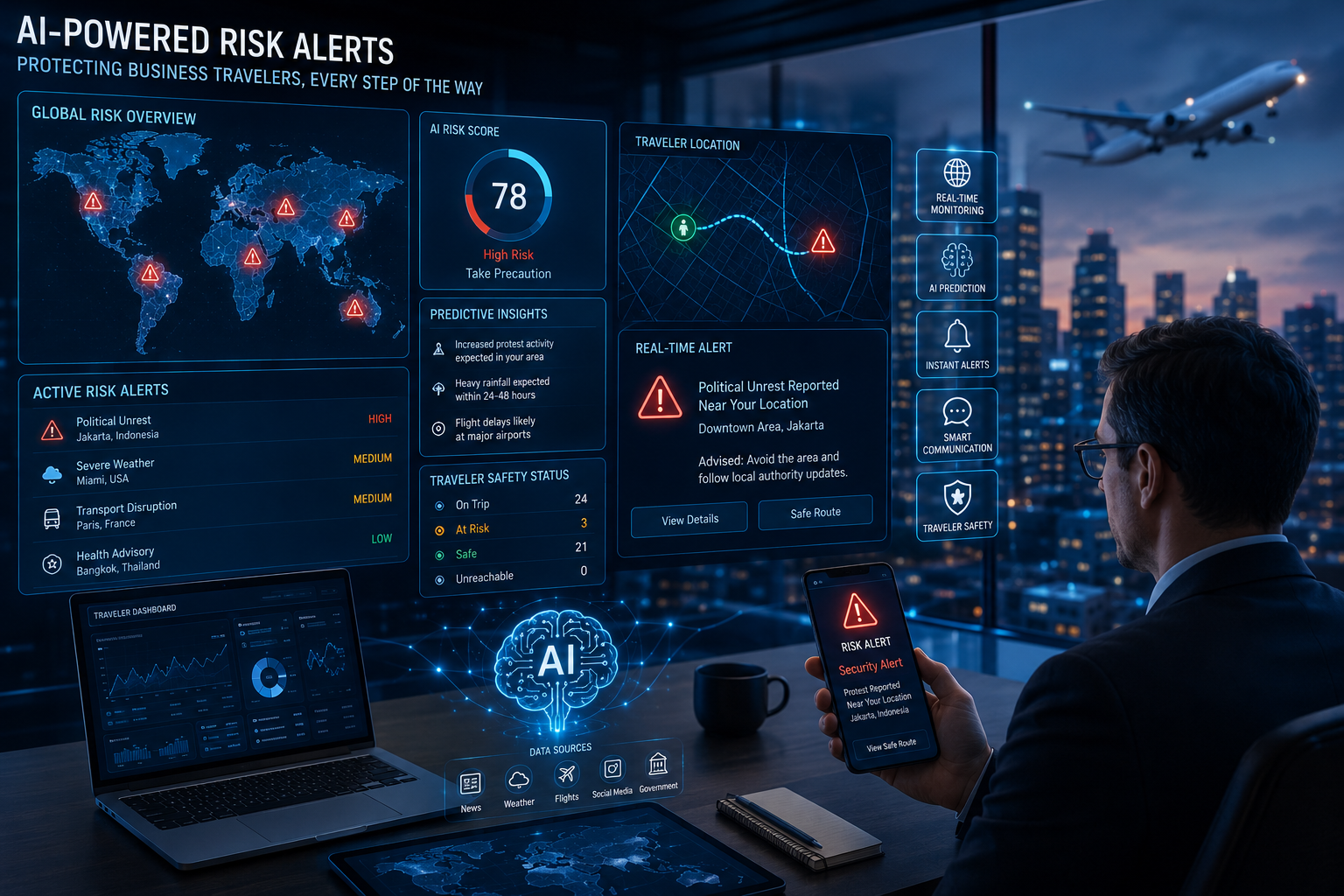
AI-powered risk alerts are intelligent systems that use real-time data, machine learning, and predictive analytics to identify potential travel threats and notify organizations instantly.
These platforms continuously analyse information from multiple sources, including:
- Global news and security reports
- Weather forecasting systems
- Airline and airport data
- Social media and public alerts
- Government travel advisories
- Transportation and logistics networks
By processing large amounts of data in real time, AI systems can detect risks early and provide immediate alerts to travellers and security teams.
Why Business Travelers Face Increasing Risks
Modern business travel involves constant exposure to changing environments. Employees traveling internationally may encounter:
- Political protests and civil unrest
- Flight cancellations and airport congestion
- Natural disasters and extreme weather
- Cyberattacks targeting transportation systems
- Health emergencies and border restrictions
- Local crime and security threats
Traditional travel management methods often fail to provide the speed and visibility required to handle these evolving situations. AI-powered monitoring helps companies stay ahead of risks before they escalate into major disruptions.
How AI Helps Protect Business Travelers
1. Real-Time Threat Detection
AI systems monitor global events 24/7 and immediately identify incidents that may affect travellers. If a protest breaks out near a hotel or severe weather disrupts flights, automated alerts can be sent within seconds.
This rapid visibility allows companies to respond faster and make informed decisions during emergencies.
2. Predictive Risk Analysis
One of the biggest advantages of artificial intelligence is predictive analytics. AI can identify patterns and forecast potential disruptions before they happen.
For example, AI systems may detect increasing political tension in a region, predict transportation delays due to storms, or identify elevated cybersecurity threats targeting airports.
Predictive intelligence helps businesses reduce risk exposure proactively instead of reacting after disruptions occur.
3. Personalized Travel Alerts
Modern AI platforms deliver location-specific alerts tailored to each traveller’s itinerary. Employees receive relevant updates based on their exact destination, route, and travel schedule.
This reduces unnecessary notifications while ensuring traveller’s stay informed about threats that directly impact them.
4. Faster Emergency Response
During emergencies, communication speed is critical. AI-powered travel risk platforms can automatically trigger emergency notifications, reroute travellers, and provide safety instructions in real time.
Some systems also support live traveller tracking, helping organizations quickly identify employees in affected areas and coordinate assistance.
5. Enhanced Duty of Care Compliance
Companies have a responsibility to protect employees during business travel. AI-driven monitoring strengthens corporate duty of care by improving visibility, risk assessment, and crisis response capabilities.
Organizations using intelligent travel security systems are better prepared to meet compliance requirements and demonstrate proactive risk management.
Industries Using AI Travel Risk Monitoring
AI-powered travel security solutions are increasingly used across industries that rely heavily on workforce mobility, including:
- Technology and IT companies
- Consulting and professional services
- Energy and infrastructure firms
- Logistics and supply chain organizations
- Healthcare and pharmaceutical companies
- Manufacturing and engineering sectors
For these industries, even minor travel disruptions can impact operations, client commitments, and employee productivity.
The Role of AI in the Future of Travel Security
Artificial intelligence is rapidly becoming the foundation of modern travel risk management. In the future, AI systems will become even more advanced through:
- Automated crisis response systems
- AI-driven route optimization
- Smart traveller safety assistants
- Predictive geopolitical risk forecasting
- Integrated cyber and physical threat monitoring
As global risks continue to evolve, businesses that invest in AI-powered travel security will gain a major advantage in protecting employees and maintaining operational resilience.
Best Practices for Companies
To strengthen travel risk management using AI, organizations should:
- Deploy real-time AI travel monitoring platforms
- Integrate travel intelligence into business continuity plans
- Create clear emergency communication protocols
- Conduct regular traveller risk assessments
- Train employees on travel safety procedures
- Use predictive analytics for high-risk destinations
A proactive and technology-driven approach helps organizations respond quickly while minimizing disruption and risk exposure.
FAQ’s
1.What is AI-Powered Risks?
AI-Powered Risks are instant notifications that inform travellers and organizations about potential threats, disruptions, or hazards that could impact trips.
2. Why are these alerts important?
- Employee Safety: – Alerts allow travellers to avoid danger, minimize exposure to unsafe areas, and respond proactively.
- Operational Continuity: – Companies can adjust travel plans quickly, preventing missed meetings and reduced financial and operational loss.
- Duty Of Care Compliance: – Organizations fulfil legal and ethical responsibilities by providing real-time protection and guidance to employees during travel.
Conclusion
AI-powered risk alerts are changing how companies protect business travelers in 2026. By combining real-time intelligence, predictive analytics, and automated communication, organizations can identify threats faster, improve employee safety, and strengthen operational continuity.
In an increasingly unpredictable global environment, AI-driven travel risk management is no longer just a security enhancement — it has become a critical business necessity for enterprises operating across international markets.
Share on WhatsApp