Why is a women’s safety handbook needed in 2026?
Incidents of crime against women in India have been on the rise even as more women join the urban workforce, with key economic centres such as Delhi, Gurgaon, Mumbai, Bengaluru, Hyderabad, Chennai and Pune reporting increases in harassment and molestation cases. Conviction rates remain poor due to a sluggish judicial system, faulty forensic evidence collection and limited use of modern technology, while cultural inhibitions mean many cases of harassment at home, work or in public places go unreported. On the UN’s 2023 Gender Inequality Index, India ranks 130th of 193 countries with a GII value of 0.403, reflecting the scale of the gap the handbook aims to address through awareness and self-defence training.
Which Indian states report the most crimes against women?
According to NCRB 2023 data cited in the handbook, Uttar Pradesh recorded the highest number of cases nationally at 66,381, followed by Maharashtra (47,101), Rajasthan (45,450) and Madhya Pradesh (32,342). West Bengal (34,691), Odisha (25,914) and Andhra Pradesh (22,418) also reported high case volumes. These figures cover murder with rape, attempt to commit rape, kidnapping and abduction, assault with intent to outrage modesty, and cyber crimes under the Information Technology Act.
What safety practices does the handbook recommend for travel and public places?
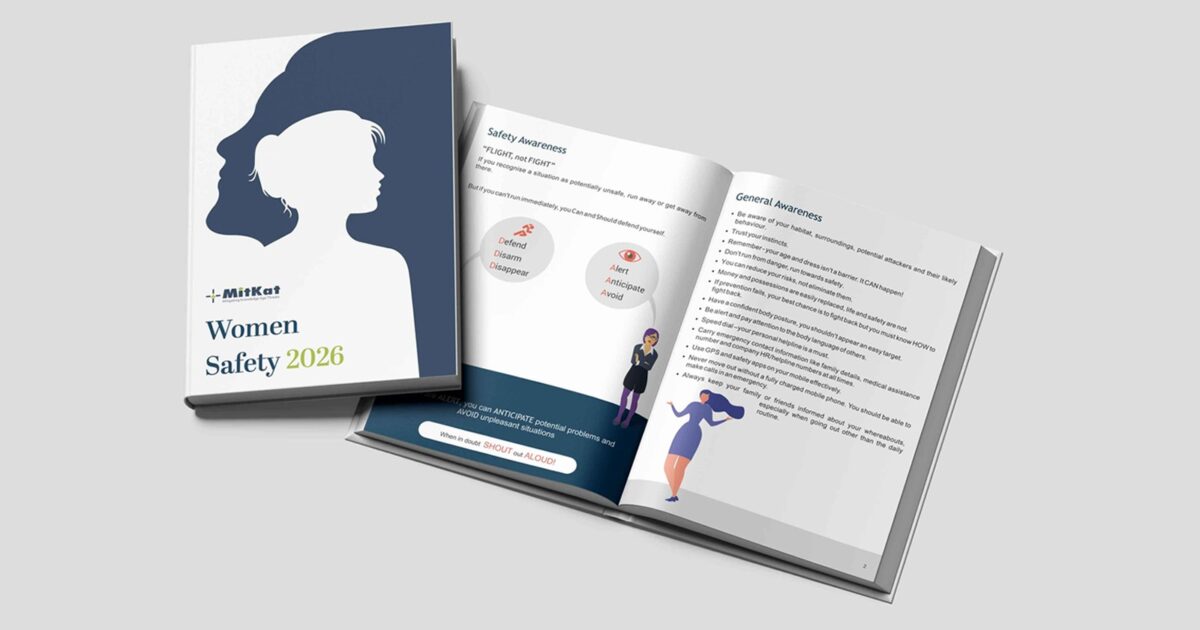
The handbook’s core safety philosophy is “FLIGHT, not FIGHT” — running or getting away from a potentially unsafe situation where possible, while being prepared to defend, disarm and disappear if you cannot. Recommendations for road and public transport travel include keeping vehicles in good condition, avoiding deserted areas at night, sharing photos of cab or auto registration numbers with an emergency contact, and never stopping for strangers claiming a flat tyre. For aggregator cabs, travellers are advised to verify the driver’s photo against the app, sit directly behind the driver, and avoid sharing personal information during the ride. Guidance for hotels, social gatherings and the home covers checking for hidden cameras, never leaving drinks unattended, and installing basic home security systems such as CCTV and door alarms.
What legal rights do women have under Indian law?
The handbook outlines rights under the Bharatiya Nagarik Suraksha Sanhita (BNSS), which replaced the Code of Criminal Procedure from 1 July 2024: women cannot be arrested without a female police officer present, can only be searched by a female officer, and are entitled to have any medical examination conducted in the presence of a female doctor. Women also have the right to give statements to a magistrate in private and cannot be summoned to a police station for interrogation. Offences covered include molestation (Section 354 IPC, up to five years), stalking (Section 354D, up to three years) and dowry death (Section 304B, minimum seven years to life imprisonment), alongside cyber offences such as cyberbullying, morphing, doxing and online sextortion, which can be reported via the national cybercrime.gov.in portal.
How can women protect themselves from AI-driven safety risks?
The handbook flags a growing set of AI-related risks: non-consensual deepfakes, AI impersonation and sextortion schemes, voice cloning from short social media clips, and AI-powered romance or investment scams using AI-generated profiles. “Fun” trends such as AI yearbook or avatar generators may harvest facial and biometric data without clear consent. Recommended precautions include reading privacy policies before uploading photos to AI apps, using only verified platforms, never uploading Aadhaar, PAN or banking details into AI tools, and verifying identity before responding to urgent financial requests — summarised as “think before you upload, verify before you trust, protect before you post, report before it spreads”.
What self-defence and helpline resources does the handbook provide?
Core self-defence principles include maintaining a balanced posture, keeping a free hand for defence, shouting loudly to attract attention, and aiming strikes at vulnerable points such as the groin, knee or throat before escaping to safety rather than continuing to engage an attacker. The handbook also covers legal use of pepper spray in India and everyday carry items — pens, keys, phone chargers — that can double as improvised defence tools. Key national helplines include Police (100), the National Women Helpline (181), the National Cyber Crime Helpline (1930), and the Indian Cyber Crime Coordination Centre (I4C) portal at cybercrime.gov.in, alongside state-specific cyber crime cell contacts for Delhi, Maharashtra, West Bengal and other states.
Frequently asked questions
What is the national helpline for women’s safety in India?
The National Women Helpline is 181, alongside Police at 100 and the National Cyber Crime Helpline at 1930.
What rights does a woman have if arrested in India?
Under the BNSS, a woman cannot be arrested or searched without a female police officer present, and any medical examination must be conducted in the presence of a female doctor.
How can I report a cyber crime against women in India?
Complaints can be filed online at cybercrime.gov.in, which is coordinated nationally by the Indian Cyber Crime Coordination Centre (I4C) under the Ministry of Home Affairs.
Which Indian states report the highest number of crimes against women?
Per NCRB 2023 data, Uttar Pradesh, Maharashtra and Rajasthan report the highest case volumes nationally.
Download the full handbook now
MitKat’s Women’s Safety Handbook 2026 carries the complete state-by-state crime data, detailed do’s and don’ts for travel, hotels, social gatherings and cyberspace, the full legal offences and punishment table, and illustrated self-defence techniques. Download the full handbook now to share with your teams and family
Filed under: India-South AsiaRegional Risk Reviews