KEY TAKEAWAYS:
- MitKat’s situational update of 20 November 2026 says Bangladesh’s security environment has become more serious since early November, with politically motivated violence overlapping garment-sector wage protests.
- Police Headquarters data cited in the report records 70 crude-bomb explosions and 57 vehicle arson attacks nationwide between 07 and 17 November, and at least four people were killed in violence reported between 14 and 19 November across at least 21 districts.
- Authorities attribute much of the violence to the banned Awami League (AL) and affiliates, whose nationwide shutdown on 19 November coincided with attacks in Gopalganj and elsewhere; the report notes that individual responsibility is still under investigation. In the garment sector, workers are demanding a monthly minimum wage of BDT 30,000, up from BDT 12,500, and the report records 341 factories suspended on 19 November, including 194 under the “no work, no pay” provision.
- A direct organisational link between the worker-led protests and the political violence has not been established.
- The Minimum Wage Board meets on 23 November, the National Citizen Party (NCP) has announced rallies from 23 November to 31 December, and Sheikh Hasina’s stated return in December and Victory Day on 16 December are the main flashpoints.
- MitKat judges the near-term (four to six weeks) escalation potential High, with a High likelihood of further violence, and the long-term outlook Medium. For business, it expects disrupted movement on key highways, factory closures, checkpoints and a stretched security response. These are qualitative judgements, not calculated probabilities.
This summary draws on MitKat’s update and attributes its figures and judgements to it. The situation is contested and fast-moving: responsibility for many incidents is still under investigation, counts differ between sources, and the report itself stresses that businesses should assess threats from verified local developments.
What is happening in Bangladesh as of 20 November 2026?
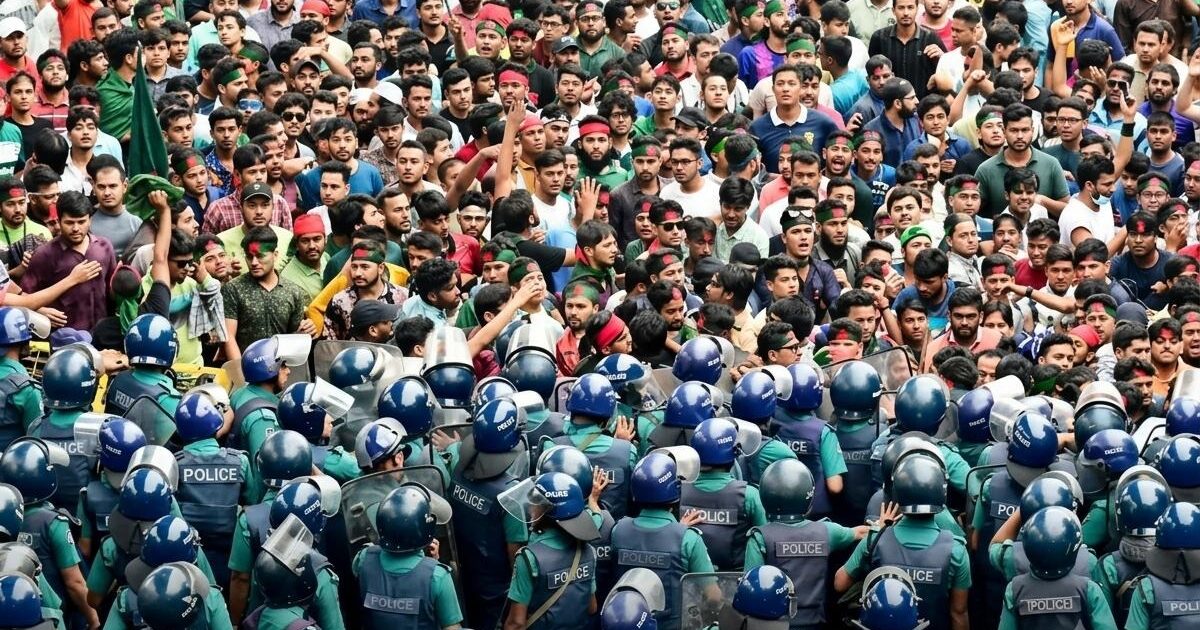
According to the report, Bangladesh is in a renewed wave of politically motivated violence since the BNP government of Prime Minister Tarique Rahman took office on 17 February 2026. Police Headquarters data records 70 crude-bomb explosions and 57 vehicle arson attacks nationwide between 07 and 17 November, with 35 cases filed and 60 people arrested, while Dhaka Metropolitan Police recorded 85 crude-bomb explosions in the capital in the first 18 days of the month. Between 14 and 19 November, at least 21 districts saw explosions, arson, vandalism, blockades or clashes, and four people were killed. Gopalganj, the Awami League’s heartland, saw some of the most widespread violence. News coverage adds that the Home Ministry deployed 96 BGB platoons, about 3,000 personnel, across seven districts for the 19 November shutdown, with the largest numbers in Gopalganj, Dhaka and Chattogram.
How has the situation developed since early November?
| Date (2026) | What the report records |
| 01–02 Nov | Garment workers protest in Dhaka, Gazipur and Savar for a BDT 30,000 minimum wage; the government forms a six-member Minimum Wage Board; about 529 factories are affected; crude bombs explode near Agargaon Metro Station and Dhanmondi |
| 09 Nov | Sheikh Hasina seeks a new passport and ID card through the Bangladeshi mission in New Delhi; the government rejects the request and says it will pursue extradition |
| 10–11 Nov | Explosions, arson and blockades intensify in Dhaka, Manikganj, Faridpur, Gopalganj and Shariatpur; a bus driver is killed in Faridpur; Dhaka Police add 15,000 personnel and 160 checkpoints |
| 16 Nov | Police report 49 vehicles set on fire and explosions at 59 locations nationwide since 07 November, with 33 cases filed and 60 people arrested; the Minimum Wage Board meeting is postponed to 23 November |
| 17 Nov | Attackers storm and burn Tungipara Police Station in Gopalganj after several AL-affiliated individuals are detained; a BNP lawmaker’s residence is torched; operations are disrupted at 640 or more factories |
| 18 Nov | Violence spreads to more locations; hundreds of Border Guard Bangladesh (BGB) personnel are mobilised nationwide; workers block the Dhaka–Aricha Highway at Savar and police use tear gas and sound grenades |
| 19 Nov | The AL’s nationwide shutdown is accompanied by explosions, arson, attacks on police stations, lawmakers’ homes and financial institutions, and blockades, especially in Gopalganj; the NCP announces rallies from 23 November to 31 December |
What is driving the unrest?
The report names several drivers. Political polarisation has continued since the 2024 uprising and the February 2026 election, and the Awami League’s ban has not removed its networks or support base. The immediate trigger is the banned party’s mobilisation, with its affiliates the Bangladesh Chhatra League and Jubo League, to demand an end to the ban and challenge the death sentence on Sheikh Hasina, together with her stated plan to return in December. Local rivalries over political influence, markets and transport hubs can also cause clashes unrelated to national programmes, and a human-rights group recorded more than 70 incidents of political violence in October, with at least 12 deaths and 334 injuries, including intra-party and inter-party clashes. Economic pressure matters too: the World Bank’s October update projected growth of 3.4 percent in FY26 and FY27, citing weak investment, slower exports and stalled job creation.
Where are the hotspots?
| Location | What the report records | Risk |
| Dhaka: Shahbagh and Dhaka University | Repeated blasts at the TSC, the Faculty of Business Studies and the DU metro station; explosions beneath Agargaon Metro Station and at Khilgaon Railgate | Medium |
| Dhaka: courts and government zones | Blasts outside the CMM and District Judge Court; the Supreme Court, High Court and Secretariat heavily protected | Medium |
| Dhaka: Mirpur, Pallabi, Mohakhali, Badda, Jatrabari | Bus arson, a police station gate blast and a crude-bomb series in Jatrabari | Medium |
| Gopalganj | Awami League heartland; attacks on police stations and residences of BNP lawmakers, blockade of the Dhaka–Khulna highway; BGB deployment substantially increased | Medium |
| Shariatpur: Padma Bridge (Jajira) | More than 100 blasts during an overnight toll plaza blockade | Medium |
| Gazipur, Savar–Ashulia, Narayanganj | Wage protests, factory closures and vehicle arson; BGB platoons in industrial zones | Medium |
| Madaripur (Tekerhat), Narail, Pirojpur, Jashore, Sylhet, Bagerhat | Blockades, bus arson with one death in Pirojpur, two political activists killed in Narail, and petrol-bomb attacks | Medium |
| Manikganj, Chattogram, Rajshahi, Khulna, Mymensingh region | Vehicle and bus arson, blasts near offices and attacks on party offices | Low |
What is happening in the garment sector?
Workers are demanding that the monthly minimum wage rise from BDT 12,500 to BDT 30,000, citing inflation and rent, food and transport costs. The sector employs about four million workers, contributes around 10 percent of GDP and, per the report, accounted for nearly 80 percent of merchandise exports in October 2026. Protests have taken the form of factory-gate demonstrations and blockades of the Dhaka–Mymensingh, Dhaka–Aricha and Dhaka–Tangail highways and the Abdullahpur–Baipail Road. Police have used tear gas, sound grenades and batons, and a police vehicle was burned in Gazipur. The report records operations disrupted at 640 or more factories on 17 November after the Minimum Wage Board meeting was postponed from 16 to 23 November, and 341 factories suspended on 19 November, of which 194 invoked “no work, no pay” under the Labour Act and 147 declared general holidays. Other news coverage cites different figures, around 450 disrupted or suspended earlier in the week, so treat the counts as approximate.
Are the bombings and the garment protests connected?
The report says the two overlap in place and time but are different phenomena, and that a direct organisational link has not been established. Government and ruling-party lawmakers allege that Awami League-linked elements have infiltrated the protests, and police say they caught a suspect described as a member of an AL-affiliated wing after a blast in Savar. Independent monitors, unions and economists quoted in the report say the unrest is overwhelmingly driven by economic distress and delayed wage talks, and that authorities have rarely shown evidence linking detained workers to the party. Analysts and international outlets cited in the report argue that the “Awami League agents” label serves the government’s political interests. The report adds that the state has filed Anti-Terrorism Act cases against thousands of unnamed people and that factory owners are using lockouts, and it warns that treating union leaders as political actors removes moderate negotiators and may make crowds more volatile.
| Garment wage protests | Crude-bomb surge | |
| Primary motive | Cost of living and deadlocked wage talks, with demands of BDT 30,000 or more a month | Political destabilisation and contesting the BNP government ahead of December, according to the report’s analysis |
| Typical targets | Highway intersections, factory gates, management offices | Buses, Grameen Bank branches, police vehicles, party offices and political residences |
| Credibility of a link | The report rates a worker-led bombing campaign as low, since workers rely on walkouts and blockades | The report rates opportunistic infiltration of industrial hotspots as high |
What is the outlook for the coming weeks and beyond?
| Horizon | Escalation potential | Likelihood of violence | Main triggers |
| Near term (next 4–6 weeks) | High | High: further explosions, arson, clashes and attacks on public infrastructure are possible, especially around political gatherings and security deployments | Hasina’s anticipated December return, AL mobilisation and shutdown calls, Victory Day on 16 December, retaliation between rival groups, unresolved wage talks |
| Long term (1 year) | Medium | Intermittent demonstrations with spikes around elections, governance decisions and economic grievances | The AL’s future legal status, the independence of law enforcement and the judiciary, reforms, inflation and employment, mechanisms for settling industrial disputes |
The dates to watch are 23 November, when the Minimum Wage Board meets and the National Citizen Party’s rallies begin (they run to 31 December, with the Jamaat-e-Islami-led 11-party alliance vowing to stay on the streets), December for Hasina’s anticipated return and any Awami League programmes, and 16 December for Victory Day. The report adds that India–Bangladesh tensions over Hasina’s presence in India and Dhaka’s extradition request add a further dimension, and that claims of external interference remain political allegations, not established fact.
What does this mean for businesses?
The report expects sudden security restrictions and localised unrest in Dhaka and politically sensitive districts, more checkpoints, searches and crowd-control operations that can delay staff and goods, and possible incidental damage to premises near party offices, public buildings or protest sites. For logistics, it flags delays to commutes, raw-material deliveries, cargo dispatches and access to warehouses, ports and airports, with higher transport costs. Garment suppliers face export schedule and buyer-confidence risks, smaller manufacturers and subcontractors face financial strain, and international buyers face labour-rights and supply-chain compliance questions.
What should organisations do?
The report sets out four phases. From 20 to 23 November, monitor incidents, review the security of premises and adjoining roads, set up employee channels for verified updates, check commutes before confirming shifts, and plan alternative transport routes around the affected highways. From 24 to 30 November, track Awami League announcements, review arrangements for sensitive dates such as 16 December, identify alternative facilities or approved subcontractors, hold adequate stocks, and make sure closures and disciplinary decisions comply with the Bangladesh Labour Act, 2006. In December, increase monitoring around offices, factories and transport hubs, consider staggered shifts, secure vehicles, inventory and records, plan relocation of essential operations, and prepare for the Minimum Wage Board’s decision and payroll changes. From 2027, set up a standing monitoring mechanism with clear escalation triggers, keep emergency contacts and review supplier exposure in vulnerable industrial corridors.
Frequently asked questions
Are the garment protests linked to the Awami League?
The government alleges that Awami League-linked elements have tried to exploit them, but the report says a direct organisational link has not been established, and independent observers attribute the protests mainly to economic distress and delayed wage talks.
What are the garment workers demanding?
A monthly minimum wage of BDT 30,000, up from BDT 12,500. The report notes proposals of up to BDT 32,000 and says the wage board’s 23 November meeting is the next key indicator.
Which highways are most affected?
The Dhaka–Mymensingh, Dhaka–Aricha and Dhaka–Tangail highways, the Abdullahpur–Baipail Road, and the Dhaka–Khulna corridor, particularly around Gopalganj and Madaripur.
What dates should I watch?
23 November (Minimum Wage Board meeting and the start of NCP rallies), December (Hasina’s anticipated return and further Awami League programmes) and 16 December (Victory Day).
Download the full update now
MitKat’s Situational Update, Political and Security Outlook in Bangladesh, carries the full incident timeline, hotspot map and risk ratings, the garment-sector breakdown with vulnerable areas and targeted roads, the analysis of narratives around the unrest, the escalation outlook and the full four-phase mitigation plan. Download the full update now to brief your security and operations teams.
Filed under: India-South AsiaRegional Risk Reviews