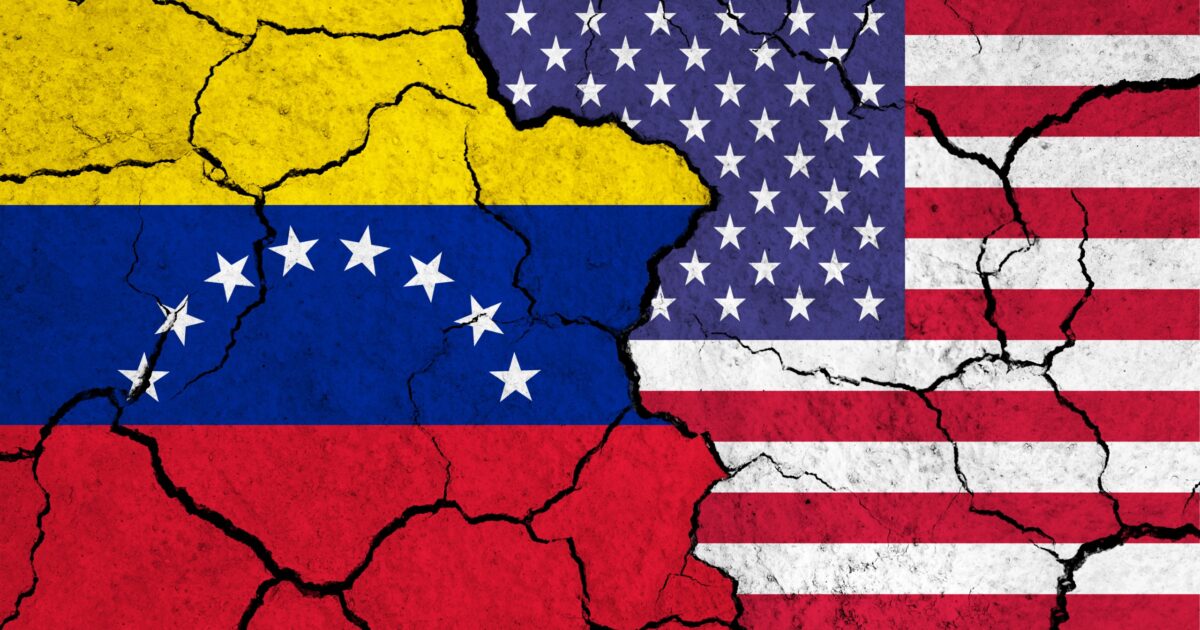
MitKat Advisory’s Special Report on the US attack on Venezuela goes beyond the immediate event to assess what the operation means for Venezuela’s internal stability, US domestic politics, the broader international order and business continuity across Latin America. It is intended as a working reference for organizations reassessing their regional risk posture in the weeks ahead.
What the Special Report covers
The report opens with an overview of the 03 January operation and international reactions, then covers Venezuela’s geopolitical significance and the deterioration of US-Venezuela relations since 2024. An impact assessment spans Venezuela, the US, global order, LATAM countries and LATAM businesses, followed by four expected scenarios, a note on intersecting US-Iran tensions, and a detailed set of recommendations.
Power vacuum and institutional fragmentation in Venezuela
With the traditional chain of command decapitated, pro-government colectivos are reportedly patrolling neighbourhoods amid fears of urban guerrilla warfare. Vice-President Rodríguez’s self-declared interim leadership, rejected by Washington, has created a dual-authority scenario that risks institutional paralysis and a prolonged internal conflict.
Sharp domestic polarization within the US
Congress is divided over the constitutionality of the strikes, with a War Powers Resolution vote planned and large anti-war protests reported in several major cities. Financial markets have reacted cautiously to the prospect of US oil companies taking a leading role in rehabilitating Venezuela’s energy sector, an undertaking estimated at USD 80-90 billion.
A test for the global order
The capture of a sitting head of state has been widely read as a revival of the Monroe Doctrine and a sign that Washington no longer treats UN Charter protections as binding. Russia, China and Iran have all responded critically, with concern in some quarters that the episode sets a precedent other powers could cite for their own interventions.
Diplomatic rifts and migration pressure across Latin America
Reactions across the region are sharply divided, from Argentina and Ecuador’s public support to Brazil, Mexico and Colombia’s condemnation of the intervention as a violation of sovereignty. Nearly all neighbouring states face the prospect of renewed migration inflows, border congestion and disrupted bilateral trade.
Business disruption across the region
Air travel, port operations and logistics across Latin America face significant interruption, from suspended flights and rerouted cargo to halted activity at Venezuelan ports such as La Guaira and Puerto Cabello. Reduced Venezuelan oil output is tightening heavy-sour crude supplies for refiners in Brazil and Mexico, with knock-on effects for diesel prices and trucking costs.
What businesses should do
MitKat recommends suspending all non-essential travel to Venezuela and reviewing routing through neighbouring countries, updating emergency response and evacuation protocols for personnel across Venezuela, Colombia and Brazil, and securing logistics capacity and inventory buffers for the next 30 to 60 days. Energy-dependent businesses should assess exposure to Venezuelan crude grades and lock in alternative supply, while all organizations should strengthen enhanced due diligence on sanctioned entities and Iranian networks and maintain centralized monitoring of fast-moving developments.
Download the full report now
The full Special Report covers four detailed forward-looking scenarios, the intersecting US-Iran dimension, and a complete set of sector-by-sector recommendations. Download the full report now to plan your regional risk response.
Filed under: AmericasRegional Risk Reviews