What is the Nashik to Mumbai tribal march and when will it reach Mumbai?
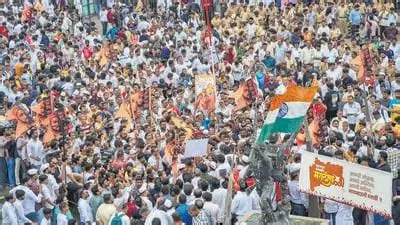
The Sakal Adivasi Vidyarthi Andolan Kruti Samiti began a long march of tribal students and community members from Nashik to Mumbai on 28 September, setting off at 1100 hours from Anant Kanhere Maidan (Golf Club Ground). The march follows a prolonged sit-in at Nashik’s Eidgah Maidan and seeks improved facilities, food quality, safety and infrastructure at tribal residential schools and hostels, along with an inquiry into student deaths. Other demands include withdrawal of the central-kitchen system, release of pending Swayam DBT funds, financial assistance for affected families and changes in the Tribal Development Department. Participants are expected to cover approximately 25 to 30 kilometres per day, with overnight halts along the route, and to reach Mumbai on 5 October, culminating at Raj Bhavan.
Which roads will see the most disruption between 29 September and 5 October?
The Nashik to Mumbai tribal march 2026 will affect different road segments on different dates. The reported route includes Mumbai Naka, Vilholi, Wadivare, Ghoti, Igatpuri, Kasara, Shahapur, Bhiwandi and Mulund. On 29–30 September, roads along the Nashik–Igatpuri–Kasara corridor, including NH-160 and connecting roads around Ghoti, Igatpuri and Kasara Ghat, may face localised congestion and traffic restrictions. On 30 September–1 October, disruptions may extend to Shahapur and Bhiwandi, particularly along NH-160, Bhiwandi–Wada Road and Bhiwandi–Kalyan Road. From 2–4 October, as the march approaches Mulund, congestion may affect the Eastern Expressway, LBS Marg, Mulund–Airoli Road and adjoining roads. On 4–5 October, southbound movement may affect the Eastern Expressway, Sion–Mulund corridor, Dr Babasaheb Ambedkar Road, Eastern Freeway, Parel and Byculla, and on 5 October congestion is likely around Marine Drive, Nepean Sea Road and Walkeshwar Road as participants approach Raj Bhavan. Enhanced police deployment, barricading and traffic diversions may cause localised route closures and delays, affecting employee commuting, freight movement, vendor operations, airport transfers and last-mile deliveries. Disruption is therefore staged rather than simultaneous, moving with the marchers.
What about rail services and Mumbai airport access?
No suspension of rail services has been announced, but localised delays to passenger movement and station access are possible. Stations including Nashik Road, Igatpuri, Kasara, Asangaon, Shahapur and Thane may see increased footfall and congestion as the march progresses, and Mulund, Nahur, Bhandup, Kanjurmarg and Vikhroli stations may experience similar disruption as participants enter Mumbai. On 4–5 October, Dadar, Parel, Byculla, Mumbai Central and Churchgate may face increased footfall and access delays. Chhatrapati Shivaji Maharaj International Airport may also experience landside access delays if traffic restrictions affect connecting roads, so airport transfers should carry extra buffer time on the final days of the march. Heightened activity and increased footfall are also likely around Raj Bhavan and adjoining Malabar Hill areas on 5 October as participants conclude the march.
What are the business continuity risks?
For the Nashik to Mumbai tribal march 2026, the principal risk is localised delay rather than citywide disruption, and no citywide business shutdown is expected. Businesses along the Nashik–Mumbai corridor and in Mulund and South Mumbai may face localised access restrictions, employee delays and disruptions to deliveries as the march passes. Increased congestion near commercial districts, logistics hubs and government offices may affect field operations, vendor movement and last-mile deliveries, and enhanced police deployment, barricading and diversions can close routes at short notice. The risk shifts with the march: the Nashik–Igatpuri–Kasara stretch is most exposed early, Shahapur and Bhiwandi in the middle days, and Mulund and South Mumbai in the final three days, so facilities and supply-chain partners along each segment should be checked against the dates when the march is expected to pass.
What should organisations and individuals do to prepare?
To prepare for the Nashik to Mumbai tribal march 2026, organisations should monitor updates from the Mumbai Traffic Police, local authorities and law enforcement agencies for confirmed march locations, traffic advisories, diversions and transport disruptions. Review business continuity, employee travel and logistics plans, and allow additional transit time for personnel, freight, airport transfers and critical deliveries along the Nashik–Mumbai corridor and affected areas in Mumbai. Maintain regular communication with employees, transport providers and supply-chain partners to assess operational impacts, and implement alternate-route and contingency measures as required. Individuals should check the day’s expected march position before travelling, allow extra time on the affected road segments and at stations, and plan airport journeys with a buffer, particularly on 4 and 5 October.
Frequently asked questions
When will the Nashik to Mumbai tribal march reach Mumbai?
The march began on 28 September and is expected to reach Mumbai on 5 October, ending at Raj Bhavan.
Are rail services suspended during the tribal march?
No suspension has been announced, but localised delays to passenger movement and station access are possible along the route and, on 4–5 October, at Dadar, Parel, Byculla, Mumbai Central and Churchgate.
What are the emergency contact numbers for Mumbai and the route?
Police 100, Fire 101, Ambulance 102/108. Railway Helpline: 23004000. Mumbai Traffic Police on X: @MTPHereToHelp.
Download the full risk flash now
datasurfr’s Risk Flash on the tribal protest march from Nashik to Mumbai carries the complete route map, date-by-date impact analysis for road, rail and air connectivity, and a detailed contacts directory. Download the full risk flash now to brief your travel and continuity teams.
Filed under: India-South AsiaRegional Risk Reviews