KEY TAKEAWAYS:
- Morocco holds elections for its 395-seat House of Representatives on 23 September 2026, its first legislative vote since 2021, with 1,850 candidate lists and 7,288 candidacies from 27 parties contesting seats among 15.8 million registered voters.
- The incumbent coalition of the National Rally of Independents (RNI), the Authenticity and Modernity Party (PAM) and the Istiqlal Party enters as the best-placed alliance given its incumbency and local network, though youth unemployment (37.3 percent among 15–24-year-olds) and public frustration that 2030 FIFA World Cup infrastructure spending has outpaced improvements in healthcare and education remain prominent campaign themes.
- Provisional results are expected from 24 September. MitKat’s analysis rates the most likely outcome as the incumbent tripartite coalition retaining a governing majority, though a reduced margin requiring cabinet concessions or an expanded coalition is assessed as a moderately likely alternative.
- Businesses should expect localised traffic and access disruption around polling day and result announcements in Rabat, Casablanca and other major cities, with a low but non-zero risk of prolonged disruption if coalition talks or contested results drag on.
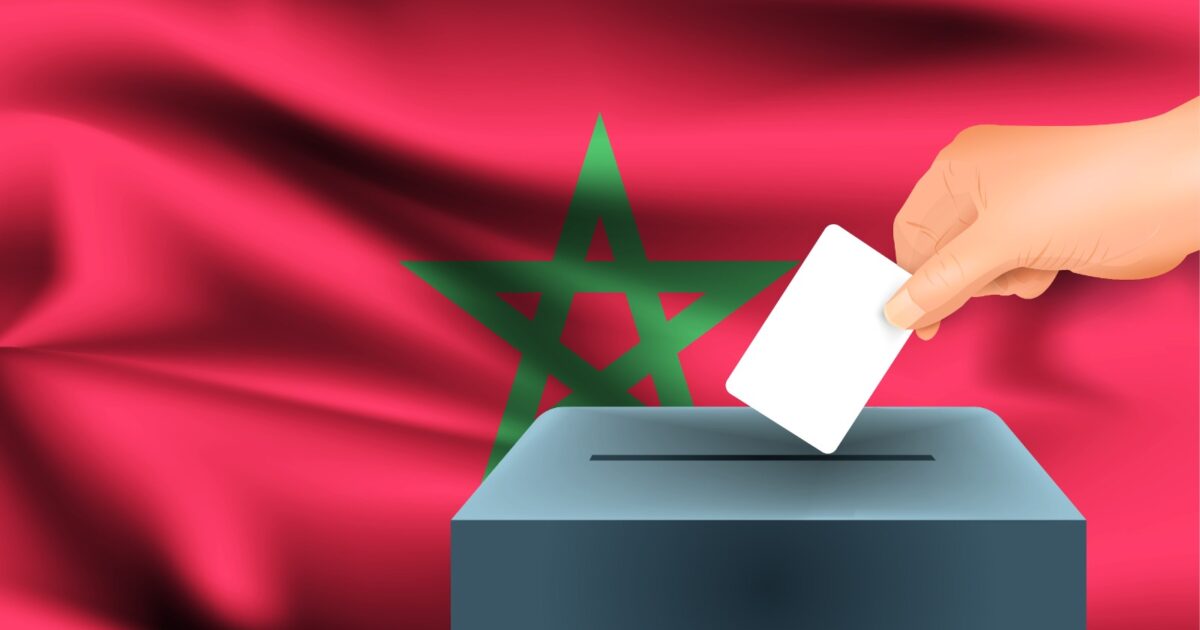
Morocco heads to the polls on 23 September 2026 for its first legislative election since 2021, a vote that will shape the composition of the House of Representatives and determine who the King appoints as the next Head of Government. Here is what is at stake, and what it means for continuity planning.
What is Morocco voting on 23 September 2026?
Morocco is electing all 395 members of its House of Representatives, with 305 local constituency seats and 90 regional constituency seats decided through closed-list proportional representation. Under Morocco’s constitutional monarchy, the King appoints the Head of Government from the party that finishes first, taking the results into account. The 2026 process saw the Ministry of the Interior register 1,850 candidate lists comprising 7,288 candidacies across 27 political parties, with campaigning running from 10 to 22 September ahead of election day. Of the 15,801,162 registered voters, 46 percent are women and 55 percent are urban-based. Provisional results are expected to be announced from 24 September.
What are the biggest issues shaping the election?
Youth employment is a dominant theme: the IMF reported Morocco’s overall unemployment rate reached 13 percent in 2025, while unemployment among 15–24-year-olds reached 37.3 percent, and the government’s Job Plan 2030 aims to address labour-market participation and youth and rural employment. Healthcare and education have also become prominent concerns, with recent youth-led protests linking dissatisfaction over public services to a perception that government spending on major infrastructure and international sporting events, including preparations for the 2030 FIFA World Cup, has not been matched by improvements in essential services. Water security and agricultural resilience remain structural concerns following prolonged drought conditions, while institutional confidence and electoral integrity have been emphasised by Moroccan authorities as important objectives, against a backdrop of reported youth disenchantment with political participation.
Which parties and outcomes are in play?
The incumbent coalition of the National Rally of Independents (RNI) — now led by party president Mohamed Chaouki after Aziz Akhannouch’s departure from the party leadership in February 2026 — alongside the Authenticity and Modernity Party (PAM) and the Istiqlal Party, enters the election as the best-placed alliance, having governed since winning 102, 87 and 81 seats respectively in 2021. Other significant parties include the Socialist Union of Popular Forces (USFP), the Popular Movement (MP) and the Justice and Development Party (PJD), the moderate Islamist party that previously led government before its 2021 seat count fell to 13. According to MitKat’s analysis, the most likely scenario is that the incumbent tripartite coalition retains a governing majority, leveraging its record on social protection and infrastructure; a moderately likely alternative sees RNI remain the largest party but lose seats amid dissatisfaction over inflation, youth unemployment and drought impacts, requiring greater concessions to coalition partners or an expanded governing alliance.
What security and business risks does the election carry?
Victory rallies, political gatherings and post-election press conferences are likely in Rabat and Casablanca, particularly near party headquarters and government institutions, which may bring temporary road closures and access restrictions. Protracted coalition negotiations after election day could extend policy uncertainty and prompt temporary security deployments or administrative delays in major commercial and political hubs. A contested result in specific municipal or regional constituencies may lead to localised sit-ins or increased security perimeters around provincial headquarters, with the potential for short-term freight and transit delays along regional routes, including the Tangier Med–Rabat–Casablanca industrial corridor.
What should businesses and individuals do to prepare?
Businesses should pre-identify alternative logistics and transit routes along the Tangier Med–Rabat–Casablanca corridor, schedule critical freight shipments before or after polling day where feasible, and review contingency plans for staff commute or transport delays in industrial zones including Tangier, Kenitra, Mohammedia and Agadir. Commercial enterprises near government ministries, municipal buildings or party headquarters in Rabat and Casablanca should establish alternative access procedures, and organisations should implement enhanced cybersecurity monitoring and brief employees against opening election-themed phishing links or unverified claims about candidates and results. Individuals are advised to avoid non-essential travel near party headquarters, municipal buildings and major public gatherings in Rabat, Casablanca, Fes, Marrakech and Al Hoceima on election day and during result announcements, allow additional travel time along major transport arteries, and monitor official updates from the Ministry of Interior, DGSN and accredited state media for road closures and security directives.
Frequently asked questions
How many seats are being contested in Morocco’s 2026 election?
All 395 seats of the House of Representatives are being contested — 305 local constituency seats and 90 regional constituency seats — through closed-list proportional representation.
Is the incumbent coalition expected to win?
MitKat’s analysis rates the incumbent RNI-PAM-Istiqlal coalition retaining a governing majority as the most likely outcome, given its incumbency and local network, though a reduced majority requiring greater coalition concessions is assessed as a moderately likely alternative.
When will Morocco’s 2026 election results be announced?
Provisional results are expected to be announced from 24 September 2026, the day after polling.
Download the full report now
MitKat’s Special Report on the Morocco Legislative Elections 2026 carries the complete party-by-party breakdown, the full scenario analysis, a detailed security and impact assessment, and emergency contact information. Download the full report now to brief your risk and continuity teams.
Filed under: EMEAThreat Intelligence Special Reports