What is the 4 October march in Mumbai and why is it being held?
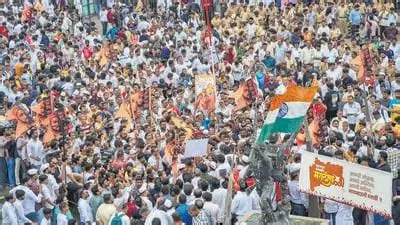
The MNS-Shiv Sena (UBT) march in Mumbai is a joint public march by the Maharashtra Navnirman Sena and Shiv Sena (UBT) against the Election Commission of India’s functioning and its ongoing Special Intensive Revision (SIR) of electoral rolls. The two parties have raised concerns about electoral-roll revision, EVMs and the functioning of the poll panel under Chief Election Commissioner Gyanesh Kumar. Participants will assemble in Byculla and begin the march between 1000 and 1100 hours local time, culminating in a public meeting near the Brihanmumbai Municipal Corporation (BMC) headquarters. The exact route is yet to be confirmed. Organisers have described the event as a public movement and have invited other political parties, including those in power, and the wider public to participate.
Which areas of Mumbai will see the most disruption?
Seven zones are flagged as high impact. Byculla, the assembly point, is likely to see early crowding and vehicle restrictions. Sir JJ Road and the JJ Flyover are a possible route, with potential crowding and traffic disruption, while Mohammed Ali Road and Bhendi Bazaar may see crowd movement, closures and diversions. DN Road is likely to see spillover congestion as the march approaches CSMT. CSMT and the BMC headquarters are the highest-impact area because of the concluding rally and dispersal. Hutatma Chowk and Fort may see congestion from diverted traffic, and Metro Junction could see spillover if CSMT access is restricted. Significant delays are possible across Byculla, Nagpada and South Mumbai during the march and dispersal period. Previous protests in the CSMT area caused road closures and significant congestion, including around Metro Cinema Road. Because the exact route is yet to be confirmed, the affected roads may change. Businesses located along the route may face temporary access restrictions, and employees and commercial vehicles moving through Byculla, Fort and CSMT are the most exposed during the march and the dispersal that follows.
Who is joining the march and what security measures are expected?
The march will be led by MNS chief Raj Thackeray and Shiv Sena (UBT) president Uddhav Thackeray, with party workers and members from both parties expected to participate. NCP (SP) Maharashtra president Shashikant Shinde has said his party’s members will join as part of the INDIA alliance, other opposition parties have been invited, and leaders from the ruling party have also been publicly welcomed, so the final scale and composition of the turnout remain uncertain. No specific security or traffic advisory had been issued for the march as of 1 October. Heightened police deployment and crowd-control measures are likely around Byculla, JJ Flyover, central Mumbai and the CSMT and BMC headquarters area as the march progresses, with temporary closures and diversions likely along the route and around CSMT. The march has been called amid political opposition to the Election Commission of India’s ongoing SIR exercise, and organisers have described it as a public movement.
What are the business continuity risks?
The main risk is delay and restricted access rather than city-wide disruption. Staff travelling through Byculla, Fort and CSMT may face delays, closures and access restrictions, and deliveries and commercial vehicles may be held up by road closures and diversions. Businesses along the march route may face temporary access restrictions, employee delays and delivery disruptions, particularly around Byculla, JJ Road, DN Road and the CSMT and BMC headquarters area. Bus diversions and delays are possible, and pedestrian crowding is likely around CSMT, where an ongoing 75-day traffic and power block may add to passenger-management issues. Heavy police deployment, barricading and extra checkpoints can cause intermittent traffic disruption, and the possibility of localised altercations or disorder cannot be ruled out. Logistics, staff mobility and public transport are all exposed, and the impact is likely to peak around CSMT and the BMC headquarters during the concluding rally and dispersal.
What should organisations and individuals do to prepare?
Personnel travelling to or through Byculla, Nagpada, JJ Road, DN Road, Fort and CSMT should allow additional travel time and monitor Mumbai Traffic Police updates before departure, and non-essential road travel through the Richardson and Cruddas–JJ Flyover–CSMT corridor should be avoided, if feasible, during the march and immediate dispersal period. Logistics and delivery teams should schedule time-sensitive movements outside the expected march window where operationally feasible and keep flexibility for route diversions. Businesses near the route should brief employees and security personnel on potential crowding, temporary access restrictions and changes to vehicle entry and exit arrangements. Companies with personnel travelling to CSMT should verify rail-service arrangements in advance, given the concurrent CSMT redevelopment-related operational changes. Mumbai Traffic Police can be reached on 022-24940303 and on X at @MTPHereToHelp.
Frequently asked questions
When and where does the march start on 4 October?
Participants assemble in Byculla on 4 October and begin marching between 1000 and 1100 hours local time, ending with a public meeting near the BMC headquarters.
Are road closures and diversions expected during the march?
Yes. Temporary closures and diversions are likely along the march route and around CSMT and the BMC headquarters, although no specific traffic advisory had been issued as of 1 October.
What are the emergency contact numbers for Mumbai?
Mumbai Police Control Room: 100 / 112. Mumbai Traffic Police: 022-24940303 and @MTPHereToHelp on X. Divisional Railway Manager, Mumbai: @drmmumbaicr. BMC Civic/Disaster Management Helpline: 1916.
Download the full Risk Flash now
datasurfr’s Risk Flash on the MNS-Shiv Sena (UBT) march in Mumbai carries the event background, the full high-impact zone list, the impact assessment, emergency contacts and recommendations. Download the full Risk Flash now to brief your travel and continuity teams.
Filed under: India-South AsiaRegional Risk Reviews