What does the India South Asia risk forecast April 2026 cover and what are the key dates?
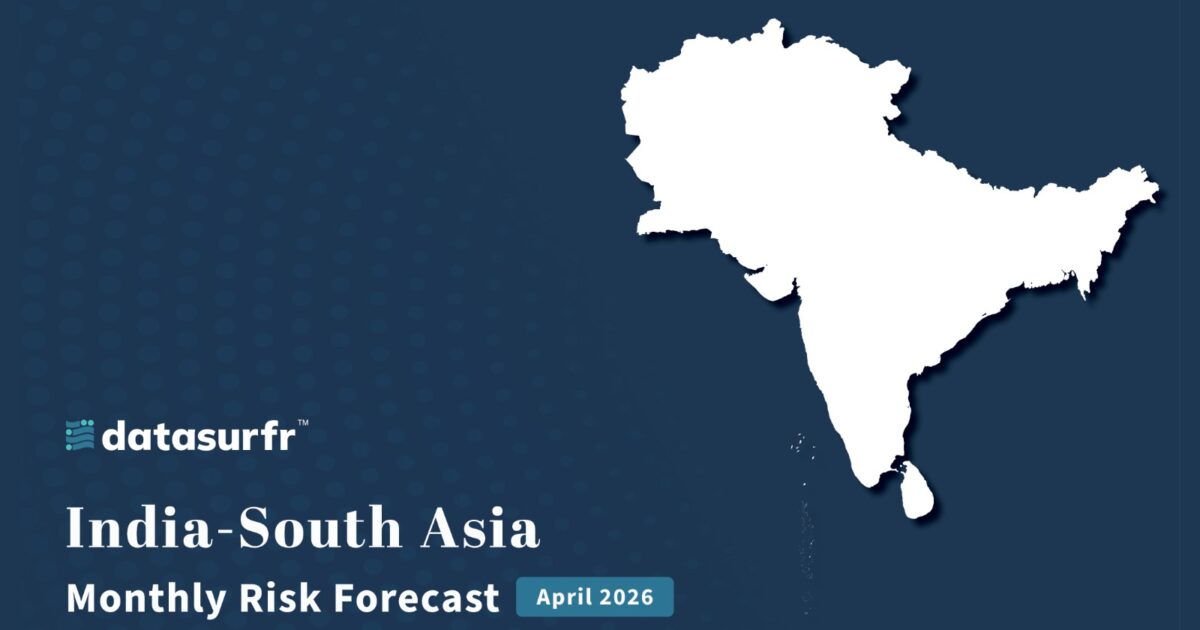
The forecast from datasurfr and MitKat covers India, Bangladesh, Nepal and Pakistan, and rates most April events Low to Medium risk. Key dates include Hanuman Jayanti on 02 April, the Maharashtra contractors’ strike from 06 April, assembly elections on 09, 23 and 29 April, Ambedkar Jayanti on 14 April, Bengali New Year on 15 April, worker and power-sector marches on 16 April, and Nepal’s Loktantra Diwas on 24 April. Multiple trade expos run through the month, including Bharat Buildcon in New Delhi from 29 April. March’s high-impact developments set the baseline: nationwide LPG shortages after the Hormuz closure, Pakistan’s escalation with Afghanistan, unseasonal rainfall across Gujarat, north India and the east coast, and Nepal’s landslide win for the Rashtriya Swatantra Party.
Which Indian states face the highest election risk?
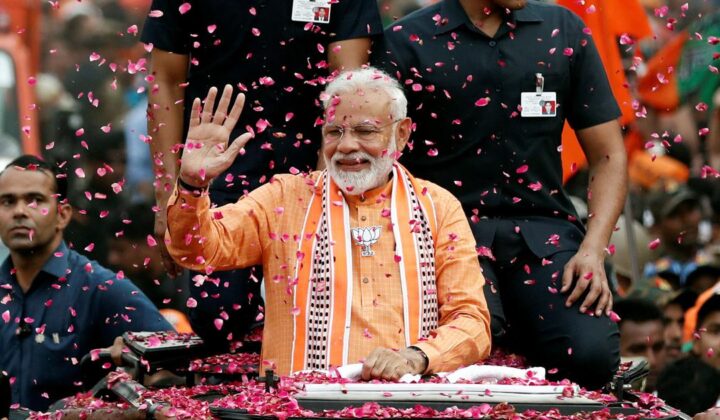
West Bengal carries the highest risk, given a history of clashes between rival cadres, pre-election disputes over voter rolls between the Trinamool Congress and the BJP, and expected localised violence, voter intimidation and post-poll clashes, especially in rural areas and contested urban centres. Assam faces communal and ethnic tension after government-led eviction drives and debates on citizenship and land rights; large Central paramilitary contingents will be deployed in both states. Tamil Nadu pits the DMK and AIADMK against the BJP and Congress, with crowd safety the main concern after a deadly stampede at a political rally in September 2025 led to tighter campaign rules. Kerala, where the CPI(M)-led alliance seeks to retain its majority, sees frequent but lower-intensity political violence, while in Puducherry the AINRC–BJP coalition is defending its majority in a contest centred on statehood and employment. National discontent over the energy crisis and the India–US trade deal raises the risk of protests across all five, with recurring disruption in state capitals.
What strikes, festivals and events could disrupt April?
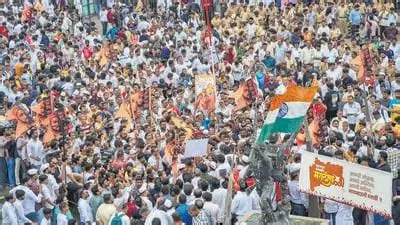
The Maharashtra State Contractors’ Association has threatened an indefinite strike from 06 April over roughly INR 77,600 crore in pending bills, which could halt road, bridge, water supply and pre-monsoon drainage works in Mumbai, Pune and Nashik. On 16 April the Bharatiya Mazdoor Sangh plans a workers’ march in Maharashtra, and electricity contract workers plan a march at Prakashgad, Mumbai, with possible traffic impact around Bandra-Kurla Complex. Telangana’s Vidyut Artisan Employees Joint Action Committee threatens a statewide indefinite strike from 08 April. Hanuman Jayanti and Ambedkar Jayanti bring processions and heightened security, with communal-clash risk in parts of central and north India, and Bengali New Year coincides with the West Bengal campaign. Expos in New Delhi, Mumbai, Pune, Chennai and Bengaluru will strain hotels and transport.
What are the business continuity risks?
The India South Asia risk forecast April 2026 points to a volatile month in which election unrest, industrial action and energy stress overlap. Political violence and protests can disrupt operations, supply chains and travel in West Bengal and Assam; a prolonged contractors’ strike could stall infrastructure projects and pre-monsoon works, and power-sector strikes could cause intermittent supply interruptions. Fallout from the Hormuz closure remains: LPG rationing hit food and beverage, hospitality and gas-dependent industries in India, while Pakistan and Bangladesh imposed austerity, fuel cuts and work-from-home measures, with load-shedding affecting manufacturing. The Afghanistan–Pakistan border conflict is expected to stay volatile, and further pro-Iran protests are possible if the US–Iran war escalates. Farmers’ protests could also spread from Punjab after its assembly rejected the India–US trade deal.
What should organisations and individuals do to prepare?
Organisations with sites or staff in poll-bound states should schedule travel, deliveries and non-essential movement away from polling days, build contingency time around state capitals, and keep alternative routes for facilities near procession routes, memorial sites and expo venues. Review contractor and infrastructure dependencies in Maharashtra, confirm backup power where Telangana or Maharashtra utilities may be affected, and secure LPG and fuel contingencies for kitchens, canteens and gas-dependent processes. Plan for stricter checks in sensitive districts and monitor developments in the Gulf. Individuals should avoid rallies and processions, follow local police advisories, allow extra time near large gatherings and expos, and keep valuables secure in crowded venues.
Frequently asked questions
When are the assembly elections in April 2026 and when are votes counted?
Assam, Kerala and Puducherry vote on 09 April, Tamil Nadu and West Bengal (phase I) on 23 April, and West Bengal (phase II) on 29 April; counting for all is on 04 May.
Where is the risk of political violence highest?
West Bengal and Assam, where clashes between rival cadres, voter intimidation and communally charged rhetoric are likely; Kerala’s violence is common but of significantly lower intensity.
What are the emergency contact numbers in India?
Nationwide: All-in-One Emergency (ERSS) 112, Police 100, Ambulance 108, Fire 101, Women’s Helpline 1091.
Download the full forecast now
The India South Asia risk forecast April 2026 from Datasurfr carries the complete event calendar, risk ratings, election analysis and country updates for Bangladesh, Nepal and Pakistan. Download the full report now to brief your continuity and travel teams.
Filed under: India-South AsiaRegional Risk Reviews