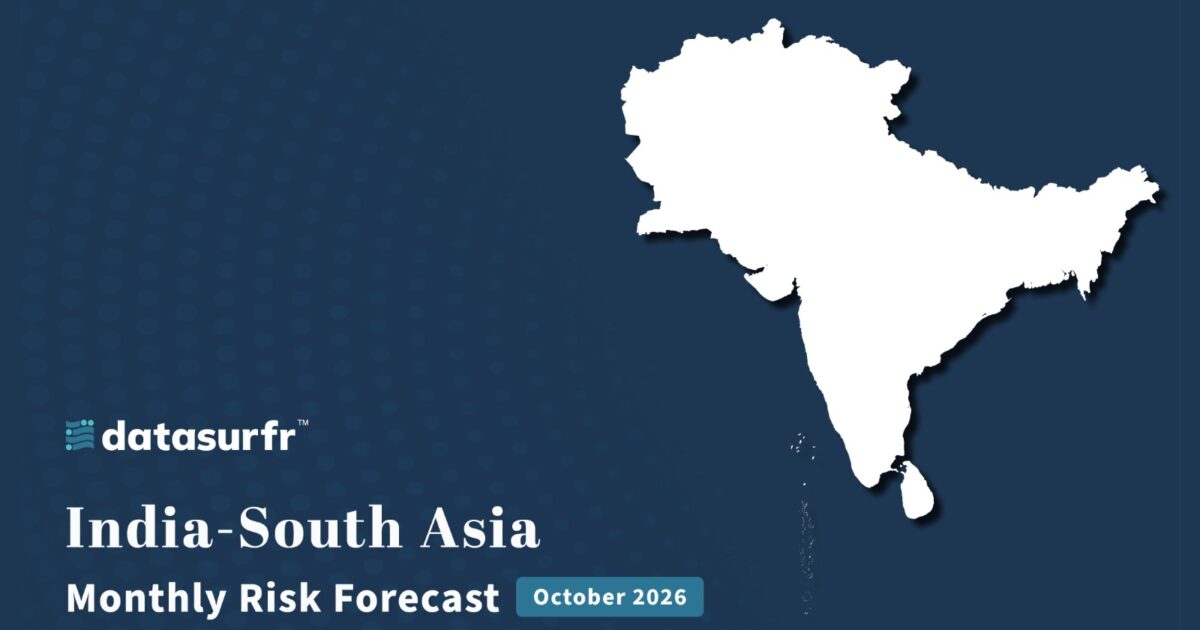
What is the India-South Asia October 2026 Risk Forecast and what drives it?
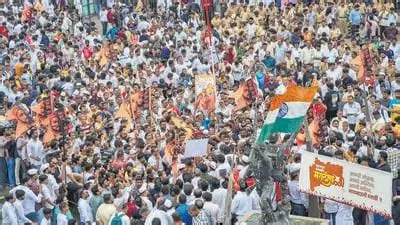
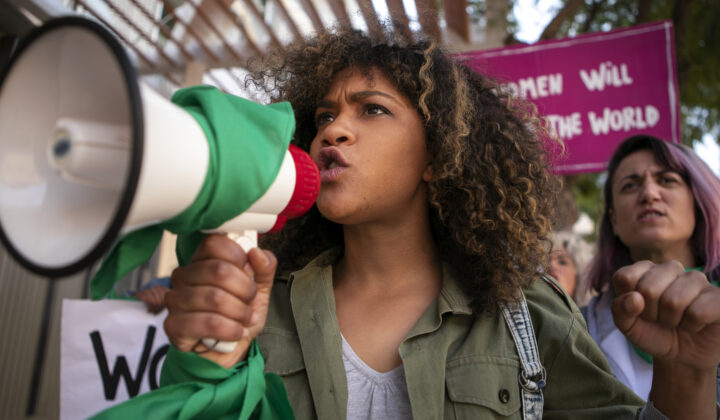
The India-South Asia Risk Forecast for October 2026 highlights widespread civil agitation, high-profile political demonstrations, regulatory friction, and extensive festival traffic across the region. Political disruption is headlined by the opposition INDIA coalition’s nationwide ‘Save Democracy’ campaign from 02 to 08 October, demanding electoral roll revisions and Chief Election Commissioner accountability. This coincides with Gandhi Jayanti (02 October), a national public holiday featuring high-security wreath-laying ceremonies at Rajghat, Delhi, and institutional closures across India.
In tandem, the Cockroach Janata Party (CJP) has launched a ‘Jail Bharo’ (mass voluntary arrest) campaign beginning 02 October in Mumbai and New Delhi. In Maharashtra, the Shiv Sena (UBT) and MNS will hold a joint march in South Mumbai on 04 October, while opposition parties in Odisha have declared a statewide strike (bandh) on 07–08 October against the Mines and Minerals Amendment Act 2026.
Which key regions, elections, and regulatory changes will see the most disruption?
By-Elections in Four States (06 October): The Election Commission of India (ECI) will conduct polling for Assembly seats in Madurantakam and Dharapuram (Tamil Nadu), Thattanchavady (Puducherry), Rejinagar and Nandigram (West Bengal), and the Nagaon Lok Sabha seat (Assam). Nandigram and Nagaon remain politically sensitive with high security and risk of post-poll friction.
New UPI Merchant Discount Rate (MDR) Rules (15 October): NPCI’s revised framework imposes a 0.4% MDR on Person-to-Merchant (P2M) UPI transactions above INR 2,000. Petrol dealers in Maharashtra and MP have announced payment restrictions, while the All-India Mobile Retailers Association (AIMRA) called for a nationwide ‘No UPI Day’ protest on 02 October by covering QR codes.
Regional Political Movements in Nepal & Pakistan: In Nepal, the Nepali Congress 15th General Convention (02–05 October) in Kathmandu (Tundikhel) faces internal factional disputes and local traffic cordons. In Pakistan, opposition PTI mobilizations and fuel austerity measures (50% reduction in official vehicle fuel, 2100h commercial closures) will impact urban business corridors.
What about religious festivals, weather disasters, and security unrest?
Festive Season & Nashik Kumbh Mela: Major Hindu observances span Mahalaya (10 October), Sharad Navratri (11–19 October), Durga Puja, and Dussehra/Vijayadashami (20–21 October), causing massive intercity travel and idol immersion processions across West Bengal, Assam, and Nepal (Dashain). On 31 October, the Nashik-Trimbakeshwar Simhastha Kumbh Mela formally commences with Dhwajarohan flag-hoisting.
Disaster Recovery & Kinetic Security: In Nepal, recovery continues following the catastrophic 26 August Trishuli floods, with the death toll exceeding 1,400 and USD 1.8 billion in direct damages. In India, Ganga river flooding in Bihar (Patna) and UP gradually recedes. Meanwhile, militant violence in Pakistan (Khyber Pakhtunkhwa, Balochistan) and ethnic tension in Manipur continue to create localized transit risks.
What are the business continuity risks?
Organizations operating in major urban hubs (New Delhi, Mumbai, Kolkata, Dhaka, Islamabad) face sudden commute delays, road blockades, and administrative slowdowns. Protests surrounding government buildings (such as ECI headquarters in Delhi or BMC in Mumbai) will trigger multi-tier police barricading and traffic diversions.
Supply chains, freight movement in Odisha’s mining belts, and digital payment acceptance (due to UPI MDR protests) represent immediate operational choke points. Additionally, extended public holiday closures around Gandhi Jayanti (02 October) and Dussehra (20–21 October) will slow administrative and banking approvals.
What should organisations and individuals do to prepare?
For Organisations: Re-route commercial logistics around political rally corridors in Delhi, Mumbai, and Odisha. Provide backup digital payment options (cards, net banking) for retail and fuel transactions ahead of 15 October MDR changes. Plan for reduced workforce attendance and administrative delays during the 10–21 October festival period.
For Individuals: Avoid non-essential travel through central government districts on 02, 04, and 06 October in Delhi and Mumbai. Allow substantial extra travel time during festive immersion days (16–21 October), and verify cash/card availability during merchant UPI protest days.
Frequently asked questions
What are the key protest dates in India during October 2026?
Key protest dates include 02 October (CJP Jail Bharo & AIMRA No UPI Day), 02–08 October (INDIA bloc nationwide campaign), 04 October (Shiv Sena-MNS Mumbai rally), 06 October (Delhi ECI march), and 07–08 October (Odisha bandh).
How does the new UPI MDR rule affect merchants from 15 October?
A 0.4% fee applies to Person-to-Merchant UPI transactions over INR 2,000 (capped at INR 300 for INR 75,000+). Customers are not charged directly, but merchant associations are protesting the added cost.
What are the emergency contact numbers for major South Asian cities?
India: All-in-One ERSS 112, Police 100, Ambulance 108; Delhi Police: 112 / WhatsApp 8750871122; Mumbai Traffic WhatsApp: 8454999999; Nepal Police: 100; Pakistan Emergency: 15.
Download the full advisory now
datasurfr’s Special Advisory on the India-South Asia October 2026 Risk Forecast delivers complete security route maps, election impact analysis, and festival travel management protocols. Download the full advisory now to safeguard your regional workforce and logistics operations.
Filed under: India-South AsiaRegional Risk Reviews