What is the EMEA Monthly Risk Forecast June 2026?
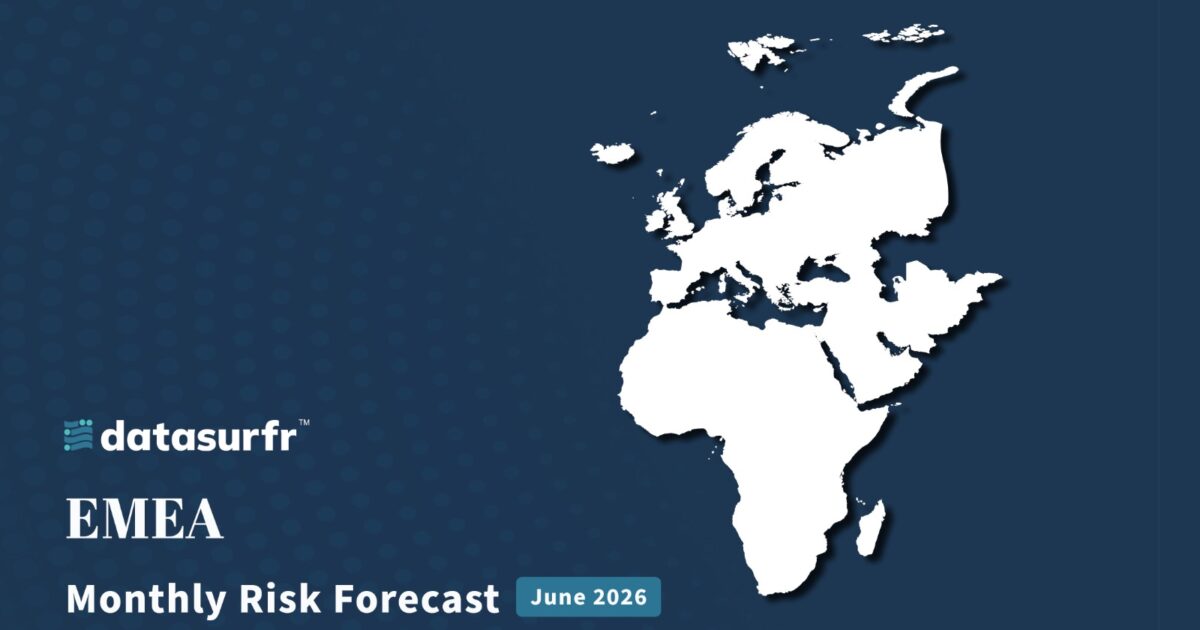
The EMEA Monthly Risk Forecast June 2026 provides a comprehensive assessment of operational and security risks across Europe, the Middle East and Africa. June 2026 is expected to keep the EMEA region in a highly dynamic and operationally sensitive environment shaped by elections, labour unrest, geopolitical tensions, public-health concerns, and climate-related disruptions. Across Europe, June is expected to be dominated by transport strikes, political developments, and large-scale public events. In Africa, elevated monitoring of Ebola cases in the Democratic Republic of the Congo and neighbouring states is likely to continue, with enhanced airport screening and travel-health advisories remaining in place across major EMEA transit hubs. Meanwhile, Gulf states are expected to remain operationally sensitive due to ongoing maritime-security concerns, aviation disruptions, and elevated military alert levels linked to wider regional tensions.
What are the key events and dates in June 2026?
Key dates include: 01 June — General elections in Ethiopia and Madaraka Day in Kenya; 02 June — Republic Day in Italy; 04 June — Corpus Christi in Europe; 06 June — Sweden National Day and stricter citizenship requirements take effect; 07 June — Snap elections in Kosovo; 10 June — Nationwide SNCF railway strike in France; 14 June — Anti-militarization mobilization in Brussels; 16 June — Islamic New Year in MENA; 19–20 June — Midsummer Day in Finland and Sweden; 23 June — National Day in Luxembourg, Victory Day in Estonia, and Ligo Day in Latvia; 24 June — Midsummer Day in Estonia, Latvia, and Lithuania. LGBTQ+ Pride Month observances are expected throughout June, with major events in Gothenburg (13 June), Vienna (13 June), Cardiff (13–14 June), Warsaw (13 June), Zurich (19–20 June), Rome (20–21 June), Edinburgh (20 June), Dublin (27 June), San Sebastián (28 June), and Paris (27 June). Pope Leo XIV’s visit to Spain runs from 06–12 June, covering Madrid, Barcelona, and the Canary Islands.
Which countries are most affected by strikes and disruptions?
France faces a nationwide SNCF railway strike on 10 June, with disruptions expected on TGV inOui, Ouigo, Intercités, regional TER networks, and international connections, affecting major hubs including Paris Gare de Lyon, Gare du Nord, Marseille, Lyon, Lille, Bordeaux, Strasbourg, Toulouse, and Nantes. Spain faces banking-sector protests on 03 June and a potential indefinite nationwide stoppage by truck and bus drivers from 08 June if the government does not provide written clarification on early-retirement arrangements by 24 May. Estonia has tightened border operations from 15 June, reducing operating hours at the Narva-1 pedestrian crossing and maintaining restricted hours at Koidula and Luhamaa vehicular crossings through at least 31 August 2026. Switzerland will reintroduce internal Schengen border controls along the border with France from 10–19 June for the G7 Summit in Evian-les-Bains, causing significant cross-border traffic disruptions. Kosovo holds snap elections on 07 June, with heightened political activity and localized security deployments expected.
What is the impact of the fuel crisis and geopolitical tensions?
The EMEA fuel crisis in May 2026 originated from the escalation of the US-Israel-Iran conflict in late February 2026, followed by Iran’s blockade of the Strait of Hormuz. The Strait handles approximately 20 percent of global oil trade and significant volumes of refined products, including jet fuel and diesel. The blockade disrupted tanker movements, damaged energy infrastructure, and reduced export activity across the Gulf region. Europe faced immediate supply pressures, particularly after lower inventory levels caused by increased winter demand. Several African countries dependent on fuel imports, including Kenya and Ethiopia, reported diesel and petrol shortages. Fuel prices increased sharply across EMEA markets, leading to higher transport and logistics costs. The Russia-Ukraine conflict continued at high intensity through May, with repeated missile and drone strikes targeting infrastructure, logistics corridors, and urban centres across Ukraine. Tensions involving Israel, Iran, and the US remained the most significant geopolitical risk factor across the Middle East. Although temporary ceasefire arrangements remained in place, instability around the Strait of Hormuz continued to impact maritime traffic, shipping insurance costs, aviation operations, and global energy prices.
What are the public health concerns in EMEA?
On 17 May, the World Health Organization declared the Ebola outbreak in the Democratic Republic of the Congo (DRC) and Uganda a Public Health Emergency of International Concern (PHEIC), citing rapid spread and cross-border transmission. As of 24 May, DRC reported 101 laboratory-confirmed cases and more than 900 suspected cases across Ituri, North Kivu, and South Kivu provinces, with over 130 suspected deaths. Uganda confirmed five cases, including three new infections linked to travellers from DRC. EMEA countries have implemented enhanced airport screening, temperature checks, and health declarations for passengers arriving from affected areas. Several EMEA governments issued travel advisories against non-essential travel to eastern DRC. Through May 2026, EMEA has seen a small but notable cluster of Hantavirus-related illness linked primarily to the MV Hondius, a Dutch-flagged wildlife expedition cruise vessel, with a total of 12 cases (10 confirmed, 2 probable) reported as of 24 May, including one fatality. The strain has been identified as Andes hantavirus. No broad-based travel restrictions have been imposed.
What should organisations and individuals do to prepare?
Organisations should closely monitor official government announcements regarding elections, strikes, and public events and communicate them clearly to employees, clients, and vendors. Anticipate reduced activity or temporary shutdowns. Reschedule non-essential meetings, deliveries, and deadlines to avoid peak disruption periods. Coordinate with logistics partners to assess the impact of transport restrictions and potential port closures. Pre-position critical inventory and plan for delays during and immediately after strike periods. Ensure adequate liquidity to meet operational requirements, as banking and financial services may be unavailable for several days. Circulate a comprehensive travel and safety briefing outlining key risks and recommended precautions. Maintain updated emergency contact lists and establish a clear communication protocol. For offices or facilities closed during holidays or strikes, conduct a thorough security check. Individuals should plan travel outside the two days immediately before and after major events, as these are typically the most congested, and opt for off-peak hours. Secure all transport tickets and accommodation well in advance. Identify backup travel routes and utilize real-time navigation tools. Remain abreast of significant delays by doubling or tripling the estimated travel time. For air travel, arrive at least four to five hours before international departures and at least three hours before domestic flights. Maintain awareness of surroundings, particularly in crowded areas. Keep personal belongings secure and out of sight. Regularly monitor local news and official advisories. Use personal safety applications. Consume freshly prepared food and stay cautious of food hygiene. Prepare a travel kit with water, snacks, basic first-aid supplies, and necessary medications. Ensure adequate fluid intake. Dress modestly, particularly when visiting religious sites, and remain respectful of local customs and traditions.
Frequently asked questions
When are the key elections in EMEA in June 2026?
General elections in Ethiopia on 01 June and snap parliamentary elections in Kosovo on 07 June.
Which countries are most affected by strikes in June 2026?
France faces a nationwide SNCF railway strike on 10 June. Spain faces banking-sector protests on 03 June and a potential indefinite transport strike from 08 June.
What are the emergency contact numbers for EMEA countries?
For EU-wide emergencies: 112. UK: 999. Ireland: 112 or 999. France: 112. Spain: 112. Italy: 112. Kosovo: 112. Ethiopia: 991 (Police), 907 (Ambulance), 939 (Fire). Kenya: 999 or 112.
Download the full advisory now
datasurfr’s Special Advisory on the EMEA Monthly Risk Forecast June 2026 carries the complete event calendar, the full country-by-country impact assessment, and a detailed contacts directory. Download the full advisory now to brief your travel and continuity teams.
Filed under: EMEARegional Risk Reviews