What is the drought situation in Indonesia 2026?
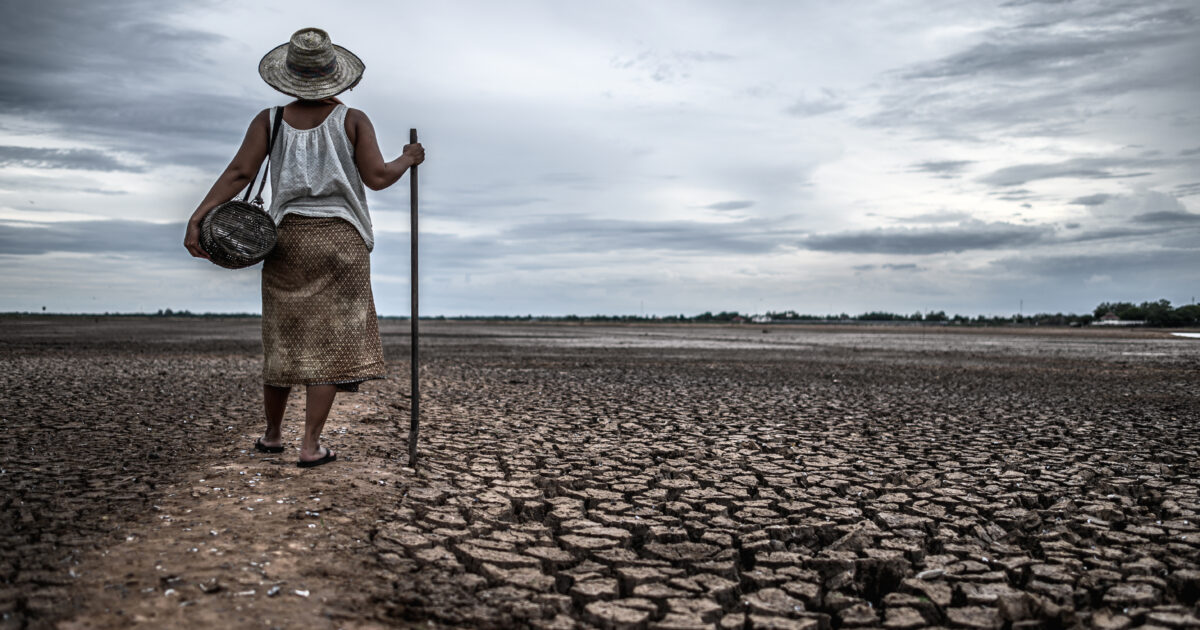
Indonesia is experiencing intensifying drought amid a strong El Niño event and a significant karhutla (forest and land fire) season. The Indonesian Agency for Meteorology, Climatology and Geophysics (BMKG) has placed multiple areas across the country under Waspada (Alert), Siaga (Standby), and Awas (Watch) drought classifications. Prolonged periods without rainfall have been recorded across several provinces, with 1,869 locations classified under the extremely long consecutive dry days (HTH) category. The situation is particularly significant across parts of Java, Bali, Nusa Tenggara, Kalimantan, Sulawesi, Maluku, and Papua. BMKG classified the 2026 El Niño as very strong and estimates that the onset of the 2026/2027 rainy season will be delayed in 529 Seasonal Zones (ZOM), equivalent to approximately 61 percent of Indonesia’s seasonal zones.
Which areas in Indonesia are most affected?
BMKG’s Meteorological Drought Early Warning for the first ten-day period of October 2026 classified vulnerable areas across multiple provinces. Awas (Watch) classification applies to Buleleng and Gianyar in Bali; Tangerang City, Lebak, Pandeglang, and Tangerang in Banten; Bantul, Gunung Kidul, Yogyakarta City, Kulon Progo, and Sleman in DI Yogyakarta; West Jakarta, Central Jakarta, East Jakarta, North Jakarta, and Thousand Islands in DKI Jakarta; Boalemo, Bone Bolango, Gorontalo, Gorontalo Utara, Gorontalo City, and Pohuwato in Gorontalo; Bekasi, Cirebon, Garut, Indramayu, Karawang, Kuningan, Majalengka, Subang, Sukabumi, Sumedang, and Cirebon City in West Java; Blora, Boyolali, Brebes, Cilacap, Demak, Grobogan, Jepara, Karanganyar, Klaten, Kudus, Magelang, Pati, Pekalongan, Pemalang, Purworejo, Rembang, Sragen, Sukoharjo, Tegal, Temanggung, Wonogiri, Pekalongan City, and Surakarta City in Central Java; and numerous regencies in East Java, Kalimantan, Maluku, Nusa Tenggara, Papua, and Sulawesi.
What are the key impacts?
Domestic Water Crisis: Decreased water source discharges caused widespread water supply shortages across West Java, Central Java, South Sulawesi, Yogyakarta, and Gorontalo. Prolonged dry spells exceeded 118 days in regions such as Kulon Progo, Gunungkidul, Sleman, Wonogiri, Magetan, Kupang, and Bima, with Bantul recording 141 days as of 20 September 2026. Agricultural Disruption: National monitoring indicated tens of thousands of hectares under severe drought stress. In Karawang Regency, drought impacted 4,248 hectares of rice fields across 10 districts by late September. Maritime and River Transport Logistics: In East Kalimantan, port authorities required coal barges to reduce cargo from 7,000 tonnes to 5,500–6,000 tonnes. Falling river levels disrupted approximately 3.9 million tonnes of coal transport in Kalimantan, forcing some mine operators to declare force majeure. Power Generation: Hydropower generation was constrained across South Kalimantan, Central Sulawesi, and South Sulawesi due to depleted reservoir levels.
What government measures have been taken?
Between July and late September 2026, the Ministry of Public Works and related agencies initiated emergency drought response efforts at more than 3,000 locations nationwide. The Ministry distributed over 48.9 million liters of clean water to approximately 1.75 million people across 3,288 locations, including 23.2 million liters to Central Java and East Java. Agencies deployed public hydrants, mobile water-treatment units, and deep boreholes. Authorities normalized irrigation channels, established emergency channels, and pumped river water into farmlands. The Central Java Provincial Government submitted requests for weather modification operations. Regional Disaster Management Agencies (BPBD), the military, police, Baznas, and local public water companies established Drought Emergency Command Posts and extended emergency statuses through October and late 2026.
What should organisations and individuals do to prepare?
Organisations should implement water conservation protocols and review backup water supply systems. Assess supply chain vulnerabilities, including potential transport disruptions on major inland waterways such as the Kapuas and Barito rivers, and establish alternative logistics corridors. Review business continuity plans for prolonged drought conditions, particularly in Java, Bali, Nusa Tenggara, Kalimantan, and Sumatra. Assess water requirements across offices, manufacturing facilities, warehouses, and operational sites, maintain adequate water reserves, and identify alternative water sources. Businesses dependent on hydropower or river-borne coal supplies should monitor electricity availability and review backup power arrangements. Employers should brief personnel on potential water shortages, heat exposure, and deteriorating air quality. Individuals should practice strict water conservation, secure safe water storage, comply with official water rationing guidelines, and limit strenuous outdoor physical activities during periods of elevated air pollution. Emergency contacts: Integrated Emergency Services: 112. Police: 110. Medical Emergency / Ambulance: 119. Fire and Rescue: 113. Search and Rescue (BASARNAS): 115.
Frequently asked questions
What is causing the drought in Indonesia in 2026?
The drought is driven by a very strong El Niño event, which reduces cloud development and rainfall over Indonesia, combined with a positive Indian Ocean Dipole (IOD) that further suppresses moisture availability.
Which areas in Indonesia are most affected by drought?
Vulnerable areas include Java, Bali, Nusa Tenggara, Kalimantan, Sulawesi, Maluku, and Papua. Awas (Watch) classification applies to parts of Bali, Banten, DI Yogyakarta, DKI Jakarta, Gorontalo, West Java, Central Java, East Java, and other regions.
What are the emergency contact numbers for Indonesia?
Integrated Emergency Services: 112. Police: 110. Medical Emergency / Ambulance: 119. Fire and Rescue: 113. Search and Rescue (BASARNAS): 115. BMKG: @infoBMKG on X. BNPB: @BNPB_Indonesia on X.
Download the full advisory now
datasurfr’s Special Advisory on the Drought Conditions in Indonesia carries the complete province-by-province drought classification, the full sector impact assessment, and a detailed contacts directory. Download the full advisory now to brief your travel and continuity teams.
Filed under: APACThreat Intelligence Special Reports