KEY TAKEAWAYS:
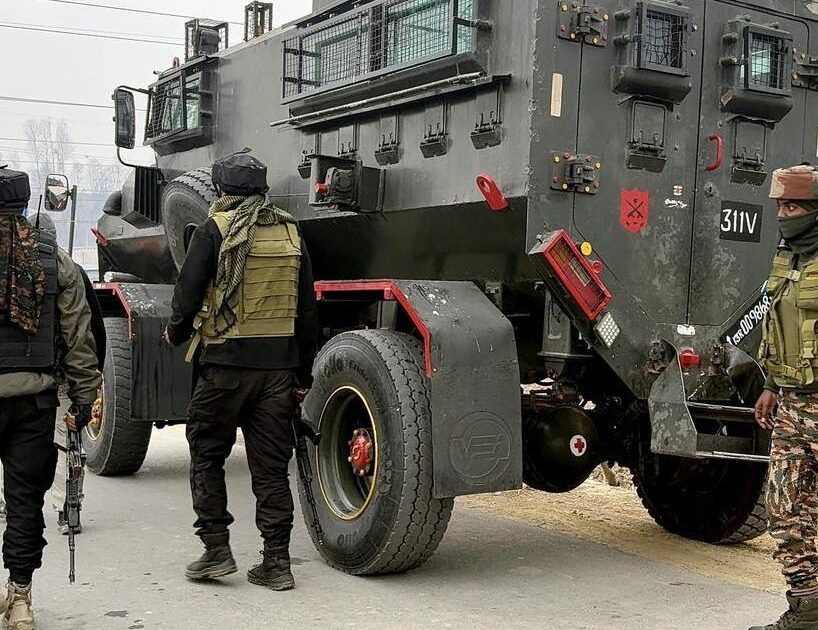
- MitKat’s assessment of 18 November 2026 reviews a series of attacks and suspected explosion incidents across India between September and November, in Jammu and Kashmir, Uttar Pradesh, Rajasthan and the Northeast. The most direct attack on security forces was on 11 November, when two gunmen opened fire on a Central Reserve Police Force (CRPF) checkpoint in Kulgam, injuring three personnel; officials say both suspects have since been killed, on 16 and 18 November.
- Separate explosions damaged a police outpost in Ghaziabad (06 November), a railway line in Sri Ganganagar, Rajasthan (03 November) and a highway wall in Nagaland, and twin blasts hit homes in Imphal on 02 November.
- The report stresses that attribution is unestablished: a previously unknown group claimed Kulgam, which officials suspect is a front for Lashkar-e-Taiba (LeT) or a proxy; Rajasthan’s anti-terrorism squad alleges a Pakistan-based handler behind the Sri Ganganagar blast, a claim not yet tested in court; and an online claim over Ghaziabad is unverified and reportedly used AI-generated audio.
- There is currently insufficient evidence to classify the incidents as a coordinated nationwide campaign.
- MitKat expects a persistent but geographically uneven threat, with Jammu and Kashmir the principal concern and a more serious escalation judged unlikely.
- For business, the most likely impacts are disruption, checkpoints, delays and precautionary closures, not direct targeting of companies. This summary attributes all allegations to the authorities or sources that made them.
This summary draws on MitKat’s assessment and attributes allegations, claims and suspicions to the authorities or groups that made them. Most of these cases are still under investigation, none of the allegations below has been tested in court, and the report itself warns that premature attribution can distort threat assessments. Treat social media claims as unconfirmed until police or government sources confirm them.
What security incidents has India seen between September and November 2026?
According to the report, India’s internal security environment has seen a series of attacks and suspected explosion incidents spanning Jammu and Kashmir, Uttar Pradesh, Rajasthan and the Northeast, including attacks on security personnel, explosions at police and transport infrastructure and suspected sabotage. The table below shows the main incidents the report records, drawn from the South Asia Terrorism Portal and open-source media.
| Date (2026) | Location | Incident, as reported |
| 13 Sep | Fazilka, Punjab | Grenade thrown at a city police station; windows of two parked cars damaged, no casualties; two people arrested, and Pakistani agencies suspected by police |
| 16–17 Sep | Shillong, Meghalaya | Four petrol bomb attacks on government and police establishments; a police booth set on fire; no casualties |
| 18 Oct | Imphal West, Manipur | IED blast near Singjamei Police Station injures three CRPF personnel |
| 01 Nov | Kohima, Nagaland | Suspected low-intensity IED blast near Khuzama village on National Highway-02; perpetrators not identified |
| 02 Nov | Imphal, Manipur | Twin explosions at two private residences; the proscribed KCP-MFL claimed responsibility |
| 03 Nov | Sri Ganganagar, Rajasthan | Explosion damages two concrete sleepers on the Anupgarh–Suratgarh railway line; two people arrested on 14 Nov; Rajasthan ATS alleges a Pakistan-based handler |
| 06 Nov | Ghaziabad, Uttar Pradesh | Explosion at the Vasundhara police outpost causes structural damage and an evacuation; cause undetermined, probe ongoing |
| 11 Nov | Kulgam, J&K | Two gunmen fire on a CRPF checkpoint; three personnel injured, one critically |
| 13 Nov | Ukhrul, Manipur | Four civilians shot dead on NH-202; police suspect Kuki militants, Kuki-Zo bodies deny involvement; statewide shutdown follows |
| 16 and 18 Nov | Kulgam, J&K | Two suspects in the 11 November attack killed in separate encounters, at Laru Bypass and Zangalpora |
Is there evidence of a coordinated nationwide campaign?
No, according to the report. It says there is currently insufficient evidence to classify the incidents as part of a coordinated nationwide campaign, and that available evidence does not establish common perpetrators, procurement networks or methods behind the explosions in Ghaziabad, Sri Ganganagar and Nagaland. It describes the threat as persistent but geographically uneven. It also notes that India distinguishes terrorism, insurgency, left-wing extremism and separatist movements by their objectives and methods, so incidents in different regions should not be treated as one pattern.
What happened in Kulgam, Jammu and Kashmir?
On 11 November, two armed men opened fire on a CRPF checkpoint near Mir Bazar in Kulgam, injuring three personnel, one critically. A previously unknown outfit, Pasdaran-e-Hurriyat Kashmir (PeHK), claimed the attack and threatened a “new wave” of attacks on the government and the RSS, and intelligence officials suspect it is a front for LeT or its proxy, The Resistance Front. The National Investigation Agency joined the investigation and several suspected on-ground workers were detained. Police named a suspected LeT commander and a second man as the attackers. On 16 November, one of them was killed near the Laru bypass while the other escaped the cordon, and on 18 November, police and the Army killed the second in Zangalpora after, police said, he refused repeated calls to surrender and fired on the forces. Police said the mosque where he had sheltered was not damaged. The report adds that the killing of the second man may prompt propaganda or retaliatory attempts by proxy outfits, and that Lieutenant Governor Manoj Sinha has said the security forces have a free hand. Separately, the report notes the killing of two Special Police Officers in Kishtwar and an infiltration attempt in Poonch on 12–13 October.
What is the situation in the Northeast?
The report points to incidents in Manipur, Nagaland and Meghalaya involving security personnel, public establishments and transport routes. In Manipur, authorities have set up 116 checkpoints and are escorting essential-supply convoys on NH-37, and 27 IEDs were recovered along the India–Myanmar border. After the 13 November ambush in Ukhrul, in which four civilians were shot dead, police suspect Kuki militants while Kuki-Zo bodies deny involvement; a statewide shutdown followed and security forces used tear gas on protesters. The report says Kuki–Naga tensions are now adding to the existing Kuki–Meitei conflict. The perpetrators of the Nagaland highway blast have not been identified.
What do we know about the Ghaziabad and Sri Ganganagar explosions?
In Ghaziabad, an explosion damaged the Vasundhara police outpost on 06 November. A social media account reportedly linked to Tehreek-ul-Mujahideen Hindustan claimed responsibility, but the claim is unverified, and investigators reportedly found its audio was AI-generated. Authorities are examining sabotage, accidental detonation and extremist involvement, forensic samples have been sent to Agra, and preliminary checks found no explosive residue. In Sri Ganganagar, Rajasthan’s anti-terrorism squad alleges that a Pakistan-based handler supplied the explosive device and chose the target, that the accused made three attempts before the blast on 03 November, and that the main accused, a 21-year-old woman, was recruited online and paid. Two Punjab residents were arrested on 14 November, and the report says the alleged link to Pakistan’s intelligence agency has not been established in court.
What are the main threat drivers and the outlook?
The report names five drivers: cross-border infiltration and external facilitation in Jammu and Kashmir, emerging proxy organisations that complicate attribution, the exposure of personnel at checkpoints and isolated posts and of long stretches of linear infrastructure, low-intensity explosions and localised sabotage, and the information environment, where synthetic audio and unverified claims can inflate a group’s apparent reach. In the near term it expects a persistent but uneven threat, with Jammu and Kashmir the main concern, continued counter-terrorism operations and more checks and access restrictions around sensitive locations. It judges a more serious escalation unlikely, though verified links between incidents, further attacks on security personnel or successful sabotage of major infrastructure would raise vigilance. It also notes that on 14 November the government extended its ban on the Islamic Research Foundation under the Unlawful Activities (Prevention) Act.
What does this mean for businesses and travellers?
The report says the most likely business impact is operational disruption, travel restrictions, transport delays, precautionary evacuations and heightened security, not direct targeting of commercial entities.
| Region | Threat exposure | Potential business impact |
| Jammu and Kashmir | Militant attacks, infiltration attempts and counter-terrorism operations | Heightened security checks, movement restrictions and disruption around sensitive locations |
| Northern India (Rajasthan and Delhi NCR) | Explosive incidents affecting railway and police infrastructure | Localised transport disruption, infrastructure inspections and a stronger security presence |
| Northeast India (Nagaland and Manipur) | IED-related incidents, militant activity and security operations | Highway and border-route disruption, with delays to personnel and cargo |
| Other urban centres | Investigations into suspicious explosions and potential explosive devices | Temporary access restrictions, heightened vigilance and precautionary security |
On infrastructure, it flags possible closures and tighter access at police and government facilities, delays to passenger and freight movement if railway structures are damaged or inspected, congestion on highways near border areas and in the Northeast, and localised road closures and restricted access around commercial hubs in cities such as Hyderabad, Bengaluru and Delhi NCR. No direct disruption to air transport has been established. Delhi NCR remains the most sensitive metropolitan region because of its political and economic importance, though the report calls the overall threat manageable, and major cities face a greater risk from isolated explosive incidents, bomb threats and suspicious parcels than from large coordinated attacks.
What should organisations and individuals do?
For organisations, the report recommends reviewing the security exposure of offices, project sites and warehouses in Jammu and Kashmir, Rajasthan, Delhi NCR and the Northeast, identifying facilities near police installations, railways and highways, and reviewing travel plans for staff and contractors in affected areas. It advises avoiding non-essential movement near active encounter sites and restricted locations, keeping contact details and check-in procedures up to date, and reviewing access controls, visitor screening and reporting procedures for unattended packages. It also recommends identifying alternative road and rail arrangements, allowing for delays from checkpoints and inspections, verifying reports and claims of responsibility before making operational decisions, and reviewing emergency procedures for explosions, security alerts and temporary closures. For individuals, it advises following official advisories, especially when travelling to Jammu and Kashmir, Rajasthan or the Northeast, allowing extra time for security checks, telling family or colleagues about travel plans, avoiding unnecessary proximity to police installations and checkpoints, not photographing security operations, and taking care near railway facilities and major highways. People should not touch or approach unattended packages, should move away and notify the police, and should follow official instructions during an incident.
Frequently asked questions
Are the recent incidents part of a coordinated campaign?
The report says the available evidence does not establish a common organisation or coordinated network behind the incidents, and that claims of responsibility should be treated as unconfirmed until verified.
Which regions carry the highest risk?
Jammu and Kashmir remains India’s highest-risk terrorism environment, according to the report, with the Northeast, parts of Rajasthan and Delhi NCR also requiring monitoring.
Is air travel affected?
The report says no direct disruption to air transport has been established, although any escalation could prompt extra screening and security measures at major airports.
What should I do if I see a suspicious object?
Do not touch, move or approach it. Move away from the area and notify the police or relevant authorities, and avoid gathering near the site, even after the initial response.
Which official sources should I monitor?
The report lists the Ministry of Home Affairs (mha.gov.in), the National Investigation Agency (nia.mha.gov.in), Jammu and Kashmir Police (jkpolice.gov.in), the CRPF (crpf.mha.gov.in), PIB Fact Check (pib.gov.in), the Ministry of Defence (mod.gov.in) and the Indian Army (indianarmy.nic.in).
Download the full assessment now
MitKat’s Assessment, Update on Recent Terror and Security Incidents Across India, carries the full incident table, the timeline and regional threat-distribution figures, the Kulgam operation timeline, the threat-driver analysis, the government response and counter-terrorism preparedness review, the detailed impact assessment and the complete recommendations for organisations and individuals. Download the full assessment now to brief your security and operations teams.
Filed under: India-South AsiaThreat Intelligence Special Reports