KEY TAKEAWAYS:
- Datasurfr’s special report of 21 November 2026 says the United States enters winter under a strengthening El Niño, with the National Oceanic and Atmospheric Administration (NOAA) favouring above-average temperatures across much of the northern US and wetter-than-average conditions across the southern tier and East Coast from December 2026 to February 2027.
- Drought is favoured to improve across the Southwest, Southern Great Plains, Southeast and parts of the East Coast, while drought may worsen across parts of the northern Rockies.
- The report stresses that seasonal outlooks give broad tendencies, not the timing or severity of individual storms, so severe cold, heavy snow, freezing rain and flooding remain possible.
- The nearest hazard is a strong North Pacific storm forecast to bring heavy precipitation, mountain snow and high winds to the West Coast from 25 November to 01 December, overlapping the Thanksgiving travel period, with heavy rain also possible from the Gulf Coast to the Northeast.
- The report identifies electricity, natural gas, roads, rail, aviation, water, telecoms and supply chains as the most exposed sectors, with the Northeast and New England, the Great Lakes and Midwest, Texas and the Southern Plains, the Pacific Northwest and California, the Rockies and Alaska as priority regions.
- Its impact ratings are conditional, not confirmed disruptions.
What is the US winter weather outlook for 2026–27?
According to the report, the US enters the season under a strengthening El Niño. NOAA’s Winter Outlook, issued on 15 October, favours above-normal temperatures across much of the northern US and above-normal rainfall across the southern tier and East Coast for December 2026 to February 2027. News coverage matches this: NOAA’s outlook favours a warmer northern tier and a wetter south, and an update released on 19 November kept that pattern. Drought is favoured to improve by the end of January 2027 across the Southwest, Southern Great Plains, Southeast and parts of the East Coast, while drought may develop or worsen across parts of the northern Rockies, northeastern Oregon and eastern Washington.
The report is careful on one point. NOAA’s categories refer to the probability of seasonal temperature or rainfall falling above, near or below the 1991–2020 baseline, and they do not specify exact amounts or the timing of individual events. A warmer-than-normal winter does not rule out short Arctic outbreaks, snowstorms or freezing rain, and above-normal rainfall raises the exposure to heavy rain, flash flooding and mudslides, particularly on dry or vulnerable ground.
What weather is expected before 30 November, including Thanksgiving travel?
The report cites NOAA Climate Prediction Center outlooks issued on 17 November. A strong North Pacific low-pressure system is forecast to bring heavy precipitation, mountain snow and high winds to the West Coast between 25 November and 01 December. The Center has issued a moderate risk of heavy snow for the Klamath and Sierra Nevada Mountains and of high winds along the Pacific coast from Cape Mendocino to the Canadian border on 25 November, with slight risks extending across western Washington, Oregon, northern California and the Cascades. A slight risk of heavy snow also covers the Wasatch Range and Northern and Central Rockies from 25 to 28 November. Heavy rain is possible from the Gulf Coast east of Houston and the Tennessee Valley to the Southeast between 25 and 27 November, and across the Mid-Atlantic and Northeast urban corridor between 26 and 29 November. Above-normal temperatures are favoured across much of the eastern US. The report notes that these hazards overlap the Thanksgiving travel period, raising the potential for disruption to road, rail and air travel. Percentages it quotes from model guidance, such as a greater than 40 percent chance of more than 12 inches of snow in parts of the Sierra Nevada over three days, are uncalibrated model output, not official Climate Prediction Center probabilities.
What does the December–February outlook say by region?
| Region | Temperature, Dec–Feb | Rainfall, Dec–Feb |
| Pacific Northwest and northern Rockies | Above-normal favoured | Below-normal favoured across parts of the northern Mountain West |
| Northern California | Above-normal favoured | Above-normal favoured, as part of the southern-tier outlook |
| Midwest and Mississippi Valley | Above-normal favoured | Equal chances in parts of the wider region, including the Ohio Valley |
| Southwest and Southern Great Plains | Equal chances across much of the Southwest | Above-normal favoured |
| Southeast and East Coast | Above-normal favoured across much of the East; near-normal in parts of the Southeast, including Florida | Above-normal favoured |
| Alaska | Above-normal favoured across much of the state | Below-normal favoured |
| Hawaii | Equal chances | Below-normal favoured |
The report adds that NOAA had not issued a standalone March 2027 outlook as of 18 November. March falls within the overlapping January–March and February–April outlook periods, and late-winter exposure includes continued mountain snow, intermittent cold outbreaks in northern and central states, heavy rain and snowmelt flooding where warmth meets existing snowpack.
Which US regions face the highest operational exposure?
| Region | Key exposure the report highlights |
| Pacific Northwest and northern California | Heavy rain, mountain snow and wind affecting coastal highways, passes, aviation and electricity distribution, with flood and landslide exposure |
| Northern Rockies and Northern Plains | Mountain snow and freezing conditions on elevated roads; below-normal rainfall may worsen drought |
| Southwest | Flash flooding in desert washes and urban drainage; mountain snow on high-elevation roads |
| Central and Southern Plains | Heavy rain, road closures and freight disruption; cold-air outbreaks may still bring ice |
| Midwest and Great Lakes | Snow, freezing rain and cold outbreaks remain possible despite the warmer outlook, affecting interstates, rail, airports and supply chains |
| Southeast and Gulf Coast | Heavy rain, flash and river flooding and slope instability on saturated ground |
| Mid-Atlantic and Northeast | Snowstorms, freezing rain and cold outbreaks, plus urban and river flooding, across major population and transport corridors |
| Alaska | Extreme cold, ice and wind; remote communities dependent on aviation and seasonal roads face supply constraints |
Which infrastructure is most vulnerable to US winter weather?
| Sector | Key vulnerabilities | Where it is most exposed |
| Electricity generation and distribution | Freezing of generation equipment, higher heating demand, ice damage to lines and substations | Eastern Interconnection, Texas and the Midwest |
| Natural gas and pipelines | Freezing of extraction and processing equipment, pipeline capacity limits, higher heating demand | New England and major gas-producing regions |
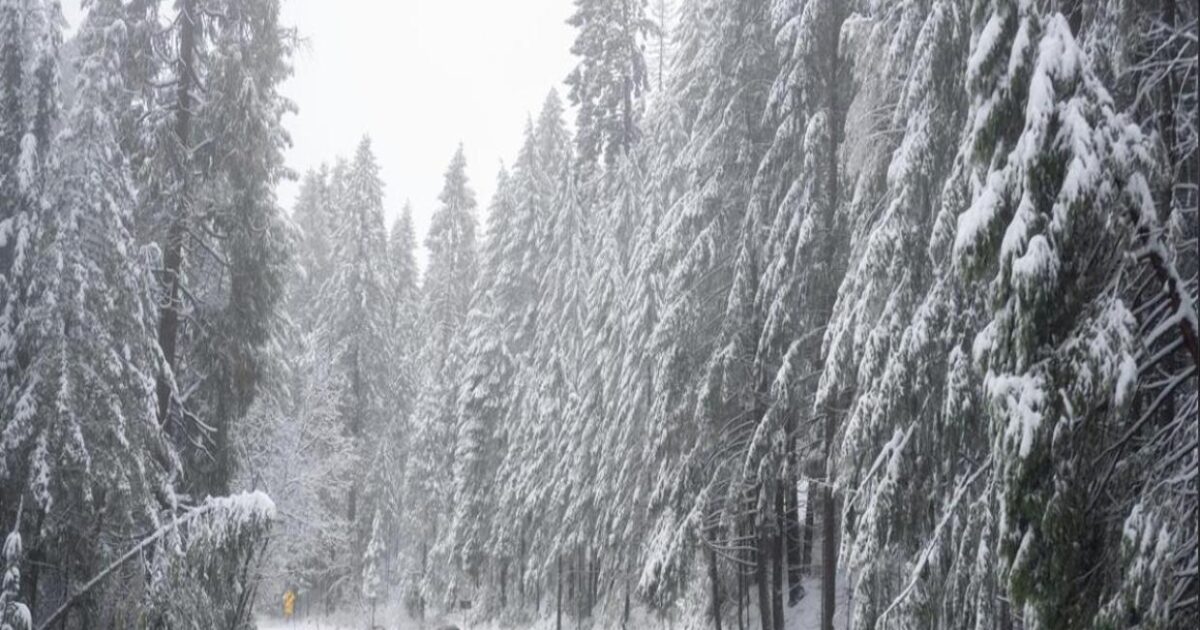
| Roads and highways | Snow, sleet, freezing rain, black ice and poor visibility | Northeast, Great Lakes, Midwest, Rockies, Sierra Nevada and Cascades |
| Water and wastewater | Frozen or burst pipes and frozen pumping and treatment equipment | Northern states, Great Lakes, Northeast and high-elevation western communities |
| Telecoms and digital | Ice on cables and equipment, power cuts, limited backup-generator fuel | Midwest, Northeast, northern states, Alaska and mountain communities |
| Supply chains and industry | Snow-covered routes, fuel-delivery limits, workforce access constraints | Northern states, Midwest, Rockies and major freight corridors |
The report gives some quantified context. More than 70 percent of US roads are in regions receiving at least five inches (12.7 centimetres) of annual snowfall, traffic speeds on snowy or slushy arterial roads may fall by 30 to 40 percent, and freeway speeds by five to 40 percent in heavy snow. It also recalls Winter Storms Fern and Gianna in early 2026, which caused extended outages on the Tennessee Valley Authority’s networks, and says several major New England gas pipelines were fully subscribed during the January–February 2026 cold period. The February 2021 storm, in which freezing conditions and fuel constraints caused widespread generation outages in Texas and parts of the South-Central US, is its example of how simultaneous energy failures amplify extreme cold.
What does the winter mean for individuals and businesses?
The report’s impacts are conditional, not confirmed disruptions. For individuals, it lists hypothermia and frostbite risks for outdoor workers, older adults and households with poor heating, falls and road accidents on ice, power cuts affecting people who rely on medical equipment, and restricted access to food, medicine and fuel in rural and mountain communities. For businesses, it flags reduced staffing where snow blocks commutes, delays to road freight in western mountain corridors and the northern US, and flooding that can interrupt deliveries and warehouse access in the southern Plains, Gulf Coast and Eastern Seaboard. It also notes higher heating costs and backup-generation needs, roof loads and flood damage to property, crop and livestock risks, and mixed effects for retail, tourism and hospitality, where mountain resorts may gain from snowfall while high winds and closures disrupt access.
What should organisations and individuals do?
For organisations, the report recommends monitoring the National Weather Service, NOAA and state and local authorities, and updating business continuity plans for remote working, temporary operating changes, emergency response and utility disruption. It advises flexible or remote work for staff commuting through affected areas, extra time for travel, deliveries and freight, inspections of heating, backup power, pipes, drainage, machinery and communications equipment, up-to-date employee contact details with welfare checks for people in affected areas, and alternative corridors, suppliers and delivery arrangements. For individuals, it advises following official warnings, avoiding non-essential travel during heavy snow, blizzards, freezing rain or extreme cold, checking flight, rail and road status before leaving, observing state-specific winter tyre and snow-chain rules, and keeping phones charged with identification, medication, emergency contacts, warm clothing, food, water and first-aid supplies in case of delays or outages. This is general guidance, not medical advice.
Frequently asked questions
Will the 2026–27 US winter be warm?
NOAA favours above-normal temperatures across much of the northern US, but equal chances in much of the Southwest and near-normal temperatures in parts of the Southeast. The report stresses that short, severe cold spells and snowstorms can still occur.
Does El Niño mean less snow?
The report does not give a snowfall forecast. It says seasonal outlooks cover temperature and rainfall tendencies, not the timing or severity of individual storms, and that the greatest winter travel exposure is in the Cascades, Sierra Nevada, Rockies, Great Lakes and Northeast.
Will weather affect Thanksgiving travel?
The report says the West Coast storm from 25 November to 01 December and possible heavy rain from the Gulf Coast to the Northeast overlap the holiday travel period. Check the National Weather Service and your airline, rail or road operator before leaving.
Which areas are most exposed?
The report names the Northeast and New England, the Great Lakes and Midwest, Texas and the Southern Plains, the Pacific Northwest and California, the Rockies and Northern Plains, and Alaska as priority regions.
Where do I check warnings and what is the emergency number?
Check the National Weather Service at weather.gov and your state and local authorities. In an emergency, dial 911.
Download the full report now
Datasurfr’s Special Report, Winter Weather in US: Forecast & Outlook 2026–27, carries the full short-term and seasonal outlooks, the regional outlook for all US regions and territories, the infrastructure exposure assessment, the historical disruption review, the impact assessment and the complete recommendations for individuals and organisations. Download the full report now to brief your operations and continuity teams.
Filed under: AmericasThreat Intelligence Special Reports