KEY TAKEAWAYS:
- MitKat’s 13 November 2026 assessment describes a renewed wave of low-intensity, politically motivated sabotage in Bangladesh, the most persistent since the BNP government of Prime Minister Tarique Rahman took office on 17 February 2026. Since 01 November, Dhaka and at least 21 districts have recorded crude bomb explosions and dozens of vehicle arson attacks, mostly at night and aimed at symbolic and transport targets.
- Authorities attribute the campaign to the banned Awami League (AL) and affiliates such as the Bangladesh Chhatra League; the report notes that police attribution has not been independently verified and that its figures are minimums.
- Physical harm has so far been limited, with one death reported. MitKat rates the situation at Level 2.0 (localised sabotage) on a five-level scale. Daytime business in Dhaka continues, and risk rises after dark.
- The next flashpoints are the AL’s announced 14–16 November programme and December, which includes Sheikh Hasina’s stated return plan, Martyred Intellectuals Day (14 December) and Victory Day (16 December).
- The most likely scenario is sustained low-intensity sabotage, and a mass-casualty shift is not indicated by current tactics.
- The report advises businesses to protect night-time travel, build in schedule buffers, and set clear escalation thresholds.
This summary draws on MitKat’s assessment and attributes its claims, ratings and probabilities to it. The situation is politically contested, the report says counts vary between sources, and its figures are minimums, so treat every number as a reported figure.
What is happening in Bangladesh in November 2026?
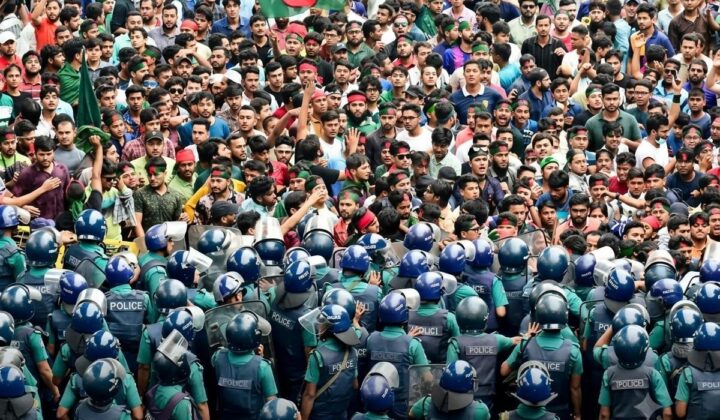
According to the report, Bangladesh is seeing a renewed wave of low-intensity, politically motivated sabotage. Since 01 November, Dhaka and at least 21 districts have recorded multiple crude bomb explosions and dozens of vehicle arson attacks, aimed at university campuses, court premises, police facilities, metro stations, memorials of the 2024 uprising, buses and party offices. Police Headquarters recorded 33 explosions and 13 vehicle arson incidents on 10–11 November alone, and more than 100 explosions were reported overnight near the Padma Bridge south toll plaza in Shariatpur during a blockade. Authorities attribute the campaign to the banned Awami League and its affiliates, notably the Bangladesh Chhatra League, which enforced a nationwide shutdown on 10 November in support of an eight-point charter that includes lifting the ban on the party and reversing the death sentence handed to former Prime Minister Sheikh Hasina. The report adds that police attribution has not been independently verified. Physical harm has been limited so far, with one death and a small number of injuries, but the tempo has risen since 07 November.
What is the background to the unrest?
The report traces the confrontation to the July–August 2024 student-led uprising that ended Sheikh Hasina’s 15-year rule; it cites a UN estimate of at least 1,400 deaths, many attributed to security forces and Awami League supporters. The interim government of Muhammad Yunus banned all Awami League activities in May 2025, and in November 2025 the International Crimes Tribunal sentenced Hasina to death in absentia. The BNP won a two-thirds majority in the 12 February 2026 election, with Jamaat-e-Islami as the main opposition. Hasina has been in India since August 2024, has said she will return around December 2026, and applied for a new passport and national identity card on 09 November; the report says Dhaka rejected the request and will pursue extradition. Garment-sector wage protests overlap with the unrest: BGMEA reported disruption at 529 factories on 01 November, and a wage board formed the same day will set a revised structure from 01 December, with payment from January 2027.
Where are the hotspots?
The report rates the main locations as follows. It places the campaign mainly in Dhaka, in the south-western Awami League strongholds and along the Padma Bridge routes, and in the industrial belts around Dhaka.
| Location | What the report records | Risk rating |
| Dhaka: Shahbagh and Dhaka University | Repeated blasts at the TSC area, Faculty of Business Studies and the DU metro station | Medium |
| Dhaka: courts and government zones | Blasts outside the CMM and District Judge Court; Supreme Court and Secretariat heavily protected | Medium |
| Gopalganj | Clashes and a Dhaka–Khulna highway blockade; three BGB platoons deployed | Medium |
| Shariatpur: Padma Bridge (Jajira) | More than 100 blasts reported during an overnight toll plaza blockade | Medium |
| Faridpur | Fatal arson of a parked bus on 10 November | Medium |
| Gazipur, Savar–Ashulia, Narayanganj | Wage protests, factory closures and vehicle arson; BGB platoons deployed | Medium |
| Chattogram, Rajshahi, Khulna, Khagrachhari | Vehicle arson and attacks on BNP offices | Low |
What is driving the escalation?
The report lists six drivers. The banned Awami League has no formal political channel, so street action is its main way to show strength. Hasina’s December return plan gives supporters a focal date, and the government’s position that she will face arrest or execution makes a negotiated outcome unlikely. The December calendar, including Martyred Intellectuals Day (14 December) and Victory Day (16 December), is symbolic, and police say the attacks aim to overshadow Victory Month. The security response has been hardline, with 898 Awami League-linked arrests reported in the first week of November, which disrupts networks but also feeds narratives of persecution. Inflation and wage demands create crowds and grievances that political actors can exploit, and fact-checkers have flagged old photos and unrelated videos circulating as scenes from the shutdown.
How serious is the security situation right now?
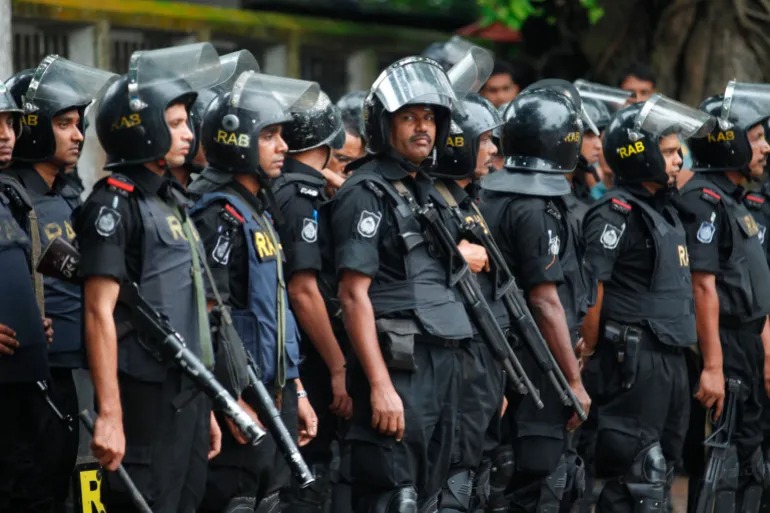
As of 13 November, the report describes Dhaka as tense but functioning. Daytime business, transport and government activity largely continue, security forces remain in control, and risk rises after dark. MitKat rates the situation at Level 2.0 (localised sabotage) on a five-level scale: there is no curfew, no army deployment in cities, no internet restriction and no sustained closure of highways or ports. Police reported 62 arrests linked to blasts and arson over the four days to 11 November, and the Dhaka Metropolitan Police have reinforced checkpoints, night patrols and CCTV, with BGB platoons deployed in Gopalganj and the industrial zones. Near-term pressure points are the Awami League’s announced 72-hour programme on 14–16 November and the parliamentary session running from 09 to 18 November. Moving to Level 3.0 would need a clear change in pattern, such as daytime attacks in commercial districts, repeated fatalities or multi-day shutdowns that are widely observed.
What could happen next?
The report’s near-term assessment is below. It judges a shift to mass-casualty attacks as not indicated by current tactics, though arson of occupied vehicles is likely, and says mid-November to 16 December is the main window in which escalation beyond Level 2.0 is possible, though not the most likely outcome.
| Next 1–4 weeks | Probability | What it means for business |
| Sustained low-intensity sabotage (baseline) | Most likely | Night-time travel risk, public transport gaps and intermittent closures near campuses and courts; spikes around 14–16 Nov and early December |
| Gradual containment | Likely | Arrests, checkpoints and the garment wage settlement reduce incidents; residual risk on symbolic dates |
| Wider escalation around December | Less likely | Multiple deaths, a sustained shutdown or confrontation over Hasina’s return could trigger army deployment, road suspensions and factory closures |
Over three to twelve months, the report judges chronic political-security tension the most likely outcome, with recurring cycles of Awami League programmes, sabotage and crackdowns. It notes that media reports describe an actual December return by Hasina as unlikely, but says a deferred or failed return would not remove the incentive to mobilise.
What does the unrest mean for businesses?
The report expects reduced attendance from shutdown calls, fear of bus arson and transport gaps, especially for shift workers and night shifts, and temporary factory closures in Gazipur, Savar–Ashulia and Mirpur that put production and export deadlines at risk. Offices near Shahbagh, the Secretariat, courts and Dhaka University may face access restrictions and early closures on programme days, and programmes announced at short notice on social media make scheduling less reliable. On logistics, arson risk deters bus and truck operators at night, highway blockades have hit the Dhaka–Khulna corridor and the Dhaka–Tangail highway, and blockades at the Jajira toll plaza disrupted the Padma Bridge link to the south-west, including Mongla port. Chattogram port is largely unaffected so far, though container movement from Dhaka-area factories is vulnerable. The report also flags investor sentiment and strains in Bangladesh–India relations.
What should organisations and individuals do?
For organisations, the report advises tracking Awami League, Chhatra League and Jubo League announcements and police advisories daily, flagging 14–16 November and 01–16 December, mapping staff homes, commute routes and sites against the hotspots, arranging vetted transport for shift workers and avoiding public buses after dark. During operations it recommends daylight-only critical travel and deliveries, avoiding overnight highway movement via the Padma Bridge and the Dhaka–Khulna corridor, remote work on shutdown days, staggered shifts, guarded depots, and verifying reports through official channels. On escalation it advises an immediate risk review after any multi-casualty incident, army deployment, curfew or internet restriction, pre-agreed thresholds for suspending travel or closing sites, activating continuity plans, and a call tree to account for all staff. For individuals, it advises avoiding political gatherings, party offices and the Shahbagh, TSC, court and Secretariat areas, minimising travel after dark, carrying photo identification, moving away from any explosion or fire without filming, verifying viral claims, and monitoring embassy alerts.
Frequently asked questions
Is Dhaka safe for business right now?
The report describes Dhaka as tense but functioning, with daytime business and transport largely continuing and risk rising after dark. It advises minimising night travel and checking current embassy and police advisories, because conditions can change quickly.
Which dates should businesses watch?
The report flags the Awami League’s 14–16 November programme, the parliamentary session to 18 November, 01 December, when the revised garment wage structure takes effect, and 14 and 16 December (Martyred Intellectuals Day and Victory Day), alongside any date announced for Hasina’s return.
Is mass-casualty violence expected?
The report says a shift to mass-casualty attacks is not indicated by current tactics, which mainly use small devices and arson at night, but it says arson of occupied vehicles is likely and lists the triggers that would raise the risk level.
Which official sources should I monitor?
The report lists the Dhaka Metropolitan Police (dmp.gov.bd), Bangladesh Police (police.gov.bd), the Ministry of Home Affairs (mha.gov.bd), Border Guard Bangladesh (bgb.gov.bd), ISPR (ispr.gov.bd), the US Embassy in Dhaka (bd.usembassy.gov) and India’s Ministry of External Affairs (mea.gov.in).
Download the full assessment now
MitKat’s assessment, Bangladesh Political Unrest & Security Outlook, carries the full historical timeline, district-level hotspot map, escalation ladder with recommended business postures, trigger table, scenario probabilities and detailed recommendations for organisations and individuals. Download the full assessment now to brief your security and operations teams.
Filed under: India-South AsiaRegional Risk Reviews