KEY TAKEAWAYS:
- Costa Rica holds general elections on 01 February, with ruling-party candidate Laura Fernández polling at the 40 percent threshold needed to avoid an April runoff.
- Rio de Janeiro’s Carnival (13–21 February) and US Mardi Gras events (17 February) bring predictable but significant travel and workforce disruption, while a new USD 45 TSA fee for non-REAL-ID air travellers takes effect nationwide from 01 February.
- Super Bowl LX in Santa Clara on 08 February is a National Special Security Event expected to generate a USD 1.4 billion regional economic impact alongside major travel restrictions.
- The month follows a volatile January in which US forces captured former Venezuelan President Nicolás Maduro in a military operation condemned by the UN, fatal ICE shootings triggered violent protests in Minneapolis, and a 2,000-mile North American winter storm killed at least 115 people.
- Chile’s Biobío and Ñuble regions remain under a state of catastrophe following wildfires that displaced roughly 50,000 people.
calendar still carries genuine operational risk. Elections, Carnival-season travel disruption and a new US federal ID fee sit alongside unresolved aftershocks from January’s US military operation in Venezuela, deadly immigration-enforcement unrest in Minneapolis, and a historic winter storm. Businesses with regional footprints should treat February as a month of predictable, calendar-driven disruption layered on top of still-unsettled political and security risk.
Which elections and political events could disrupt business operations?
Costa Rica holds general elections on 01 February to select a president, two vice presidents and all 57 members of its Legislative Assembly. Ruling-party candidate Laura Fernández is polling at the 40 percent threshold required to avoid an April runoff, though 2022’s 40 percent abstention rate makes turnout a live variable; heightened security and localised road closures are expected around polling stations. In Brazil, the National Confederation of Municipalities is mobilising mayors in Brasília on 24 February against unfunded federal mandates carrying a combined multi-billion-real fiscal impact on the country’s 5,568 municipalities — a dispute businesses with municipal contracts should watch for delayed payments and credit-spread deterioration. Honduras remains in a sensitive transition after Nasry Asfura’s austere 27 January inauguration, with limited handover coordination raising the risk of short-term delays in procurement, regulatory decisions and public contracting.
What large-scale public events could disrupt business operations?
Rio de Janeiro’s Carnival runs from 13 to 21 February, with peak disruption concentrated between 14 and 17 February as road closures, transport diversions and workforce absenteeism affect central districts and the Sambadrome area, even as hospitality and retail see a short-term revenue boost. Super Bowl LX takes place at Levi’s Stadium in Santa Clara on 08 February; as a National Special Security Event it brings Secret Service and FBI resources, a 30-nautical-mile flight restriction, and traffic congestion across the Bay Area, with a combined USD 1.4 billion regional economic impact projected alongside the 2026 FIFA World Cup. US Mardi Gras celebrations on 17 February, centred on New Orleans, are expected to bring a predictable, localised boost in tourism spending alongside road closures and strained public services. A postponed Mexico City public transport strike remains a live risk into the first half of February, with wage and subsidy talks between unions and municipal authorities still unresolved.
What changed for US-bound and domestic travellers in February?
From 01 February, the US Transportation Security Administration requires a nonrefundable USD 45 fee from domestic air travellers who lack a REAL ID-compliant identification, processed through new biometric “TSA Confirm.ID” kiosks. Roughly 6 percent of the 2.5 million daily US air travellers currently lack compliant ID, and compliance rates vary sharply by state — notably California, where only 58 percent of licence holders are compliant — raising the likelihood of checkpoint bottlenecks and missed flights in the fee’s first two weeks. Corporate travel teams are advised to confirm all travelling staff hold a compliant ID or valid passport for domestic legs.
What geopolitical and security risks are carrying into February?
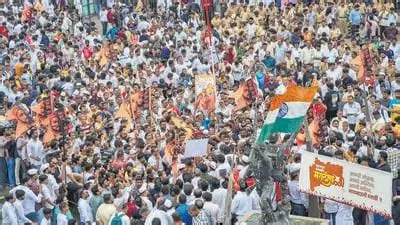
January’s US military operation in Venezuela, which resulted in the capture of former President Nicolás Maduro, has drawn condemnation from the UN and several governments as a violation of international law, and continues to generate uncertainty for regional stability, energy markets and Venezuelan/Caribbean airspace and shipping compliance. In Minneapolis, fatal shootings by federal immigration agents during an enforcement surge triggered over 1,000 protests and a National Guard deployment; businesses in affected commercial districts should anticipate continued volatility, reduced foot traffic and elevated security costs. Separately, the US suspension of immigrant visa processing for 75 countries from 21 January continues to complicate workforce planning for firms reliant on international talent pipelines, particularly in technology, consulting and research.
What environmental and climate risks carried over from January?
Chile’s Biobío and Ñuble regions remain under a state of catastrophe after wildfires burned more than 30,000 hectares, displaced roughly 50,000 people and destroyed over 300 homes; fire and air-quality risk is expected to persist through the summer season. A 2,000-mile North American winter storm in late January affected roughly 230 million people across the US, northern Mexico and Canada, killed at least 115 people and knocked out power to more than a million customers — a reminder that severe-weather contingency plans should remain active into February for supply chains touching the affected interstate corridors.
What should businesses do to prepare?
Organisations with Americas exposure should confirm travelling staff hold REAL ID-compliant documentation ahead of 01 February, build in buffer time around Rio Carnival and Super Bowl week logistics, and monitor Costa Rica’s election result and Brazil’s municipal-finance standoff for policy signals. Firms with Venezuela, Minneapolis or Chile exposure should keep crisis-response and workforce-continuity plans active, given each situation remains unresolved heading into February.
Frequently asked questions
Does the new USD 45 TSA fee apply to all US air travellers?
No. It applies only to domestic travellers aged 18 or over who lack a REAL ID-compliant identification or another federally approved form of ID; the roughly 94 percent of travellers who are already compliant are unaffected.
Is Rio Carnival a public holiday in Brazil?
Carnival is not a mandatory national public holiday, but many public offices and private employers observe it, resulting in uneven service availability and partial slowdowns in Rio from 13 to 21 February.
What is the current status of the Chile wildfires?
Chile’s Biobío and Ñuble regions remain under a state of catastrophe as of late January 2026, with containment uneven in rural and forested zones and fire risk expected to continue through the summer season.
Download the full report now
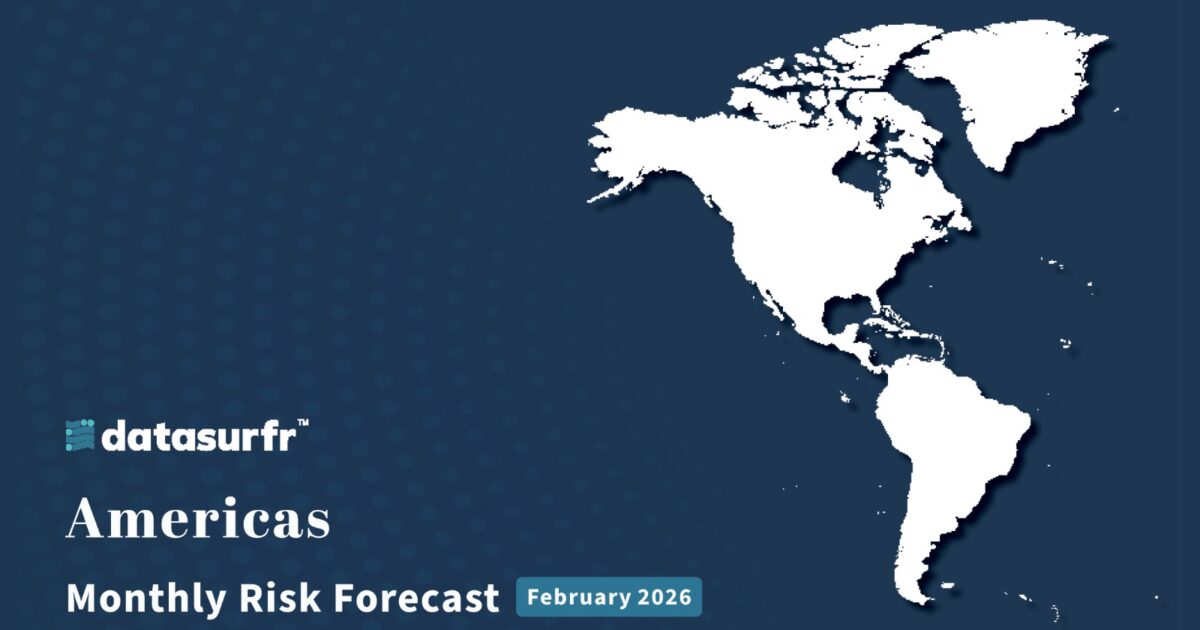
datasurfr’s Americas Monthly Risk Forecast for February 2026 carries the complete country-by-country breakdown, an escalation snapshot covering Venezuela, Iran, Russia-Ukraine and Israel-Hamas, and a full regional event calendar. Download the full report now to brief your risk and continuity teams.
Filed under: AmericasRegional Risk Reviews