
Blogs
Corporate Security Risk Intelligence
The New Landscape of Corporate Security In an age of heightened geopolitical volatility, rapid digitalisation, and growing environmental uncertainty, Corporate Security Risk Intelligence has become

The New Landscape of Corporate Security In an age of heightened geopolitical volatility, rapid digitalisation, and growing environmental uncertainty, Corporate Security Risk Intelligence has become

Operational Context Planned maintenance outages are routine in Kafr Al-Sheikh and typically last 3–5 hours. Impacts concentrate in mixed residential–commercial areas and at utility nodes

Operational Context E10 is a primary east–west artery linking Abu Dhabi’s urban core with inter-emirate corridors (E11/E311/E611). Planned lane closures on E10 typically displace traffic

Operational Context Belgium’s national protest days routinely produce single-day, high-impact disruption concentrated in Brussels. Transport unions and broad coalitions typically mobilize around the EU Quarter
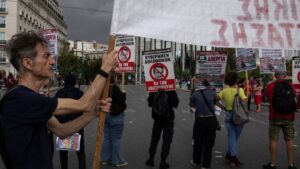
Operational Context Athens experiences recurring 24-hour transport stoppages tied to labor actions and national protest days. Disruption concentrates in the historic/civic core (Syntagma–Omonia axis) and

Overview of the Istanbul Dam Water Levels 2025 Situation As per recent reports, Istanbul dam water levels 2025 have dropped drastically due to persistent drought

Operational Context This brief covers the evolving Israel–Hamas negotiation track centered on hostage/prisoner exchanges and limited ceasefire understandings. Historically, such arrangements reduce immediate kinetic activity

Operational Context Indonesia’s large, unionized workforce and dense industrial corridors (Greater Jakarta, West/East Java) mean wage disputes can rapidly scale into multi-city actions. Tactics typically

Operational Context Situational briefs provide concise, operationally relevant snapshots of civic events affecting mobility, security, and business continuity. London routinely hosts high-attendance demonstrations in central

Operational Context This brief outline operational risks from the EU’s Entry/Exit System (EES), which replaces passport stamping with biometric registration (face + fingerprints) for non-EU