What’s Happening in Tanzania?
Tanzania Civil Unrest and Internet Blackout have dominated the national landscape following the 2025 general elections, held on 29 October 2025 from 0800 hours local time (0500 UTC) to 1600 hours local time (1300 UTC) across the mainland and Zanzibar.
The Tanzania elections were marked by widespread unrest, a prolonged internet blackout, and security crackdowns in major cities particularly Dar es Salaam as polling took place amid a constrained political environment and opposition boycotts.
Civil Unrest and Curfew
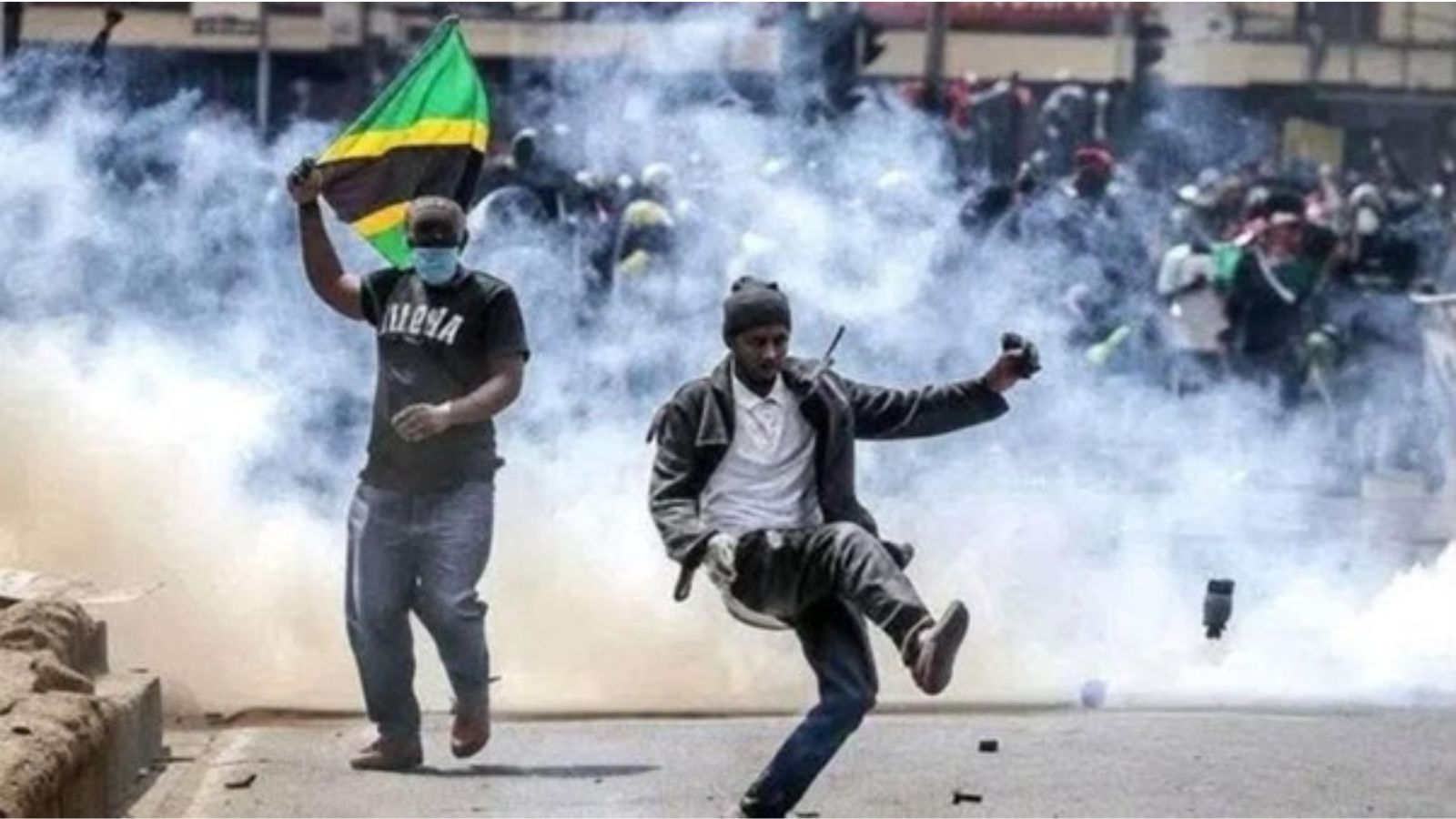
Violent protests erupted across Dar es Salaam soon after polling began on 29 October, signaling the depth of Tanzania Civil Unrest and Internet Blackout conditions. Unrest was also reported in Mbeya, Tunduma, Songwe, and Arusha. Protesters blocked roads, set fires to infrastructure including a rapid transit bus and a petrol station and vandalized polling centers in Kimara, Ubungo, and Magomeni districts. The Inspector General of Police imposed an evening curfew in Dar es Salaam at 1800 hours local time (1500 UTC) on 29 October. Clashes between police and demonstrators resulted in casualties, including one civilian and one police officer, with reports suggesting possible higher numbers. By 30 October, Tanzania Civil Unrest and Internet Blackout continued, as police used gunfire and tear gas to disperse demonstrators, while violence spread to other urban centers.
Security Deployment and Operational Impact
The military was deployed, and police checkpoints were established throughout Dar es Salaam and nearby regions on 30 October. The government ordered all public servants to work from home, resulting in operational slowdowns across public services. Schools and colleges were closed, while the US Embassy issued a security alert due to the ongoing protests. Transportation and logistics operations were severely affected, with Tanzania Civil Unrest and Internet Blackout causing extended delays near government offices and major intersections.
Communications Blackout
A nationwide internet disruption described as a digital blackout occurred on election day, affecting platforms such as X (Twitter), WhatsApp, and Facebook. The internet blackout persisted through 30 October, compounding the communication breakdown across the country.
The Tanzania Civil Unrest and Internet Blackout made it difficult for observers and media outlets to verify information and confirm incidents in real time during the Tanzania elections.
Election Outcome Status
Preliminary results were expected within 24 hours of poll closure (by 30 October); however, the National Electoral Commission has up to seven days to release final results. Low voter turnout was reported in several regions due to unrest, curfew enforcement, and restricted mobility.
Outlook
In the aftermath of the Tanzania elections, President Samia Suluhu Hassan is widely expected to secure victory under constrained conditions following opposition boycotts and disqualifications. Curfew enforcement, internet restrictions, and military deployment reflect the intensity of the Tanzania Civil Unrest and Internet Blackout, which is expected to continue in the short term. The ongoing presence of security forces near key infrastructure, government offices, and transport hubs may cause movement restrictions and logistics delays.
Operational slowdowns in trade, public services, and private enterprises are expected for the next 24–72 hours, while urban unrest risks remain elevated in Dar es Salaam, Arusha, Mbeya, and Zanzibar.
In the coming week, sporadic protests are likely near political offices, transport hubs, and urban centers, with continued supply chain disruptions.
Over the next 2–6 weeks, authorities are expected to restore order through tightened enforcement, selective arrests, and gradual restoration of internet connectivity. However, political tensions linked to Tanzania Civil Unrest and Internet Blackout may resurface during result announcements or court rulings.
Post-Election Background
Reports confirm that the 2025 Tanzania elections took place in a highly constrained political environment, following the disqualification and detention of opposition candidates. Major opposition parties, including CHADEMA, boycotted the process, citing lack of transparency and demanding reforms within the Independent National Electoral Commission (INEC). These developments fueled Tanzania Civil Unrest and Internet Blackout conditions across Dar es Salaam, Arusha, and Mbeya, marking one of the most tense electoral periods in recent years.
Recommendations
- Use phone trees, SMS, or satellite devices for communication during internet disruptions.
- Activate emergency staffing plans and cross-train employees to maintain continuity.
- Hold shipments in secure hubs until routes stabilize; expect 24–72 hour delays in Dar es Salaam.
- Coordinate with local security vendors for patrols and maintain evacuation or lockdown plans.
- For emergency support:
- INEC Hotline: +255 22 211 0000
- Police Emergency: 112
Stay Ahead of Threats with Datasurfr Predict
MitKat’s Datasurfr Predict delivers accurate, real-time, and contextualised data to help organisations respond swiftly to physical, environmental, and cyber threats.
With Sam AI, our AI Agent not only provides context for unfolding events but also analyses vetted historical data to forecast how events are likely to evolve and their potential impact using industry and location-specific probabilistic scores. Book a free demo today and see how Datasurfr Predict can transform your risk preparedness.