Operational Context
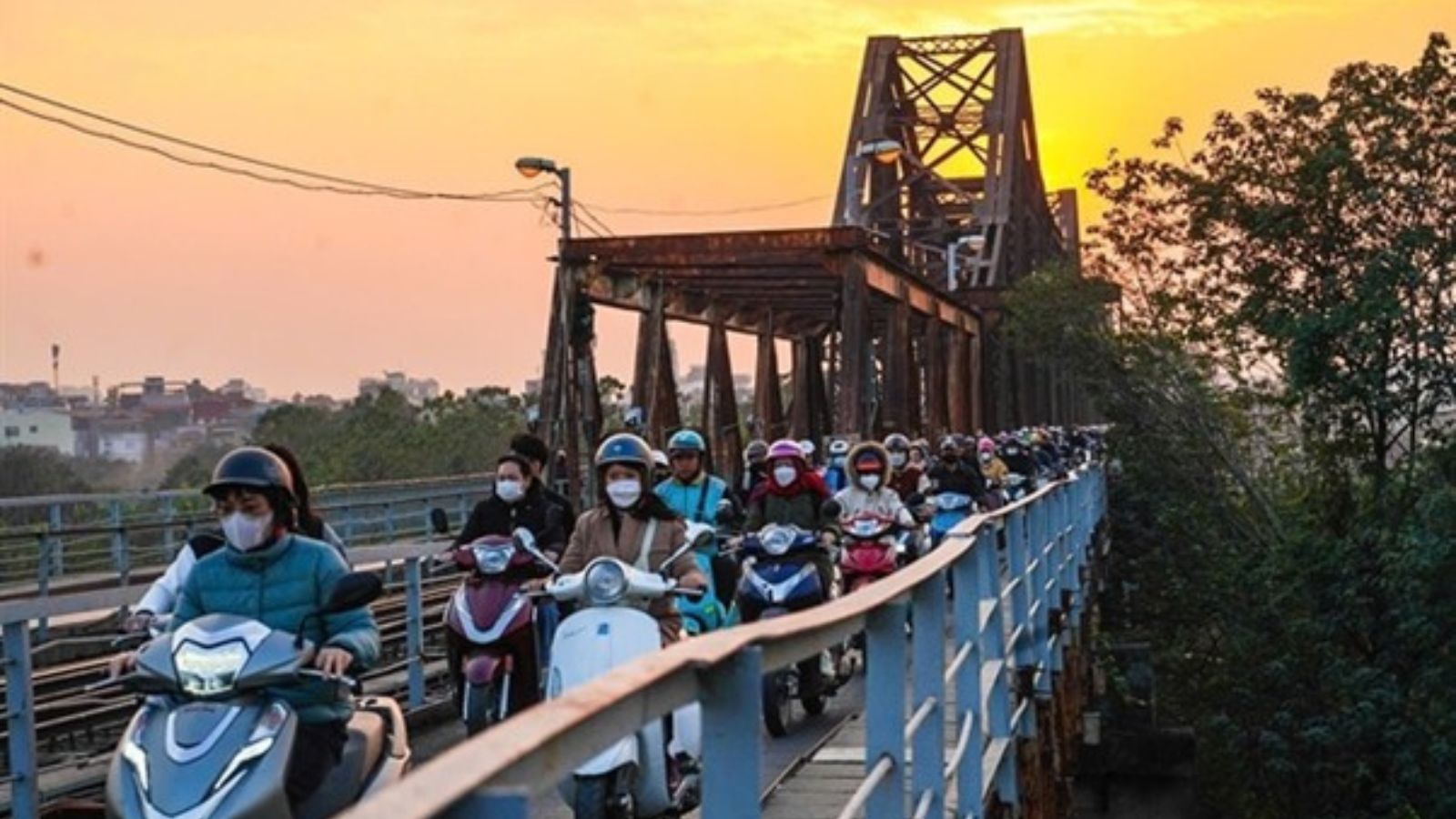
The Long Bien Bridge is a key arterial crossing over the Red River, linking Hoan Kiem (city center) with Gia Lam (eastern suburbs).
Constructed in 1902 and now a heritage structure, the bridge supports limited vehicular traffic under strict load conditions.
The announced two-month vehicle ban (Nov 1–Dec 31, 2025) for major maintenance represents a high-impact urban disruption, given the bridge’s historical role in daily commuter and logistics movement.
Past incidents such as the Trần Nhật Duật Bridge closure (2023) and Vinh Tuy Bridge fire restrictions (2024) — reveal a consistent pattern:
- Sharp traffic diversion to alternate crossings (Chuong Duong, Vinh Tuy).
- Prolonged congestion in the Old Quarter and approach roads.
- Increased logistics costs and reduced workforce productivity.
Executive Summary
- Date of Event: 1 November – 31 December 2025
- Location: Long Bien Bridge, Hanoi, Vietnam
- Risk Category: Travel Risk
- Severity Level: 4 / 5
- Confidence Score: 95 %
A vehicle ban on Long Bien Bridge for structural maintenance will severely affect mobility and logistics between central and eastern Hanoi. Traffic diversions via Chuong Duong Bridge and Vinh Tuy Bridge will experience chronic congestion, particularly during peak hours.
The prolonged two-month duration increases the likelihood of cascading economic and environmental impacts across Hanoi’s urban corridor.
Current Updates
Authorities have announced a full vehicular ban on Long Bien Bridge effective Saturday, 1 November 2025, until Wednesday, 31 December 2025.
The ban facilitates urgent repair and maintenance work on structural sections of the bridge deck and girders.
- Pedestrian and two-wheeler access will remain partially allowed.
- Public buses, trucks, and private cars must reroute via Chuong Duong Bridge or Vinh Tuy Bridge.
Traffic police units have been deployed to monitor diversions and manage flow along Tran Nhat Duat, Ngoc Lam, and Nguyen Van Cu Roads.
Known Hotspots & Sensitive Zones
- Primary Impact Zone: Long Bien Bridge and its approach roads – Tran Nhat Duat (Hoan Kiem side), Ngoc Lam (Gia Lam side)
- Alternative Routes: Chuong Duong Bridge, Vinh Tuy Bridge, Thanh Tri Bridge
- Congestion Corridors: Nguyen Van Cu, Tran Quang Khai, Yen Phu, and Pham Van Dong Roads
- Sensitive Districts: Hoan Kiem (Old Quarter), Gia Lam (residential–industrial zone)
Impact on Transportation & Services
- Roads: Complete vehicle ban on Long Bien; heavy congestion on Chuong Duong Bridge and alternate corridors.
- Public Transport: Rerouted bus lines; delays on Red River crossings.
- Logistics: Delayed deliveries (1–3 hrs typical delay); rerouting increases fuel and time costs.
- Emergency Services: Response times may be extended due to gridlocked corridors.
- Air Quality: Expected short-term rise in emissions from idling vehicles.
Recommendations
- Mobility Management:
- HR and Admin teams should identify affected commuters and implement flexible or remote work options.
- Encourage carpooling or company shuttle services for essential personnel.
- Disseminate alternative route maps and peak-hour avoidance advisories.
- Operations & Logistics:
- Reroute deliveries through Chuong Duong Bridge during off-peak hours.
- Maintain buffer inventory of critical goods for continuity.
- Inform clients and suppliers of potential delays and adjust service SLAs.
- Business Continuity:
- Activate BCP protocols for prolonged transport disruption.
- Provide temporary accommodation support for critical staff near workplaces.
- IT teams to reinforce remote access systems for continuity.
- Public & Client Communication:
- Issue transparent updates on delivery schedules and customer service changes.
- Use local-language advisories via SMS and Zalo for field staff coordination.
Multi-Dimensional Impact
- Mobility: High – 60–90 min added travel time citywide.
- Business Operations: Moderate-to-high – operational delays and elevated costs.
- Safety: Moderate – accident risk on overburdened routes.
- Environmental: Elevated vehicular emissions and noise pollution.
- Public Sentiment: Rising frustration, risk of public complaints or minor protests.
- Regulatory: Managed under Hanoi Department of Transport; fines likely for non-compliance.
Situation Outlook
Over the next two to three months, extended congestion and logistical challenges are expected due to the ongoing bridge closure and repair activities. The baseline scenario anticipates that the ban will proceed as scheduled, with severe yet manageable congestion mitigated through diversions, and bridge repairs completed by 31 December 2025. A moderate escalation could arise from adverse weather conditions or engineering delays, extending the closure into January 2026 and heightening traffic pressure and public fatigue. In a severe case, a major structural complication or an incident involving alternate routes could trigger citywide gridlock, disrupt business operations, and place significant strain on emergency response systems.
Emergency & Monitoring Channels
- Police: 113
- Fire: 114
- Ambulance: 115
- Hanoi People’s Committee
- Hanoi Department of Transport
- Vietnam Ministry of Transport
Strategic Takeaway
Treat Hanoi’s Red River crossings as a high-disruption corridor through December 2025. Lead with remote work, delivery rescheduling, and logistics rerouting via Chuong Duong and Vinh Tuy. Continuous monitoring and adaptive routing are critical to maintaining operational efficiency. Stay ahead of operational risks with real-time alerts, scenario modeling, and expert advisories with datasurfr’s Predict. Start your 14-day free trial of Datasurfr’s Risk Intelligence Platform today.