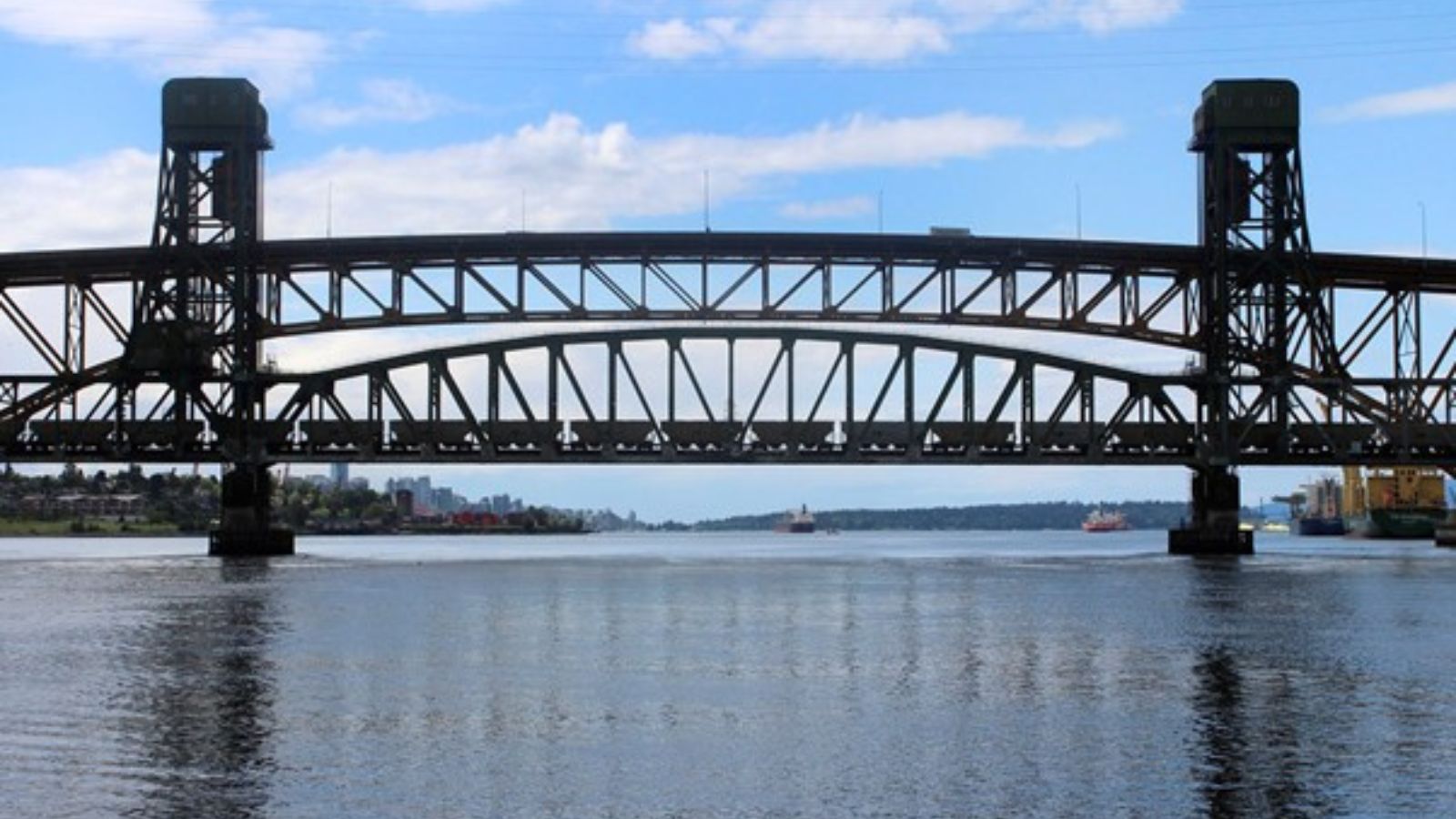
Executive Summary for the Shipping Disruption in Vancouver
A shipping disruption has halted vessel movements through the Second Narrows channel, affecting terminal access and rail connectivity. Immediate impacts include vessel delays, cargo backlog, and potential supply chain congestion across Metro Vancouver.
- Event Date: 26 February
- Location: Burrard Inlet / CN Second Narrows Rail Bridge, Metro Vancouver, British Columbia, Canada
- Risk Category: Critical Infrastructure
- Severity Level: 4 / 5
- Confidence Score: 70 %
Operational Context
On 26 February 2026, a reported incident involving damage to the CN Second Narrows Rail Bridge resulted in halted or restricted vessel transits through the Second Narrows channel into Burrard Inlet. This corridor provides marine access to key Port of Vancouver terminals and supports integrated rail-maritime operations. Historical analogues in the region indicate disruption windows ranging from several hours for minor incidents to multiple weeks where structural repairs or salvage operations are required. Current projections suggest 48 hours to 14 days of restricted marine movement for inspection and clearance, with potential extension to two to 12 weeks if structural remediation or obstruction removal is necessary. While a full port shutdown remains unlikely, localized berth and rail service constraints present moderate-to-high operational risk.
Known Hotspots & Sensitive Zones
- High Impact Zones: Second Narrows marine corridor; Burrard Inlet access route; Neptune Terminals (North Vancouver); Vanterm and Centerm container terminals; CN rail bridge infrastructure.
- Medium Impact Zones: Trans Mountain Pipeline terminals, Westridge Marine Terminal, Stanovan Refinery (Burnaby), North Shore industrial zones.
- Low Impact Zones: Road corridors not directly adjacent to marine terminals, though subject to secondary congestion.
Bridge strikes and berth closures in Metro Vancouver have historically led to multi-day logistics disruption and heightened regulatory scrutiny.
Impact on Transportation & Services
Marine traffic into Burrard Inlet is restricted pending structural inspection and clearance, resulting in delayed or rerouted container and bulk carriers. Rail services crossing the Second Narrows bridge may face operational constraints until integrity assessments are complete. Increased trucking volumes are likely as terminals attempt cargo redistribution, potentially elevating congestion along Marine Drive, Hastings Street, and Highway 1 feeder routes. Port scheduling systems may experience operational strain due to rapid rescheduling and berth reallocation. Extended restriction could affect refinery feedstocks, containerized imports, and bulk commodity exports.
Recommended Action
- Organizations should activate maritime disruption contingency plans and establish a cross-functional Incident Response Team within one hour of notification.
- Initiate twice-daily coordination with port authorities, CN Rail, and Transport Canada for verified status updates.
- Prioritize critical cargo and implement rerouting strategies through alternate gateways or feeder services where feasible.
- Secure waterfront assets and pre-position spill response resources in case of secondary environmental risk.
- Conduct a 72-hour supply chain exposure review, tracking demurrage, diversion costs, and contractual obligations.
- Strategically, businesses should diversify routing options and formalize alternate port agreements to mitigate future chokepoint risk.
Multi-Dimensional Impact
Increased truck volumes and terminal congestion may strain local road networks and emergency response times in North Vancouver and Burnaby, compounding community and environmental concerns.
Emergency Contacts
- Emergency Number: 911
- Vancouver Fraser Port Authority Operations Centre: portvancouver.com/
Situational Outlook
The baseline scenario anticipates limited structural damage, allowing phased reopening of the channel within 24–72 hours, with manageable vessel backlogs and temporary rail adjustments. A moderate escalation over the next seven days could involve extended marine restrictions and partial berth capacity reduction, generating multi-day supply chain delays and elevated trucking reliance. A severe scenario, though lower probability, would involve substantial structural repairs or obstruction removal extending beyond two weeks, triggering vessel diversion to alternate West Coast ports and sustained logistics realignment. Current indicators support a constrained but potentially extendable disruption window requiring continuous monitoring.
Strategic Takeaway
The CN Second Narrows incident underscores the vulnerability of integrated marine and rail chokepoints within Metro Vancouver’s critical infrastructure network. While immediate life-safety risks appear limited, supply chain disruption and port congestion may carry material economic consequences. Proactive coordination, cargo prioritization, and alternate routing strategies are essential to preserve operational continuity.
Stay ahead of operational risks with real-time alerts, scenario modeling, and expert advisories with datasurfr’s Predict. Start your 14-day free trial of Datasurfr’s Risk Intelligence Platform today.