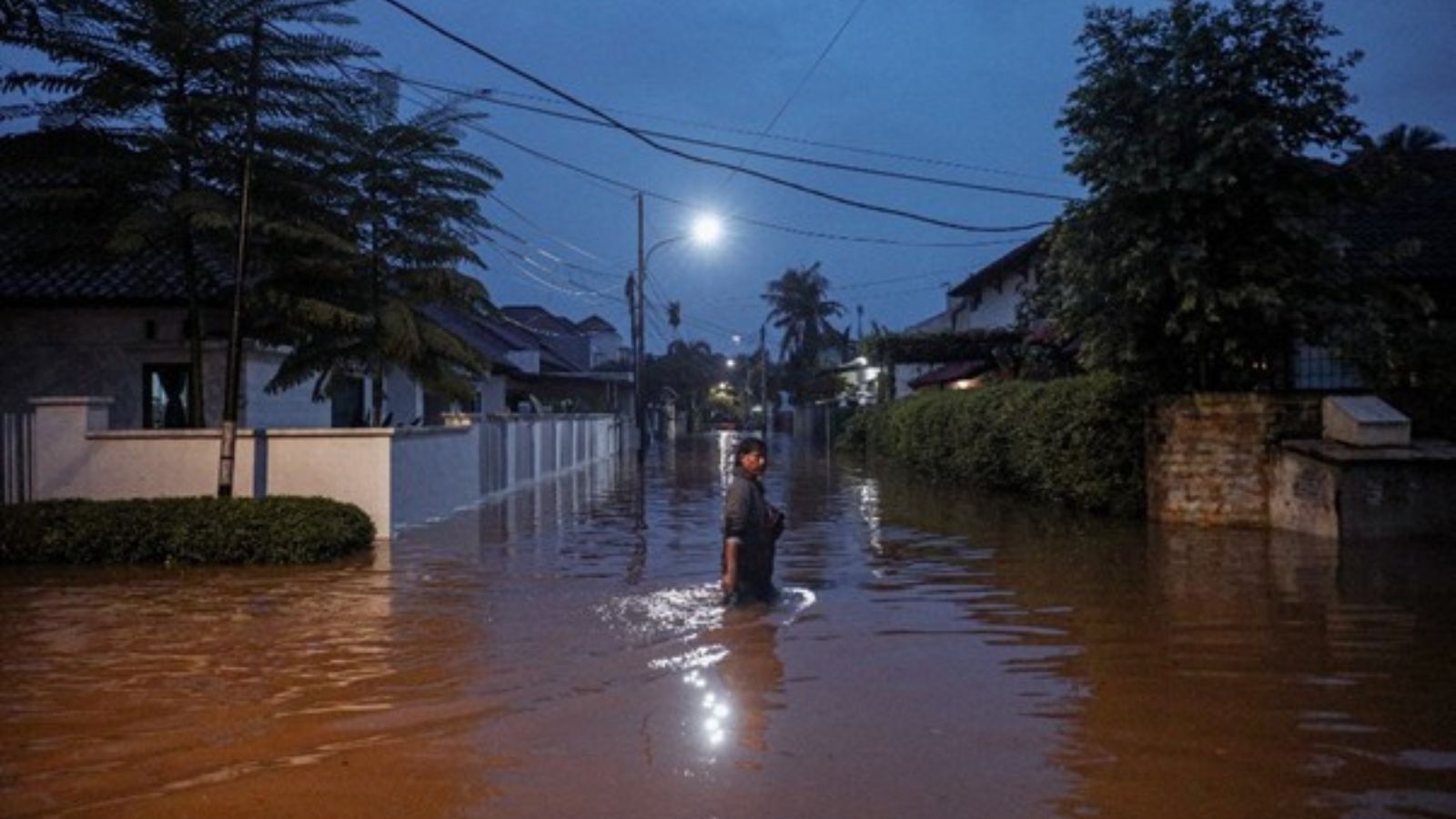
Executive Summary for the Flooding in East Jakarta
Overnight rainfall on 20 February caused significant flooding in East Jakarta, with Kebon Pala reporting inundation exceeding 1.2 metres and residents sheltering on upper floors. Authorities have mobilized response teams. Major transport and utility disruption is likely over the next 24–72 hours.
- Event Date: 20 February
- Location: East Jakarta, Jakarta, Indonesia
- Risk Category: Natural Disasters
- Severity Level: 4 / 5
- Confidence Score: 75 %
Operational Context
Jakarta experiences recurrent monsoonal flooding during January–February, particularly in low-lying districts with constrained drainage capacity. East Jakarta, including Kebon Pala and Duren Sawit, has historically recorded water depths between 1.2–1.5 metres during peak rainfall events. Floodwaters typically persist 24–72 hours depending on pumping operations, retention pond management, and rainfall continuation. Rapid-onset urban flooding in dense residential clusters often produces cascading effects, including road closures, localized power outages, logistics disruption, and temporary displacement. Seasonal recurrence and drainage system limitations elevate both humanitarian exposure and business continuity risk.
Known Hotspots & Sensitive Zones
- High-impact zones: Kebon Pala (Duren Sawit), low-lying residential RT clusters with water levels above one metre; local access roads and ground-floor properties.
- Medium-impact areas: Feeder routes including Jalan Raya Bogor approaches and adjacent arterial corridors vulnerable to spillover flooding; nearby Bekasi retention pond zones managing downstream flow.
- Low-impact areas: Elevated districts not directly affected by drainage overflow.
Flood recurrence in January–February suggests elevated probability of additional inundation if rainfall persists.
Impact on Transportation & Services
Urban flooding has disrupted local road networks, with minor RT lanes temporarily impassable. If water spreads to feeder arteries, congestion could intensify across East Jakarta corridors. Concurrent metropolitan rail disruptions are compounding commuter pressure on road transport and Transjakarta services. Localized power distribution units and traffic signal cabinets face short-circuit risk, increasing the likelihood of temporary outages. Small businesses in inundated areas are suspending operations, and last-mile logistics are experiencing delivery delays due to blocked routes and depot inaccessibility. Telecommunications networks remain largely operational but may face intermittent service degradation in flooded blocks.
Recommended Action
- Organizations should activate flood response protocols immediately, designate an incident lead, and conduct staff safety roll calls.
- Enable work-from-home arrangements for employees in affected districts and restrict non-essential travel.
- Secure facilities by isolating electrical systems, elevating equipment, and deploying temporary flood barriers.
- Pre-position generators, pumps, and emergency supplies.
- Coordinate with local disaster authorities including BPBD and Jakarta municipal agencies.
- Longer-term, conduct structural flood-risk assessments, review insurance coverage, and integrate seasonal flood monitoring into enterprise risk management frameworks.
Multi-Dimensional Impact
Concurrent rail incidents and shallow flooding in other metro corridors are reducing diversion capacity, intensifying congestion and delaying emergency response. Airport access and freight mobility may experience secondary delays, increasing supply chain pressure across Greater Jakarta.
Emergency Contacts
- Emergency Number: 112
- Meteorology, Climatology, and Geophysical Agency: bmkg.go.id/
Situational Outlook
The most probable trajectory over the next 24–72 hours involves sustained localized flooding in Kebon Pala and adjacent RT clusters, with gradual water recession as pumping operations intensify and rainfall subsides. A moderate escalation scenario would see spillover into feeder roads such as Jalan Raya Bogor, extending transport disruption and utility outages for several days. Severe escalation, though lower probability, could occur if additional heavy rainfall or drainage failure expands inundation across multiple subdistricts, triggering wider evacuations and prolonged logistics paralysis. Overall, the situation remains fluid and dependent on precipitation trends and drainage performance.
Strategic Takeaway
The East Jakarta flooding event underscores Jakarta’s persistent urban flood risk during peak monsoon periods. While impacts may remain localized, water depth, population density, and infrastructure exposure elevate operational and humanitarian concerns. Businesses should prioritize employee safety, asset protection, and supply chain contingency planning. Stay ahead of operational risks with real-time alerts, scenario modeling, and expert advisories with datasurfr’s Predict. Start your 14-day free trial of Datasurfr’s Risk Intelligence Platform today.