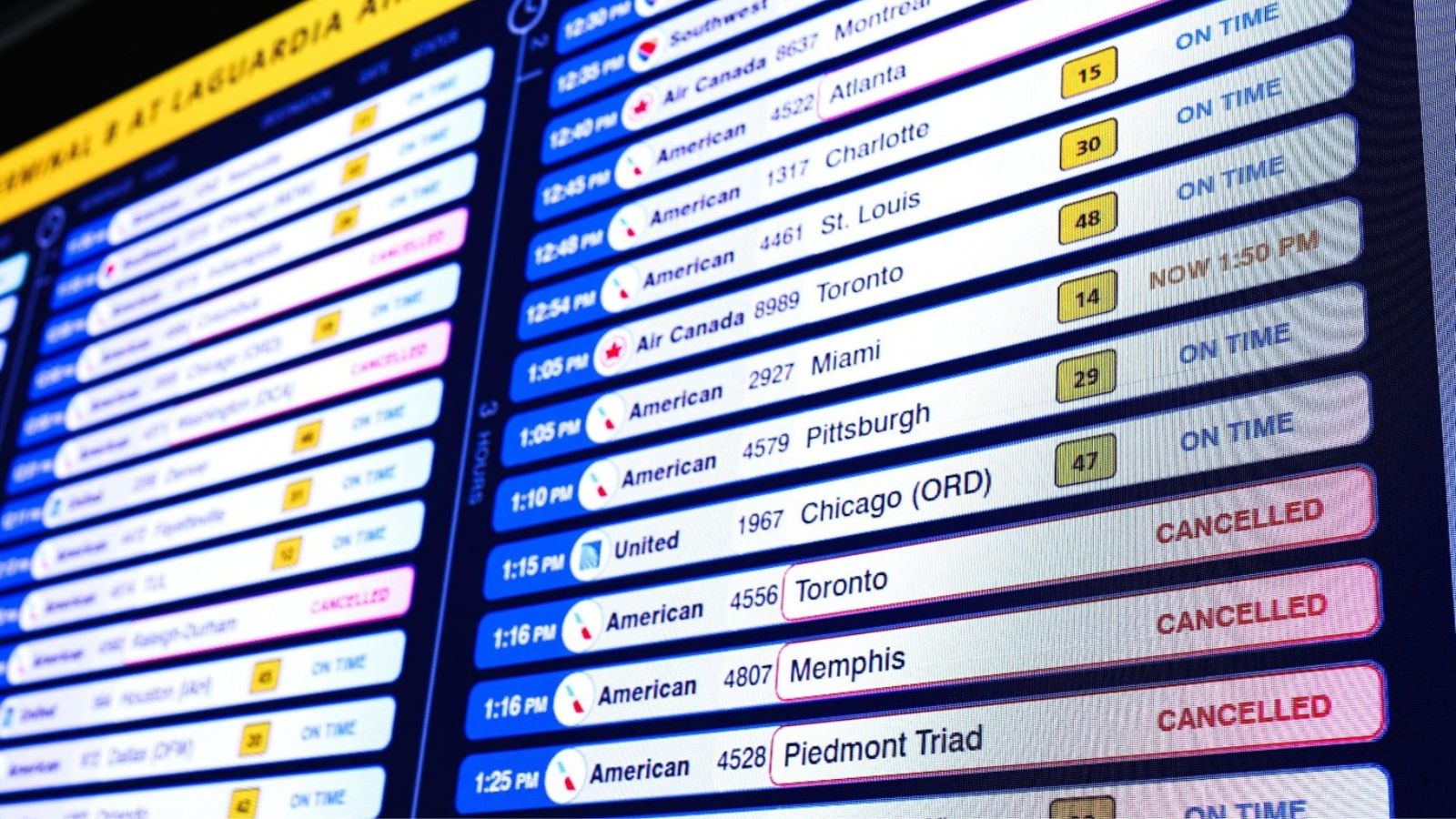
Executive Summary for the Air Transport Disruptions in New York
Air India cancelled flights to JFK and EWR on 23 February amid severe winter storm conditions. Major travel disruption, airport capacity reductions, and cascading airline delays are expected across the New York–New Jersey corridor for up to 72 hours, with secondary impacts lasting several days.
- Event Date: 23 February
- Location: Newark Liberty International Airport and New York Metropolitan Area, United States
- Risk Category: Travel Risks
- Severity Level: 4 / 5
- Confidence Score: 78 %
Operational Context
On 23 February, Air India pre-emptively cancelled scheduled services to John F. Kennedy (JFK) and Newark Liberty (EWR) in response to a winter storm Nor’easter affecting the U.S. Northeast. Nor’easters historically combine heavy snowfall, high winds, and coastal flooding, reducing airport throughput and forcing runway closures, de-icing delays, and ground operation suspensions. The highest operational impact window is 23–24 February, with residual disruption extending three to five days due to crew displacement, aircraft rotation imbalances, and backlog clearance. Regional authorities have issued blizzard and coastal flood warnings, and public transport suspensions further compound workforce mobility constraints.
Known Hotspots & Sensitive Zones
- High Impact Zones: JFK, Newark Liberty (EWR), LaGuardia (LGA), PATH rail links, Lincoln and Holland Tunnels, George Washington Bridge corridors.
- Medium Impact Zones: I-95, I-78, New Jersey Turnpike, Garden State Parkway, Long Island south shore communities vulnerable to coastal flooding.
- Low Impact Zones: Inland areas outside direct snowfall and surge impact zones.
The New York–New Jersey region experiences recurrent severe winter storm disruption, with historical precedents showing large-scale airline cancellations and commuter rail suspensions.
Impact on Transportation & Services
Airport operations are expected to operate at reduced capacity or temporary suspension during peak storm hours, with de-icing cycles and crosswind restrictions limiting departures and arrivals. NJ Transit services have been suspended, and road closures or vehicle bans may affect major interstate corridors. Freight movement through I-95 and port-linked routes will likely slow or halt temporarily, creating supply chain delays. Localized power outages may impact commercial facilities and data centres reliant on grid continuity. Businesses should anticipate workforce absenteeism, delayed cargo, and increased customer service demand.
Recommended Action
- Organizations should implement an immediate 48–72-hour travel freeze for non-essential travel to/from JFK and EWR and reroute critical travel via alternate hubs where feasible.
- Activate a cross-functional incident coordination team to manage travel disruption, logistics rerouting, and staff welfare.
- Pre-authorize remote work arrangements and emergency accommodation for stranded personnel.
- Secure physical assets against wind and water exposure and verify backup power readiness.
- Maintain proactive communication with customers regarding service delays and revised timelines.
- Monitor advisories from the National Weather Service, Port Authority of New York and New Jersey, and state emergency management agencies.
Multi-Dimensional Impact
Curfews, school closures, and transit suspensions across affected counties will amplify workforce disruption. Emergency response resources may be strained, potentially delaying non-weather-related incident response.
Emergency Contacts
- Emergency Number: 911
- National Weather Service Alerts: weather.gov/
Situational Outlook
The baseline scenario anticipates heavy snowfall and strong winds producing single-day airport suspensions and major commuter disruption, with gradual restoration within 48–72 hours. A moderate escalation could involve prolonged runway clearance delays, multi-day flight cancellations, and cascading crew and aircraft displacement across transatlantic networks, extending operational disruption up to one week. Severe escalation, though lower probability, would entail extended power outages, coastal infrastructure damage, and prolonged airport closures, generating wider supply chain bottlenecks and regulatory scrutiny. Current indicators support high confidence in immediate travel disruption with variable downstream recovery timelines.
Strategic Takeaway
The Nor’easter represents a high-impact travel risk event for the New York metropolitan aviation network. While storm effects are time-bound, cascading airline disruption and logistics delays may persist beyond the initial weather window. Organizations should prioritize business continuity, travel risk management, and proactive stakeholder communication. Stay ahead of operational risks with real-time alerts, scenario modeling, and expert advisories with datasurfr’s Predict. Start your 14-day free trial of Datasurfr’s Risk Intelligence Platform today.