What are undersea cable disruptions and why do they matter in 2026?
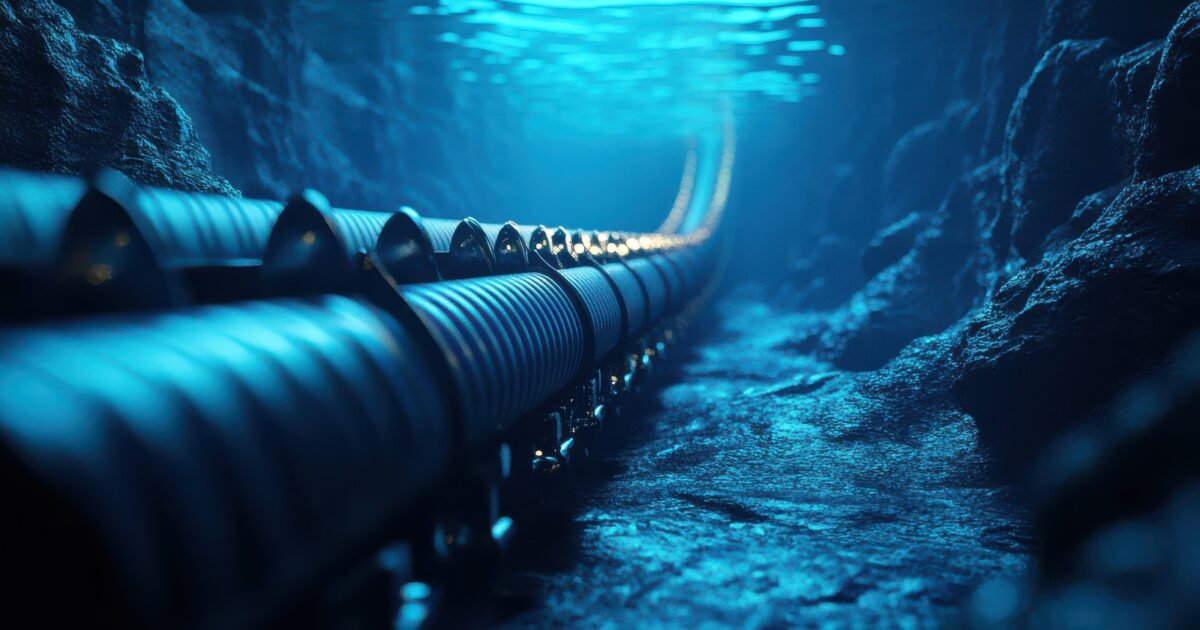
These are physical or technical failures of the subsea fibre-optic cables that carry about 99 percent of global intercontinental data traffic, including cloud services, financial transactions and digital communication. Most single-cable faults are accidental, with nearly 75 percent linked to fishing activity and ship anchoring and a smaller share to natural events and geopolitical risk. They matter more in 2026 because artificial intelligence workloads are straining capacity, around USD 10 trillion in financial transactions is supported daily, and ongoing conflict involving Iran has made repair areas in the Persian Gulf and the Red Sea high-risk. The result is that even a single cut can bring increased latency, service degradation and operational delays across several countries at once.
Which recent incidents have disrupted undersea cables?
The most significant recent event came in September 2025, when SEA-ME-WE 4 and India-Middle East-Western Europe (IMEWE) were severed near Jeddah, alongside FALCON, Global Crossing and Europe India Gateway, slowing Zoom, Microsoft Teams, email and cloud services from Microsoft, Google and Amazon Web Services across Saudi Arabia, India and the Arabian Peninsula. In February 2024, SEACOM, Asia-Africa-Europe 1 (AAE-1) and Europe India Gateway were cut in the Red Sea after a cargo vessel in a conflict-affected zone dropped anchor; Seacom reported a 78 percent year-on-year decline in its contribution to parent company earnings, linked to repair and rerouting costs. In the Baltic Sea, the C-Lion1 and BCS East-West Interlink fibre cables were damaged in November 2024, and the Estlink-2 power cable was severed on 25 December 2024, with the Eagle S vessel suspected of dragging its anchor; at least 11 incidents were recorded there between 2023 and 2024. Natural causes also feature: undersea rock movement in the Congo Canyon damaged the WACS and SAT-3 cables in August 2023, leaving Telecom Namibia with intermittent service and reduced connectivity to European points of presence.
Why are the Strait of Hormuz and the Red Sea such high-risk chokepoints?
The Strait of Hormuz carries approximately 97 percent of internet traffic for Gulf countries, with systems including FALCON, AAE-1, TGN-Gulf and SEA-ME-WE passing through it to connect the UAE, Qatar, Bahrain, Kuwait and Saudi Arabia. The Red Sea route through Bab el-Mandeb carries nearly 60 percent of India’s internet traffic to Europe. In April 2026, IRGC-linked Tasnim News Agency published a report mapping the Hormuz cables and describing the strait as a potential single point of failure for Gulf economies. Disruption can be carried out through anchor dragging, which is difficult to distinguish from an accident, so attribution is hard. The report assesses that Iran’s own reliance on these routes is lower than that of Gulf states, creating an asymmetric risk. Satellite capacity cannot replace subsea volumes, and repairs in conflict zones may stretch over several months because of access, insurance and vessel constraints.
What are the business continuity risks?
The core risk is loss of connectivity or degraded performance for services that depend on international links. A single subsea cable disruption may cost more than EUR 24 million per day, so a repair of 10 to 21 days could mean losses of at least EUR 504 million. Financial systems face transaction latency and reduced liquidity, while Global Business Services centres in India, the Philippines and Eastern Europe depend on stable connectivity, so delays in banking operations, transaction failures and cloud interruptions such as Microsoft Azure are possible. In India, Unified Payments Interface services may see temporary limitations. Landing-station concentration, as in Mumbai and Chennai, creates single points of failure, and most countries, including India, do not operate their own repair vessels. Risk also extends onshore: data centres in Bahrain and the UAE, including facilities associated with Amazon Web Services, were reportedly targeted during the conflict.
What should organisations do to prepare?
Organisations should first document which services, transaction types and outsourced functions depend on which cable systems, and confirm that primary and backup routes do not share landing stations or chokepoints. The report also recommends multiple connectivity providers, software-defined networking and SD-WAN for automatic rerouting, cross-region cloud failover, edge computing and caching, and satellite or VSAT backup for critical operations. Disruption scenarios should be written into disaster recovery plans and failover tested regularly, and vendor agreements audited for the number of supporting cable systems, repair timelines, monitoring and force majeure exclusions. Teams should watch for simultaneous multi-cable faults, disruptions that extend to landing stations or data centres, and IRGC or Houthi statements referencing infrastructure, and should join cross-sector information-sharing groups.
Frequently asked questions
How much global data traffic do subsea cables carry?
Undersea cables carry approximately 99 percent of global intercontinental data traffic and support around USD 10 trillion in daily financial transactions, according to datasurfr’s April 2026 report.
How long does it take to repair a damaged undersea cable?
Standard repairs typically take 10 to 20 days, but timelines stretch to several months in conflict zones; the March 2024 Rubymar incident needed four to six months, and the AAE-1 cable was out from December 2024 to April 2025.
What causes most undersea cable disruptions?
Human activity, mainly fishing and ship anchoring, accounts for nearly 75 percent of disruptions, with natural events such as earthquakes and geopolitical activity, including suspected sabotage, making up a smaller share.
Download the full report now
datasurfr’s Special Report on Undersea Cable Disruptions carries the full incident timeline, the regional impact overview for the Middle East and Africa, the Americas, Asia-Pacific and Europe, the scenario likelihood matrix and the complete recommendations. Download the full report now to brief your technology, risk and continuity teams.
Filed under: EMEAThreat Intelligence Special Reports