KEY TAKEAWAYS:
- South Africa holds its sixth Local Government Elections on 04 November 2026, electing councils across 257 municipalities from 136,790 IEC-certified candidates, against a backdrop of a fragmented 2021 baseline that produced 66 hung councils.
- The anti-illegal-immigration movement “March and March” has set 30 September as a fresh mobilisation deadline, a “second wave” following nationwide 30 June demonstrations that, per the report’s sourcing, have been linked to the deaths of four foreign nationals as of September.
- Persistent municipal service-delivery grievances — 47.3 percent non-revenue water nationally, roughly R119 billion in municipal electricity arrears to Eskom by June 2026, and widespread wastewater and billing complaints — continue to trigger localised protests and are increasingly intersecting with anti-migrant mobilisation in some areas.
- MitKat’s analysis outlines three risk scenarios through January 2027, ranging from contained disruption to widespread unrest, with the highest geographic exposure concentrated in Johannesburg, Ekurhuleni, Tshwane, eThekwini, Nelson Mandela Bay and Mangaung.
- Businesses should plan for overlapping sensitivity around the 30 September mobilisation deadline, the October campaign period, and the 02–04 November voting window.
South Africa’s municipal elections on 04 November 2026 arrive at a moment when local service-delivery grievances, national political fragmentation and mobilisation around undocumented immigration are converging. Here is what businesses operating in South Africa need to track between now and the new year.
What is South Africa voting on in November 2026?
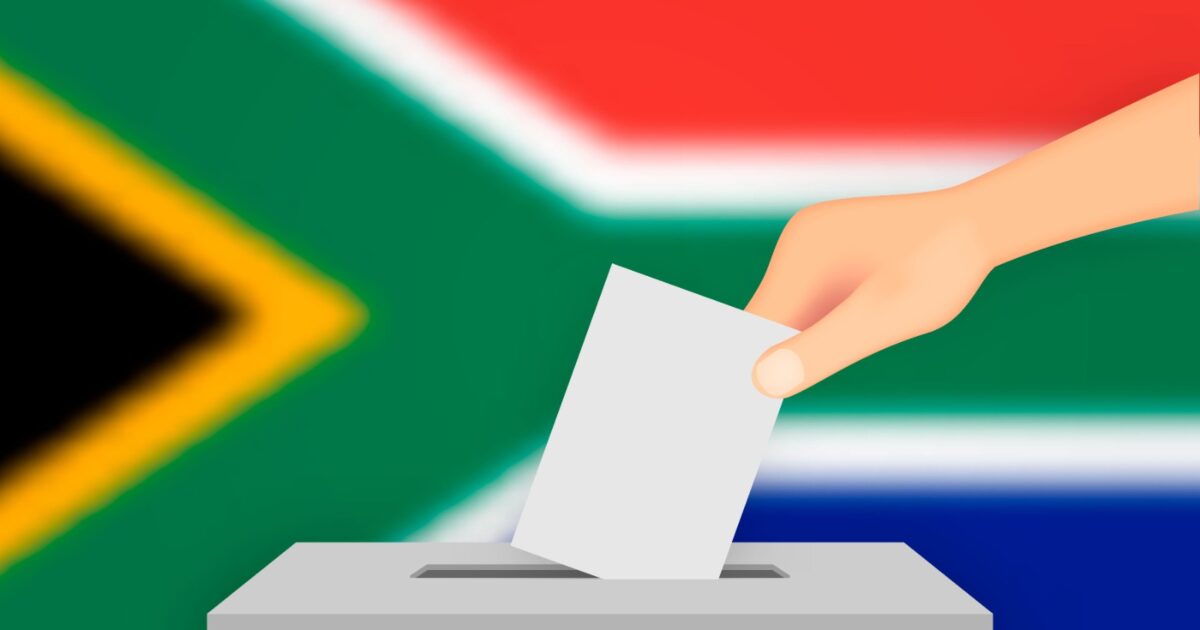
South Africa holds its sixth Local Government Elections on 04 November, electing municipal councils across 257 municipalities — eight metropolitan, 44 district and 205 local — that oversee electricity, water and sanitation, waste management, local roads and municipal planning. The Electoral Commission of South Africa (IEC) has certified 136,790 candidates, reflecting a highly fragmented field. The 2021 election left a fragmented baseline, with the African National Congress (ANC) taking 47.52 percent of the national municipal vote amid 45.87 percent turnout, and 66 of 213 contested municipalities producing hung councils, including five of the eight metros. The 2024 national election further reshaped the landscape, with the ANC’s share falling to 40.18 percent and no party securing a parliamentary majority, leading to the multi-party Government of National Unity. The electoral timetable creates several operational transition points rather than a single election-day risk window, notably the 30 September mobilisation-adjacent deadline, 23 September’s Code of Conduct signing, and the 02–04 November voting period.
What is the ‘March and March’ movement and why does 30 September matter?
March and March is an anti-illegal-immigration movement whose stated demands centre on enforcement of existing immigration law, stronger border controls, and prioritisation of South African citizens in access to employment, healthcare, education and informal trade. Following a nationwide mobilisation on 30 June 2026, the movement announced a Thursday marching cadence intended to continue for six months, and has set 30 September as a “second wave” and an unofficial deadline for undocumented foreign nationals to leave the country. Per the report’s sourcing, protests linked to this mobilisation have been associated with the deaths of four foreign nationals — two Mozambicans, an Ethiopian and a Malawian — as of September, and activity has expanded to target migrant settlements, foreign-owned shops and informal trading areas alongside Home Affairs and police facilities. Immigration enforcement has also become an increasingly prominent municipal-campaign theme, even though border control is formally a national rather than local government responsibility.
What municipal service-delivery grievances are shaping the election?
Water service failures remain a persistent driver of local mobilisation: the Department of Water and Sanitation’s 2025 No Drop assessment recorded non-revenue water at 47.3 percent nationally. Electricity grievances are compounded by municipal financial strain, with arrears owed to Eskom reaching roughly R112 billion in March 2026 and R119 billion by June 2026, increasing pressure on municipalities to pursue credit-control and supply-restriction measures that themselves can trigger protest. Waste management and wastewater deficiencies, highlighted in the 2025 Green Drop assessment, and disputes over municipal billing and administration — against a backdrop where only 15 percent of municipalities achieved clean audits in 2024–25 — round out the grievance picture. According to the report, these failures are unlikely to produce a uniform electoral swing to any single party; instead, dissatisfaction is expected to fragment across established parties, smaller parties, civic organisations and independents, with some communities threatening election boycotts and others emphasising the importance of voting to demand accountability.
What are the risk scenarios through January 2027?
MitKat’s analysis outlines three scenarios for the period through January 2027: a Contained Disruption scenario in which protest and mobilisation activity remains localised and manageable; a Localised Escalation at Flashpoints scenario in which specific metros or municipalities see intensified unrest tied to service failures or contested results; and a Widespread Unrest scenario in which overlapping grievances, immigration mobilisation and post-election disputes combine into broader instability. The report also flags the post-election window itself — covering potential results disputes and coalition formation in fragmented councils — as a distinct period of continued sensitivity beyond election day.
Which provinces and metros carry the highest exposure?
Johannesburg, Ekurhuleni, Tshwane, eThekwini, Nelson Mandela Bay and Mangaung combine recurring service-delivery grievances with established protest activity and competitive local contests, making them the metros of highest geographic exposure. KwaZulu-Natal and Gauteng are flagged as particularly sensitive for anti-immigration mobilisation and associated security risk given the concentration of March and March activity in Durban and surrounding areas. Secondary municipalities such as Lesedi and Makana can also generate significant localised disruption when a major service failure occurs, even outside the primary metro contests.
What should businesses do to prepare?
Businesses operating in exposed metros should monitor the 30 September mobilisation deadline, the October campaign period, and the 02–04 November voting window as three distinct sensitivity periods rather than a single election-day risk. Organisations with retail, logistics or last-mile delivery operations should identify alternative routes around known protest flashpoints, particularly where road blockades or municipal-office occupations have recurred, and maintain contingency plans for workforce movement disruption. Firms with foreign national staff or migrant-heavy workforces should assess duty-of-care exposure in areas where anti-immigration mobilisation has targeted foreign-owned businesses or informal trading areas. Given the multi-service nature of many local grievances, businesses reliant on municipal electricity, water or waste services should also build in contingency for localised service interruptions tied to protest activity or municipal financial strain.
Frequently asked questions
When is South Africa’s municipal election and what is being decided?
Election Day is 04 November 2026, when voters elect councils across South Africa’s 257 municipalities — eight metropolitan, 44 district and 205 local — with special voting taking place 02–03 November.
Has anti-immigration mobilisation in South Africa turned violent?
Per the report’s sourcing, protests linked to the March and March movement have been associated with the deaths of four foreign nationals as of September 2026, and activity has expanded to target migrant settlements and foreign-owned businesses alongside government facilities.
Which municipal services are the biggest source of protest in South Africa?
Water supply failures (47.3 percent non-revenue water nationally), electricity service disruptions tied to municipal debt of roughly R119 billion to Eskom, waste management deficiencies, and disputed municipal billing are the most commonly cited triggers.
Download the full report now
MitKat’s Special Report on the Pre-Election Analysis of South Africa’s Municipal Elections carries the complete metro-by-metro contest breakdown, the full early-warning indicator framework, and detailed geographic exposure assessments by province. Download the full report now to brief your risk and continuity teams.
Filed under: EMEAThreat Intelligence Special Reports