What is Jagannath Rath Yatra 2026 and when does it take place?
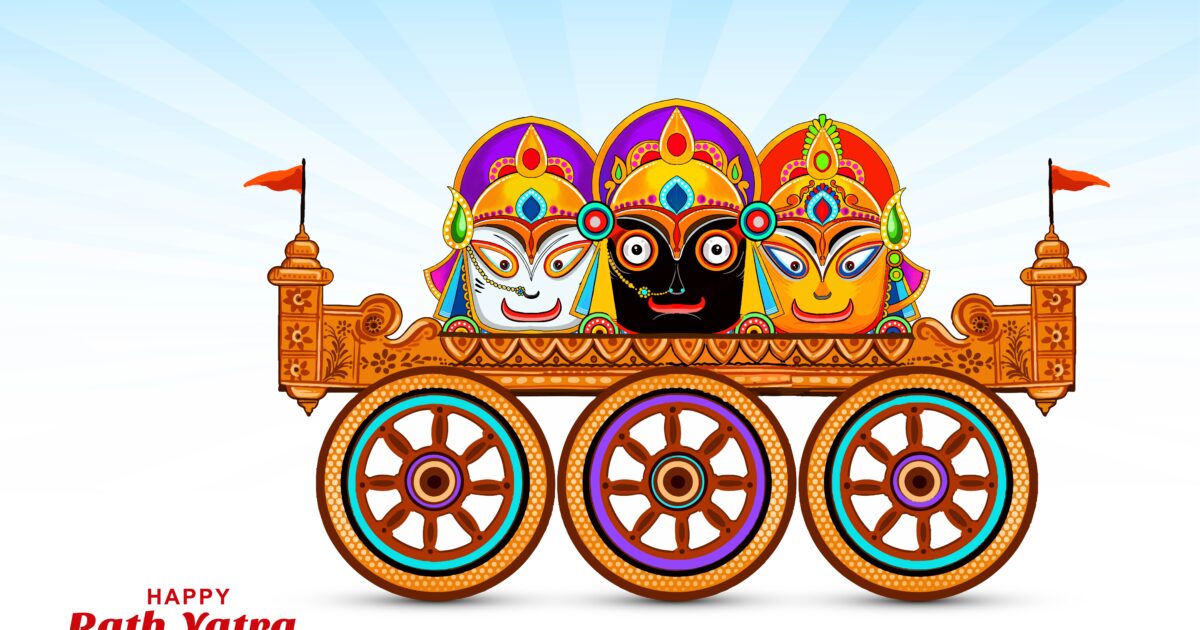
Jagannath Rath Yatra 2026 is one of India’s largest annual Hindu festivals, celebrated in honour of Lord Jagannath, Lord Balabhadra, and Goddess Subhadra. The festival commemorates the ceremonial journey of the deities from the Shree Jagannath Temple to the Gundicha Temple, approximately three kilometres away along the Grand Road (Bada Danda) in Puri, Odisha. In 2026, the Rath Yatra will be observed on 16 July, while the return journey, known as the Bahuda Yatra, will commence on 24 July, followed by concluding temple rituals.
Which cities are hosting Rath Yatra processions?
While Puri hosts the largest and most significant celebrations, similar processions will be organised in several cities across India. These include Ahmedabad (Gujarat), Ranchi (Jharkhand), Kolkata (West Bengal), Mahesh-Serampore (West Bengal), Cuttack (Odisha), New Delhi, Mumbai (Maharashtra), Hyderabad (Telangana), Bengaluru (Karnataka), and other locations where ISKCON temples and local Jagannath temple committees organise annual processions. The festival is expected to witness large gatherings, leading to extensive security deployments, traffic diversions, restrictions on vehicular movement near procession routes, and increased demand on public transport.
What are the key routes and high-impact areas?
In Puri, the procession follows the traditional route from the Shree Jagannath Temple (Singhadwara) to the Gundicha Temple via Bada Danda (Grand Road), Marichi Kot Chhak, Hospital Square, Balagandi, and Mausi Maa Temple. Primary high-impact areas include Bada Danda, Marichi Kot Chhak, Balagandi, Swargadwar, Temple Market, Singhadwara, Hospital Square, Mausi Maa Temple, VIP Road, Puri Beach Approach Roads, Aruna Stambha, Market Chhak, Gundicha Temple, Chakratirtha Road, and Atharanaia Entry Point. In Ahmedabad, the procession covers approximately 16 km from Jamalpur, passing through Raipur Chakla, Khadia, Panchkuva, Kalupur, Saraspur, Prem Darwaza, Dariyapur, Shahpur, Delhi Chakla, Ghee Kanta, Manek Chowk, and Khamasa. In Ranchi, the route is approximately 2 km from Jagannath Temple (Dhurwa) to Rath Mela Ground and Mausi Bari.
What are the traffic restrictions and security measures?
Puri Police have implemented a 24-hour No Vehicle Zone around Bada Danda and the core temple precinct. A total of 30 designated parking zones with capacity for nearly 23,840 vehicles have been established, along with 26 emergency safe zones along the 3-km Bada Danda. Vehicle movement is monitored using AI-based traffic management systems, 244 CCTV cameras, and drone surveillance. LED display boards, mobile LED units, bulk SMS alerts, and official social media channels provide real-time updates. 73 traffic aid posts and a 24×7 Traffic Control Centre have been set up. Ahmedabad Traffic Police have declared the entire procession corridor a No Parking Zone from 0000 hours on 15 July until the completion of the Rath Yatra on 16 July. Ranchi Traffic Police have implemented diversions and restricted vehicle zones from 16–25 July.
What are the impacts on businesses and individuals?
Businesses and logistics operating along procession routes may experience temporary road closures, altered traffic patterns, and heightened pedestrian activity, resulting in delayed travel and shipping. Commuters should anticipate congestion around temple precincts, major arterial roads, railway stations, and bus terminals. The festival period may also see increased demand for public transport and hospitality services. Individuals should plan journeys well in advance, avoid non-essential travel through procession routes, use public transport or designated parking, and remain vigilant in crowded areas. Health risks include exhaustion, dehydration, and heat-related illnesses, particularly during outdoor processions.
What should organisations and individuals do to prepare?
Organisations should review operational schedules, identify employees whose travel may coincide with procession routes, and minimise non-essential travel through affected city centres. Issue advance travel advisories highlighting traffic restrictions and alternative routes. Business continuity plans should account for potential delays affecting logistics and service delivery. Consider staggered work hours or flexible schedules. Ensure backup power systems are tested. Individuals should plan journeys in advance, allow extra travel time, avoid non-essential travel through procession routes, use public transport or shuttle services, and monitor official advisories. Stay hydrated, carry essential medicines, and keep belongings secure. Use real-time navigation tools and avoid sharing unverified information on social media.
Frequently asked questions
When is Jagannath Rath Yatra 2026?
Jagannath Rath Yatra 2026 will be observed on 16 July 2026, with the Bahuda Yatra on 24 July 2026.
Which cities have Rath Yatra processions?
Puri, Ahmedabad, Ranchi, Cuttack, Kolkata, Mahesh-Serampore, Bhavnagar, Mayurbhanj, and other cities with ISKCON temples.
What are the emergency contact numbers?
Puri Police WhatsApp: 8763199400; Puri Cyber Crime Helpline: 8280491300; Ahmedabad Traffic Police: 079-25630100; Ranchi Traffic Police: 0651-2317774.
Download the full advisory now
MitKat’s Special Advisory on Jagannath Rath Yatra 2026 carries the complete city-wise route maps, traffic management plans, and emergency contacts. Download the full advisory now to brief your travel and continuity teams.
Filed under: India-South AsiaThreat Intelligence Special Reports