KEY TAKEAWAYS:
- A 2026 study identified 219 hanging glaciers in the Alaknanda basin of Uttarakhand alone, with nearly a third of unstable ice concentrated in the Upper Alaknanda basin above settlements and pilgrimage routes.
- By 2030, infrastructure exposed to avalanche hazards is projected to grow 120% versus 2000, while the population living in high-risk zones is expected to rise 17%.
- The August 2026 Nepal disaster, triggered by a suspected ice avalanche near the Nepal-China border, left close to 3,000 people reported missing and 633 confirmed dead, showing how quickly such failures can cascade downstream.
- India does not yet have a dedicated, continuous early-warning framework for sudden hanging-glacier detachment, despite an INR 150 crore national GLOF mitigation programme covering Uttarakhand, Himachal Pradesh, Sikkim and Arunachal Pradesh.
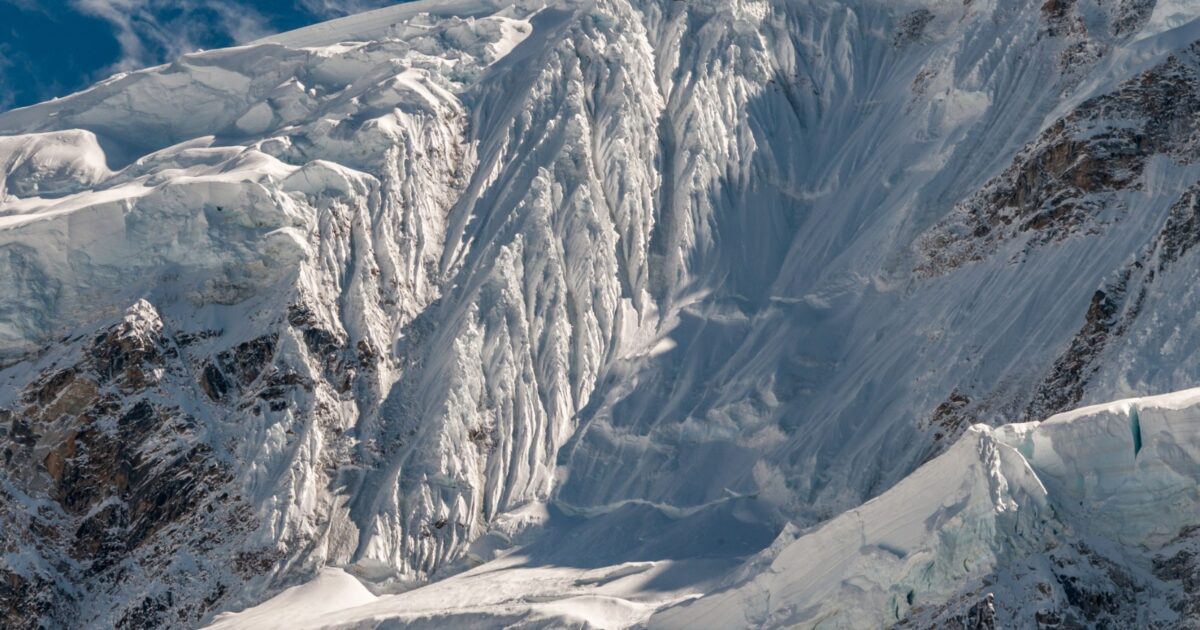
Himalayan hanging glaciers in India are ice masses perched on steep mountain slopes or valley walls that can detach suddenly, triggering ice or ice-rock avalanches, debris flows, flash floods and, in some cases, Glacial Lake Outburst Floods (GLOFs). Rising temperatures and shifting precipitation patterns are increasing instability across parts of the Himalayan cryosphere, and the risk is amplified by the concentration of settlements, tourism activity, hydropower projects and transport infrastructure within Himalayan valleys.
How many hanging glaciers are at risk in India?
A landmark April 2026 study identified 219 hanging glaciers within the Alaknanda basin of the Garhwal Himalayas in Uttarakhand alone, covering approximately 71.7 square kilometres and holding an estimated 2.39 cubic kilometres of ice. Nearly a third of this unstable ice is concentrated in the Upper Alaknanda basin, placing downstream settlements and infrastructure under direct threat. Across the wider Indian Himalayan arc, at least 858 hanging glaciers have been identified in an ongoing assessment spanning the 2,500-kilometre frontier.
What makes hanging glaciers dangerous?
Their danger lies in geometric and dynamic instability: rapid climate warming weakens their structure, allowing sudden detachment and massive ice-and-rock avalanches. These collapses frequently trigger cascading, multi-hazard disasters rather than isolated events, blocking rivers, creating flash floods and displacing glacial-lake water to cause GLOFs. Simulations for the Badrinath-Mana sector indicate avalanche debris flows could exceed 50 metres in height, threatening hydropower projects, roads and bridges. By 2030, infrastructure exposure to these hazards is projected to rise 120% against 2000 levels, with the at-risk population growing 17% over the same period.
What have recent disasters shown?
On 26 August 2026, a suspected ice avalanche or ice-rock collapse near the Nepal-China border triggered a major flood and debris-flow event along the Lhende Khola-Bhote Koshi-Trishuli river system, leaving nearly 3,000 people reported missing and 633 confirmed dead, alongside extensive damage to settlements, roads and bridges. While the event occurred outside India, it demonstrated how high-altitude cryospheric failures can rapidly cascade into cross-border disasters. The February 2021 Chamoli disaster in Uttarakhand, in which a hanging ice mass detached from Raunthi peak, killed nine people, left over 140 missing, and destroyed the Rishiganga hydropower plant while damaging the Dhauliganga plant.
What is India doing to manage this risk?
India’s disaster-risk framework is currently centred on glacial lakes and GLOFs rather than hanging glaciers specifically. The National Disaster Management Authority’s GLOF guidelines, the National Glacial Lake Outburst Flood Risk Mitigation Programme (with an INR 150 crore outlay across Arunachal Pradesh, Uttarakhand, Sikkim and Himachal Pradesh), and the SACHET national alert portal all provide relevant infrastructure. However, as of September 2026, India does not have a separate nationwide hanging-glacier management framework, and satellite observations remain periodic rather than continuous — leaving a monitoring gap between assessments in which sudden detachments could occur undetected.
What should businesses do?
Organisations operating in or dependent on Himalayan regions should maintain heightened monitoring of weather, river-level, flood and glacial-lake advisories, review employee travel and field-movement plans, and defer non-essential deployments to vulnerable areas during adverse weather. Business Continuity Plans should specifically account for road and bridge closures, power and telecommunications disruptions, workforce displacement and supply-chain delays, with alternate access routes, suppliers and communication channels identified in advance.
Frequently asked questions
Which Indian region has the highest hanging-glacier risk?
The Alaknanda basin in the Garhwal Himalayas of Uttarakhand is assessed as very high risk, with 219 mapped hanging glaciers and simulated avalanche flows near Badrinath-Mana exceeding 50 metres.
Does India have an early-warning system for hanging glaciers?
Not a dedicated one. Existing frameworks focus on glacial lakes and GLOFs; hanging-glacier-specific continuous telemetry and detachment alerts are not yet integrated into a nationwide system.
What industries are most exposed to hanging-glacier risk?
Hydropower, road and bridge infrastructure, tourism and pilgrimage-dependent hospitality, and supply chains reliant on road corridors through Uttarakhand, Himachal Pradesh, Jammu and Kashmir and the northeast Himalayan region.
Download the full report now
MitKat’s Special Report on Himalayan hanging glaciers carries the complete regional risk assessment, a state-by-state breakdown of government measures and funding, the institutional gaps in current monitoring, and detailed recommendations for individuals and organisations. Download the full report now to brief your risk and continuity teams.
Filed under: India-South AsiaThreat Intelligence Special Reports