KEY TAKEAWAYS:
- Ganeshotsav 2026 began on 14 September and culminates in large-scale idol immersion processions on Anant Chaturdashi, 25 September, with restrictions in several cities extending into the morning of 26 September.
- The festival is most prominent in Maharashtra, particularly Mumbai and Pune, with substantial celebrations also in Karnataka (Bengaluru) and Telangana (Hyderabad). Heavy-vehicle bans, road closures and parking restrictions are in effect across key Mumbai corridors including the JVLR and the Lalbaug-Kalachowki stretch of Dr. B.A. Road, as well as in Navi Mumbai, Thane, and Vasai-Nalasopara-Naigaon;
- Mumbai Police have also prohibited gatherings of five or more people and banned loudspeakers and firecrackers under the Maharashtra Police Act. Pune, Bengaluru (around Halasuru Lake) and Hyderabad (around Kukatpally and IDL Tank Road) face their own sets of road closures and traffic diversions tied to immersion routes.
- Businesses with facilities or staff movement near these corridors should expect delays rather than sustained city-wide disruption, with the risk of secondary congestion on alternative routes.
Ganesh Visarjan, the immersion ceremony that closes India’s 11-day Ganeshotsav festival, brings some of the year’s largest processions to Mumbai, Pune, Bengaluru and Hyderabad. Here is what’s closed, what’s restricted, and how to plan around it.
What is Ganesh Visarjan and when does it take place in 2026?
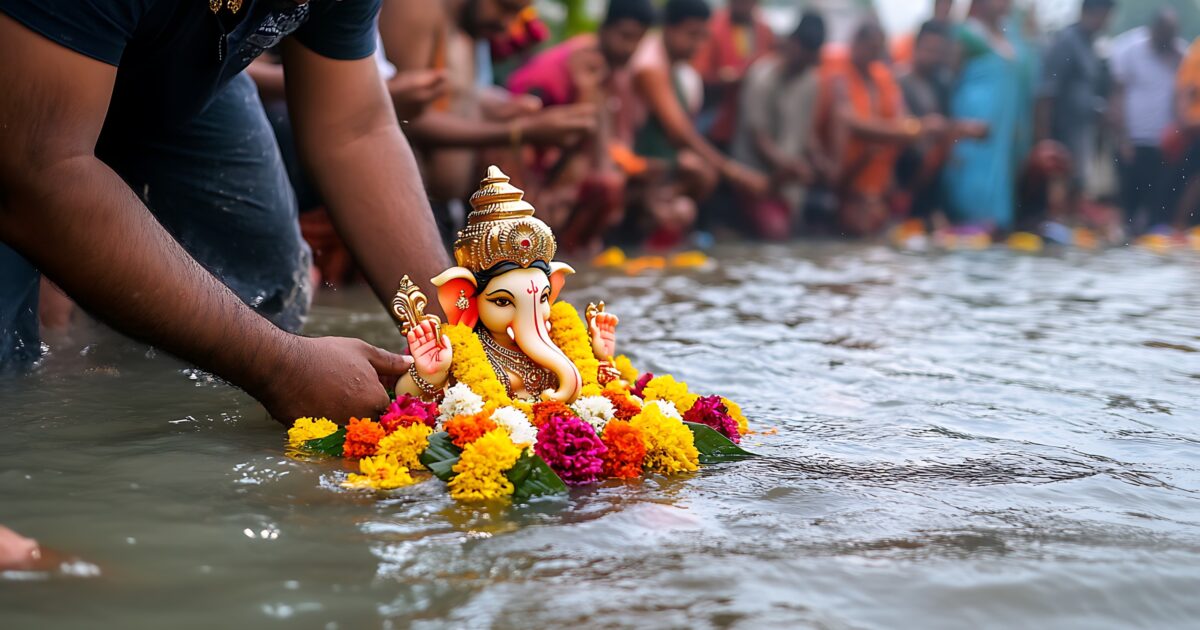
Ganesh Visarjan marks the concluding immersion ceremony of Ganeshotsav, the Hindu festival commemorating the birth of Lord Ganesha. In 2026, the festival commenced on 14 September, with devotees installing Ganesha idols in homes and public pandals; the 11-day celebration culminates in Anant Chaturdashi on 25 September, when idols are immersed in water bodies following large-scale processions. The festival is particularly prominent in Maharashtra, especially Mumbai and Pune, with substantial celebrations also in Karnataka and Telangana. Large gatherings, temporary pandals and immersion activities are expected to increase pedestrian and vehicular movement around religious and commercial areas throughout the period, with the most significant congestion concentrated around the 25 September immersion processions and continuing into the morning of 26 September in several cities.
Which areas in Mumbai will see the most disruption?
Heavy vehicles are prohibited on both carriageways of the Jogeshwari-Vikhroli Link Road (JVLR) from 1000 hours on 25 September until 1200 hours on 26 September, alongside parking restrictions between the L&T Flyover and IIT Market Gate and on several roads in the Lalbaug and Kalachowki areas until 25 September, including Dr. B.A. Road, Sane Guruji Marg and Ganesh Nagar Lane. The Deputy Commissioner of Police (South) has ordered closures and diversions on Dr. B.A. Road (south-bound) between Comrade Krishna Desai Chowk and Hansraj Rathod Chowk, with detailed alternate routes via the Lalbaug flyover and N.M. Joshi Marg. Mumbai Police have separately issued public-order restrictions under the Maharashtra Police Act, prohibiting gatherings of five or more people and banning loudspeakers, amplifying equipment and firecrackers during the specified period, with exemptions for weddings, funerals, statutory meetings and routine business activity. Mumbai Metro Line 3 (Aqua Line) has extended operating hours until midnight on 25 September to accommodate devotees, who may carry idols up to 18 inches. Neighbouring areas including Navi Mumbai (heavy-vehicle restrictions on NH-66 from 25–26 September), Thane, and Vasai-Nalasopara-Naigaon all have their own heavy-vehicle bans and route restrictions in force around the same period.
What about Pune, Bengaluru and Hyderabad?
In Pune, areas likely to be affected include Shastri Road, Kumthekar Road, Karve Road, Laxmi Road, Tilak Road, Shivaji Road, Bajirao Road and Sadashiv Peth, consistent with previous years’ immersion and procession corridors. In Bengaluru, traffic restrictions and diversions are likely along routes leading to Halasuru Lake, Doddabommasandra Lake and Allalasandra Lake, with central procession routes affecting B.V.K. Iyengar Road, Chickpet Main Road and Avenue Road among others; authorities have also prepared Halasuru Lake with water-quality measures, CCTV monitoring, high-intensity lighting and rescue teams for the immersion. In Hyderabad, immersion-related restrictions run from 0001 hours on 25 September to 0800 hours on 26 September, with road closures on IDL Tank Road (from the IDL entrance to Rainbow Vista) and between Srinivasa Steel and Three Monkey Junction, plus detailed traffic diversions around Kukatpally, Pragathi Nagar and Gandimaisamma, and restrictions on private travel buses on several routes through Miyapur and Gachibowli.
What are the business continuity risks?
The principal operational risk is delay rather than sustained city-wide disruption, but this risk rises sharply for journeys to airports, railway stations, intercity bus terminals or workplaces that intersect with affected corridors, particularly on the 25 September immersion day. Public-transport suspensions or diversions in affected corridors can push more traffic onto private vehicles and alternative routes, creating secondary congestion even outside the celebration areas — a dynamic flagged as particularly relevant in Mumbai, Hyderabad, Pune and Bengaluru given how many procession corridors and diversion points interact with existing traffic flows. Facilities located near major pandals or immersion points, or that rely on a single access route, face temporarily constrained vehicular access and less predictable emergency-vehicle movement during peak procession periods, and crowded environments around pandals, markets and immersion sites also raise the risk of opportunistic theft.
What should organisations and individuals do to prepare?
Organisations with offices, facilities or regular business movement in Mumbai, Pune, Bengaluru or Hyderabad should schedule employee travel, client visits and non-essential vehicle movements outside peak procession periods where feasible, identify alternative access routes for facilities near celebration areas in advance, and build in contingency time for commutes, deliveries and field movements. Staggered shifts or flexible working during periods of significant local congestion, and confirming emergency-vehicle access and evacuation routes remain unobstructed, are also recommended. Individuals should plan journeys well in advance, avoid non-essential travel through active procession routes, use public transport or designated parking rather than driving through celebration corridors, allow extra time for airport, railway or intercity bus journeys through affected areas, and keep valuables secure in crowded areas around pandals and immersion points.
Frequently asked questions
When is the main Ganesh Visarjan immersion day in 2026?
Anant Chaturdashi, the main immersion day, falls on 25 September 2026, with several cities’ traffic restrictions extending into the morning of 26 September.
Are there heavy vehicle restrictions during Ganesh Visarjan?
Yes. Heavy-vehicle bans are in effect across multiple corridors, including Mumbai’s JVLR, Navi Mumbai’s NH-66 stretch, Thane’s national and state highway network, and parts of Hyderabad and the Vasai-Nalasopara-Naigaon belt, generally spanning 25–26 September.
What are the emergency contact numbers for Mumbai, Pune, Bengaluru and Hyderabad?
Nationwide: All-in-One Emergency (ERSS) 112, Police 100, Ambulance 108, Fire 101, Women’s Helpline 1091. Mumbai Traffic WhatsApp: 8454999999; Pune Traffic WhatsApp: 8975953100; Bengaluru City Command Centre: 080-22942111; Hyderabad City Police WhatsApp Portal: 9490616555.
Download the full advisory now
datasurfr’s Special Advisory on Ganesh Visarjan in India 2026 carries the complete city-by-city road closure and diversion maps, the full regulatory guidelines, and a detailed contacts directory. Download the full advisory now to brief your travel and continuity teams.
Filed under: India-South AsiaThreat Intelligence Special Reports