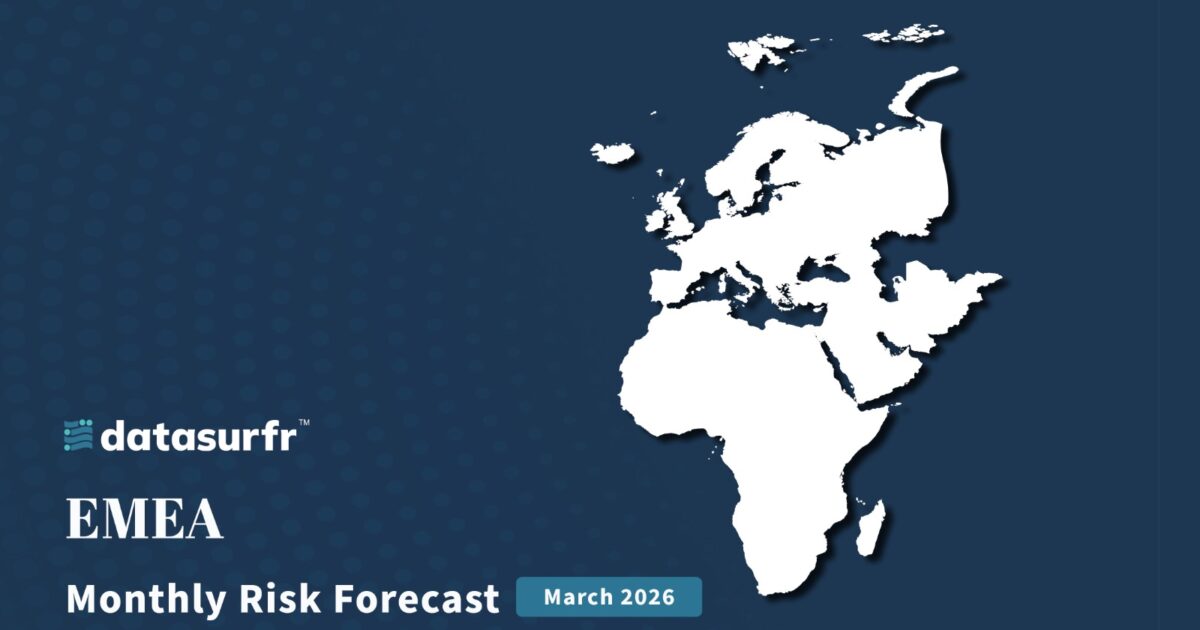
What are the main business risks across EMEA in March 2026?
The March outlook is shaped by several time-specific disruptions that can affect business continuity. In Belgium, a nationwide general strike on 12 March is expected to cause near-complete cancellation of departing flights from Brussels Airport, with reduced staffing across security, baggage handling and airside services. This could affect passenger travel, crew deployment, cargo movements, freight forwarding and regional logistics. France will hold municipal elections on 15 and 22 March, while Slovenia holds parliamentary elections on 22 March and Spain holds a regional election in Castile and León on 15 March. These events may create localized congestion, security deployments and administrative disruption in major urban areas.
Which European developments could disrupt travel and operations?
Travel and mobility risks are particularly relevant in March. Brussels Airport is expected to face the most immediate disruption, with airlines and logistics providers preparing rebooking, alternative routing and additional operational buffers around the strike. Budapest may also experience temporary traffic restrictions and controlled-access areas linked to the expected visit of Israeli Prime Minister Benjamin Netanyahu and the CPAC Global Summit. Businesses in hospitality, transport and retail could see higher demand from delegates and visitors, while also facing congestion and security measures. Across Europe, public holidays and large-scale events may reduce institutional capacity and affect routine services.
What regulatory and market changes should businesses monitor?
Ireland’s nationwide rent-control framework is scheduled to take effect from 1 March, extending rent regulation across the country and increasing compliance requirements for landlords and property owners. The transition may generate additional registration activity, regulatory enquiries and adjustments to rental pricing structures, with potential implications for property investors and lenders. In the UK, legal amendments expanding the Online Safety Act to AI chatbots increase compliance exposure for technology companies and digital platforms. Providers may need stronger safety systems, monitoring and escalation processes, while smaller developers could face higher regulatory costs.
What geopolitical and climate risks could affect supply chains?
Geopolitical escalation remains a structural risk across the region. The report highlights continued instability linked to the Israel-Hamas conflict, Russia-Ukraine war and tensions between Iran and the US, with implications for cyber risk, maritime security, energy flows, shipping insurance and supply chains. The Iran-US situation is particularly relevant to Gulf operations because disruption around the Strait of Hormuz could affect global crude prices and shipping costs. February’s severe weather also creates residual operational risks: Cyclone Gezani caused widespread destruction in Madagascar, while Storm Nils disrupted transport and urban operations across France, Spain, Italy and Portugal.
How should organisations prepare for March 2026?
Organisations should align travel, logistics and business-continuity planning with the specific dates identified in the forecast. Firms using Brussels Airport should build alternative routing and schedule buffers around 12 March and review cargo contingencies. Businesses operating in central Budapest should monitor access restrictions and security advisories around major events. Companies exposed to regulated sectors should track implementation guidance in Ireland and the UK and assess compliance requirements early. Across higher-risk markets, organisations should maintain real-time monitoring, flexible travel arrangements, alternative supply routes and crisis-communication procedures. Firms with exposure to the Gulf should also review contingency plans for energy, shipping and sanctions-related disruption.
Frequently asked questions
What are the key dates for business disruption in March 2026?
12 March is the key aviation disruption date in Belgium. France holds municipal elections on 15 and 22 March, Spain holds a regional election on 15 March, Slovenia holds parliamentary elections on 22 March, and Eid-al-Fitr is expected across the MENA region around 19–20 March.
Which sectors face the greatest exposure?
Aviation, logistics, travel management, hospitality, transport, property, financial services and technology are among the sectors directly referenced in the forecast. Exposure varies by location and by the timing of each event.
What should companies monitor beyond March?
Businesses should monitor follow-on strike activity in Belgium, implementation of Ireland’s rental rules, UK guidance on AI-chatbot safety requirements, geopolitical developments affecting Gulf maritime routes, and recovery conditions following severe weather events.
Download the full EMEA Monthly Risk Forecast now
Download the full EMEA Monthly Risk Forecast for the complete March 2026 regional outlook, including the detailed country developments, high-impact February developments, escalation snapshot and event calendar.
Filed under: EMEARegional Risk Reviews