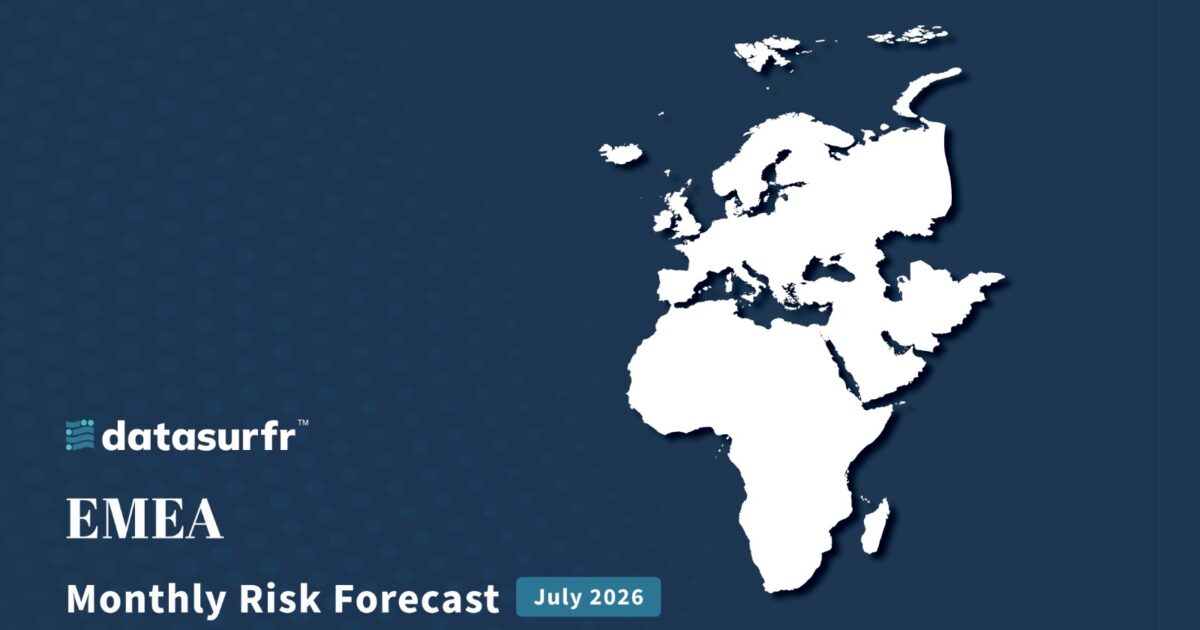
What is the EMEA Monthly Risk Forecast July 2026?
The EMEA Monthly Risk Forecast July 2026 provides a comprehensive assessment of operational and security risks across Europe, the Middle East, and Africa. July 2026 presents a complex operating environment driven by political developments, major international events, labour disputes, regulatory changes, and persistent geopolitical tensions. Across Europe, businesses will experience localized disruptions from high-profile events and evolving policy measures. Regulatory developments, including Belgium’s revised taxation of unemployment benefits, Sweden’s strengthened VAT fraud enforcement, and the UK assuming the Presidency of the Financial Action Task Force (FATF), are expected to increase compliance requirements.
What are the key events and dates in July 2026?
Key dates include: 01 July — MSC emergency fuel surcharge effective; Belgium unemployment benefit taxation changes; Sweden VAT fraud enforcement; UK FATF Presidency begins. 02 July — Algeria parliamentary elections. 07–08 July — NATO Summit in Ankara. 14 July — Bastille Day in France. 23 July — Potential airport staff strike in Scotland. 29 June–12 July — Wimbledon Championships. 04–26 July — Tour de France. 15 July — Belgian National Day. 30 July — Morocco Throne Day.
Which countries are most affected by the key developments?
France faces Bastille Day disruptions on 13–14 July, with enhanced security marking the tenth anniversary of the 2016 Nice attack. Scotland faces potential airport strikes from 23 July, timed with the FIFA World Cup and Commonwealth Games. Turkey hosts the NATO Summit under heightened security, with anti-NATO protests planned. Algeria’s elections may cause localized disruptions. Belgium’s tax changes affect 36,000 unemployed individuals. Sweden’s VAT enforcement targets cross-border fraud. The UK’s FATF Presidency increases AML/CFT compliance obligations. In Africa, Kenya faces renewed Gen Z protests, South Africa has xenophobic tensions, and Ghana’s port charges are under review.
What are the key impacts for businesses and individuals?
Businesses should anticipate transport disruptions, enhanced security measures, regulatory changes, and supply chain pressures. The MSC fuel surcharge will increase freight costs. Belgium’s tax changes may reduce disposable income. Scotland’s airport strikes could cause flight cancellations and delays. The NATO Summit will bring road closures and security checks in Ankara. Bastille Day will disrupt logistics in Paris. Sweden’s VAT enforcement may lead to longer onboarding and refund delays. The UK’s FATF Presidency may increase compliance costs for financial institutions. In Africa, protests and unrest may disrupt commercial activity. Individuals should monitor official advisories, allow extra travel time, and comply with security measures.
What should organisations and individuals do to prepare?
Organisations should review logistics budgets and contractual arrangements for fuel surcharges. Monitor regulatory changes in Belgium and Sweden. For Scotland, anticipate airport disruptions and build in connection buffers. For France, plan around Bastille Day closures. For Turkey, avoid non-essential travel to Ankara during the NATO Summit. For FATF, reassess AML/CFT frameworks. In Africa, monitor protests and secure premises. Individuals should check flight statuses, avoid protest areas, and follow local authority guidance. Emergency numbers: EU-wide 112; UK 999; Turkey 112; Algeria 14/17; Kenya 999/112.
Frequently asked questions
When is the NATO Summit in July 2026?
The NATO Summit is scheduled for 07–08 July 2026 in Ankara, Turkey.
What is the MSC emergency fuel surcharge?
MSC announced an Emergency Fuel Surcharge effective from 01 July 2026, citing volatile energy markets and rising operational costs.
What are the emergency contact numbers for EMEA?
EU-wide: 112. UK: 999. Turkey: 112. Algeria: 14 (Police), 17 (Fire). Kenya: 999 or 112. South Africa: 10111 (Police), 10177 (Ambulance).
Download the full advisory now
datasurfr’s Special Advisory on the EMEA Monthly Risk Forecast July 2026 carries the complete event calendar, the full country-by-country impact assessment, and a detailed contacts directory. Download the full advisory now to brief your travel and continuity teams.
Filed under: EMEARegional Risk Reviews