KEY TAKEAWAYS:
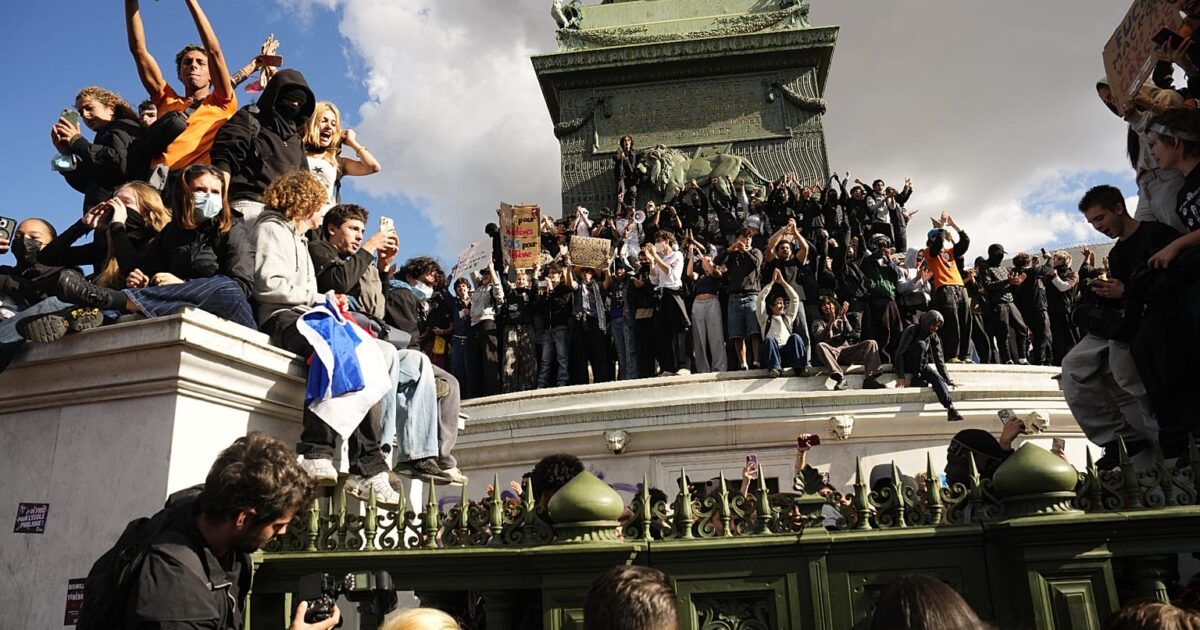
- MitKat’s 24 October 2026 report describes a geographically dispersed wave of civil unrest across Europe, driven by living costs, housing, education funding, wages and political dissatisfaction, with mobilisation building through September and intensifying in October.
- It rates France as Very High risk; Italy, Belgium and Albania as High; Spain, Germany, Austria and Portugal as Medium; and Greece, Ireland and the UK as Low.
- The movements are largely country-specific rather than a coordinated European campaign, and localised disruption is judged more likely than widespread regional instability.
- The key dates for 24–31 October are nationwide union and Yellow Vest actions in France on 24 October, a run of Italian transport strikes from 28 to 30 October (rail, a nationwide general strike, ports and Pisa and Florence airports on 30 October), and youth-led “Gen Z regelt” protests across Germany on 31 October.
- Businesses near demonstration routes, government buildings, university districts and transport hubs face transport delays, restricted premises access and possible property damage, while cross-border supply-chain disruption is assessed as comparatively limited. The report also flags possible further mobilisation in early November.
Protest activity has spread across much of Europe since September 2026. This summary draws on MitKat’s special report. The causes are politically contested, so the grievances below are the demonstrators’ and the risk ratings are MitKat’s provisional analytical judgements about operational exposure, not national travel-risk ratings or predictions.
What is driving the wave of unrest across Europe?
The report lists five principal drivers: the cost of living and wages, housing affordability, education funding, government policies and public services, and political accountability. Housing has been central in Spain, Portugal and Ireland, education funding in Belgium, Germany, Austria, France and Italy, and political accountability concerns in Albania and France. Student groups, trade unions, housing activists and political movements are the main participants, and the action has ranged from peaceful gatherings and university occupations to confrontations with police, vandalism and damage to commercial property. The report stresses that the movements are largely independent and domestic in character, not part of one coordinated European campaign, though their overlapping timing has raised concern about transport access and business continuity in major cities.
Which European countries carry the highest protest risk?
For 24 to 31 October, MitKat rates France Very High, citing reported confrontations, vandalism, property damage and restrictions on gatherings. Italy, Belgium and Albania are rated High, reflecting public disorder and politically sensitive demonstrations. Spain, Germany, Austria and Portugal are Medium, mostly because of organised demonstrations, student mobilisation and possible transport disruption, and Greece, Ireland and the UK are Low because activity has been comparatively localised. The report’s country table cites, for France, 550,000 to 800,000 marchers, more than 2,400 arrests, arson attacks on public monuments, nightly targeted local curfews in parts of Paris and Lille, and more than 60,000 police, and, for Albania, violent youth clashes with police over alleged institutional corruption. These are the report’s figures, so check them against current official reporting before relying on them.
Which protests and strikes are scheduled between 24 and 31 October?
In France, nationwide actions are listed for 24 October by the CGT and affiliated groups (rated Very High) and by Yellow Vest and affiliated groups (rated High). In Ireland, the Garda Representative Association has all-day action over pay and conditions on 24 and 31 October. Italy has the densest strike calendar: motorway fire-surveillance personnel on the A1 on 27 October; AIR Campania workers in Naples and Campania on 28 October; Trenitalia customer operations workers in Bologna, Reggio Emilia and Rimini from 28 to 29 October; a USB rail-sector strike nationwide from 29 to 30 October; a nationwide full-day action by USB, USI-CIT and affiliated unions on 30 October; and USB Lavoro Privato actions at Pisa and Florence airports and in the ports on 30 October. The motorway and AIR Campania actions are rated Medium, and the rest of the Italian actions are rated High. Germany has anti-extremism gatherings in Cologne, Jena and Leipzig on 24 and 27 October, the nationwide “Gen Z regelt” protest at 1400 hours on 31 October over education, living costs, austerity and conscription (rated High), and a gathering in Dresden the same day. Spain has UNASPI protests in Valladolid, Zamora, Soria and six other cities on 31 October, and a number of small solidarity events and rallies are listed in Brussels. Continuing mobilisation is possible in Spain, Albania, the UK, Ireland, Greece, Austria, Serbia and Poland throughout the period.
What are governments doing, and how is transport affected?
Security responses include enhanced police deployments, protest restrictions and localised access controls. The report lists last-minute RATP Paris Metro closures at major hubs and shuttering of museums and shops in France; metro disruptions and station closures in Italy during active unrest, with strict protest-containment zones in Rome and Milan; localised bus and tram diversions and assembly bans around the EU Quarter in Brussels; road closures around Madrid and Barcelona during marches; severe traffic delays in central Tirana; and potential closures of central Belgrade transit arteries. Germany, Austria, Ireland, Portugal and Greece report only minor to regular urban disruption, and the UK’s rail and Tube delays are described as unrelated to unrest.
What is the business impact?
The main exposure is workforce mobility and public order in major urban centres. Large gatherings and confrontations can create crowd-related risks for employees and travellers, road closures and public-transport strikes can delay commuting, airport transfers and scheduled travel, and restricted access to offices, commercial districts and government buildings can disrupt meetings, client visits and daily operations. Industrial action at ports, railways and on roads could delay shipments and deliveries, but the report assesses cross-border supply-chain disruption as comparatively limited unless industrial action becomes prolonged or coordinated. Isolated vandalism, property damage and opportunistic theft are a risk near demonstration sites, travel costs may rise with demand for alternative transport and accommodation, and businesses near politically sensitive demonstrations could face reputational exposure.
What should businesses and travellers do?
The report advises avoiding demonstrations, counter-protests, government buildings and areas of heightened police activity, monitoring local police, municipal, transport-operator and embassy announcements, and reviewing itineraries with flexible bookings, alternative routes and extra travel time. Employees should carry identification, travel documents and company emergency contacts, avoid photographing security operations at close range, and not try to cross police cordons. Organisations should consider remote working, staggered shifts or alternative offices near major protest sites, review access controls, CCTV and visitor management, confirm road restrictions and evacuation routes with local authorities, and check that business-interruption, travel-disruption and property-damage insurance covers protest-related losses. Risk teams should reassess regularly as schedules, labour negotiations and government restrictions change.
Frequently asked questions
Is this a coordinated European protest campaign?
According to the report, no. The movements share socioeconomic grievances but remain largely country-specific, with different organisers, aims and levels of intensity.
Which dates are the biggest strike days in Italy?
The report lists 30 October as the heaviest, with a nationwide full-day action by USB, USI-CIT and affiliated unions, rail strikes running from 29 to 30 October, and actions at Pisa and Florence airports and the ports that day, all rated High.
Will the unrest disrupt supply chains across borders?
MitKat assesses cross-border supply-chain disruption as comparatively limited, though prolonged or coordinated industrial action could create secondary effects on regional trade and distribution networks.
What are the emergency numbers in Europe?
112 is the emergency number across all the countries covered. Police numbers include France 17, Spain 091, Belgium 101, Germany 110, Austria 133, Italy 112, Albania 129, Greece 100, Poland 997 and Serbia 192, and Ireland and the UK use 999 or 112.
Download the full report now
MitKat’s Special Report on Civil Unrest and Protest Risk Assessment Across Europe carries the complete 24–31 October protest calendar with times and organisers, the country-by-country security and transport table, and a directory of official monitoring sources. Download the full report now to brief your risk and continuity teams.
Filed under: EMEAThreat Intelligence Special Reports