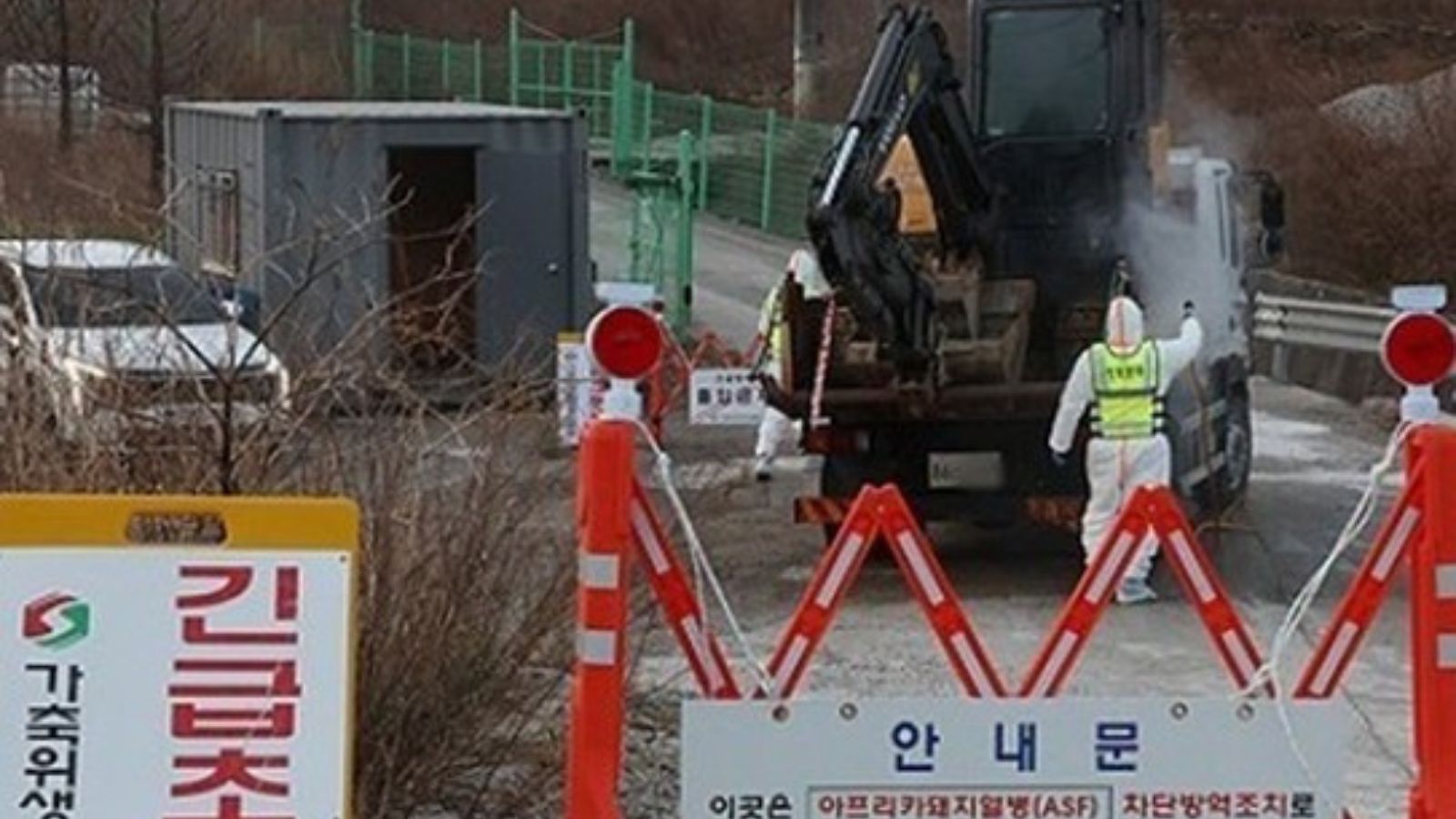
Executive Summary for the African Swine Flu Case in South Korea
Authorities confirmed an ASF-positive pig farm in Dangjin on 12 February. Standard response measures, farm isolation, culling, disinfection, and livestock movement controls, are expected within a defined quarantine radius. Immediate impacts are localized but operationally significant for producers and related logistics. While single-farm outbreaks in South Korea are typically contained, repeated regional detections increase systemic risk to pork production and market stability.
- Event Date: 12 February
- Location: Dangjin, South Korea
- Risk Category: Health
- Severity Level: 3 / 5
- Confidence Score: 75 %
Operational Context
South Korea has experienced recurring African swine fever (ASF) outbreaks between 2024 and 2026, typically confined to individual farms through rapid quarantine enforcement, pre-emptive culling, and movement restrictions. Dangjin and other parts of South Chungcheong Province have previously recorded farm-level detections, with authorities implementing three km protection zones and 10 km surveillance perimeters under national animal health regulations. Historical containment timelines indicate immediate quarantine and depopulation measures lasting two to six weeks, followed by extended livestock monitoring for up to six months to prevent secondary transmission. While ASF presents no human health risk, it poses significant agricultural biosecurity and supply chain disruption challenges, particularly for pig producers, feed suppliers, and regional slaughterhouses.
Known Hotspots & Sensitive Zones
- High Impact Zones: The infected pig farm in Dangjin and holdings within the likely three km protection zone, where culling and strict biosecurity measures are enforced.
- Medium Impact Zones: Farms within the 10 km surveillance radius, livestock collection points, and slaughterhouses in Dangjin and neighbouring Asan and Seosan subject to testing and movement controls.
- Low Impact Zones: Broader South Chungcheong Province, where heightened inspections and documentation checks may occur without direct operational shutdown.
ASF outbreaks in South Korea show seasonal recurrence during cooler months, though rapid containment has historically limited province-wide spread.
Impact on Transportation & Services
Livestock transport restrictions are expected on farm access roads and provincial agricultural routes connecting Dangjin to regional processing facilities. Movement bans on pigs, feed trucks, and farm vehicles may remain in place for one to three weeks, affecting pork supply chain continuity. Slaughterhouse intake procedures may slow due to enhanced inspections and traceability checks. No direct impact on utilities or public transport is anticipated; however, localized road controls and disinfection checkpoints may delay commercial vehicle movements and agricultural logistics operations.
Recommended Action
- Producers should immediately enforce on-site biosecurity lockdowns, restrict non-essential access, and maintain detailed movement logs for 21 days.
- Workforce segregation and strict personal protective equipment protocols are advised to prevent cross-farm transmission. Supply chain managers should initiate traceability reviews; quarantine affected batches and activate alternate sourcing from unaffected regions to mitigate market disruption.
- Establishing a cross-functional incident response team and maintaining documentation for regulatory compliance and compensation claims is recommended.
- Ongoing coordination with provincial veterinary authorities and adherence to national quarantine guidelines remain critical for containment.
Multi-Dimensional Impact
Short-term pork price volatility, reputational pressure on regional producers, and increased regulatory scrutiny may extend beyond the immediate quarantine zone.
Emergency Contacts
- Emergency Number: 119
- Ministry of Agriculture, Food and Rural Affairs (animal health advisories): mafra.go.kr/english/index..do
- Korea Disease Control and Prevention Agency: kdca.go.kr/eng/
Situational Outlook
Over the next two weeks, authorities are likely to confine the outbreak to the identified Dangjin premises through culling, surveillance, and movement controls. If no additional positive farms are detected within the 10 km zone, restrictions may be gradually lifted following negative testing and clearance protocols. A moderate escalation scenario would involve detection of additional infected farms, extending livestock movement bans and intensifying pork supply chain disruption across South Chungcheong. Severe escalation remains less probable but would entail geographically dispersed outbreaks, expanded culling, and prolonged regional market instability. Based on historical containment performance, the most likely trajectory remains localized and time-bound, though heightened surveillance is warranted.
Strategic Takeaway
The Dangjin ASF case represents a localized but economically material livestock biosecurity incident. While human safety risks are negligible, operational and agricultural impacts require structured mitigation and supply chain resilience planning. Businesses in pig farming, feed logistics, and meat processing should maintain active monitoring and regulatory coordination. Stay ahead of operational risks with real-time alerts, scenario modeling, and expert advisories with datasurfr’s Predict. Start your 14-day free trial of Datasurfr’s Risk Intelligence Platform today.