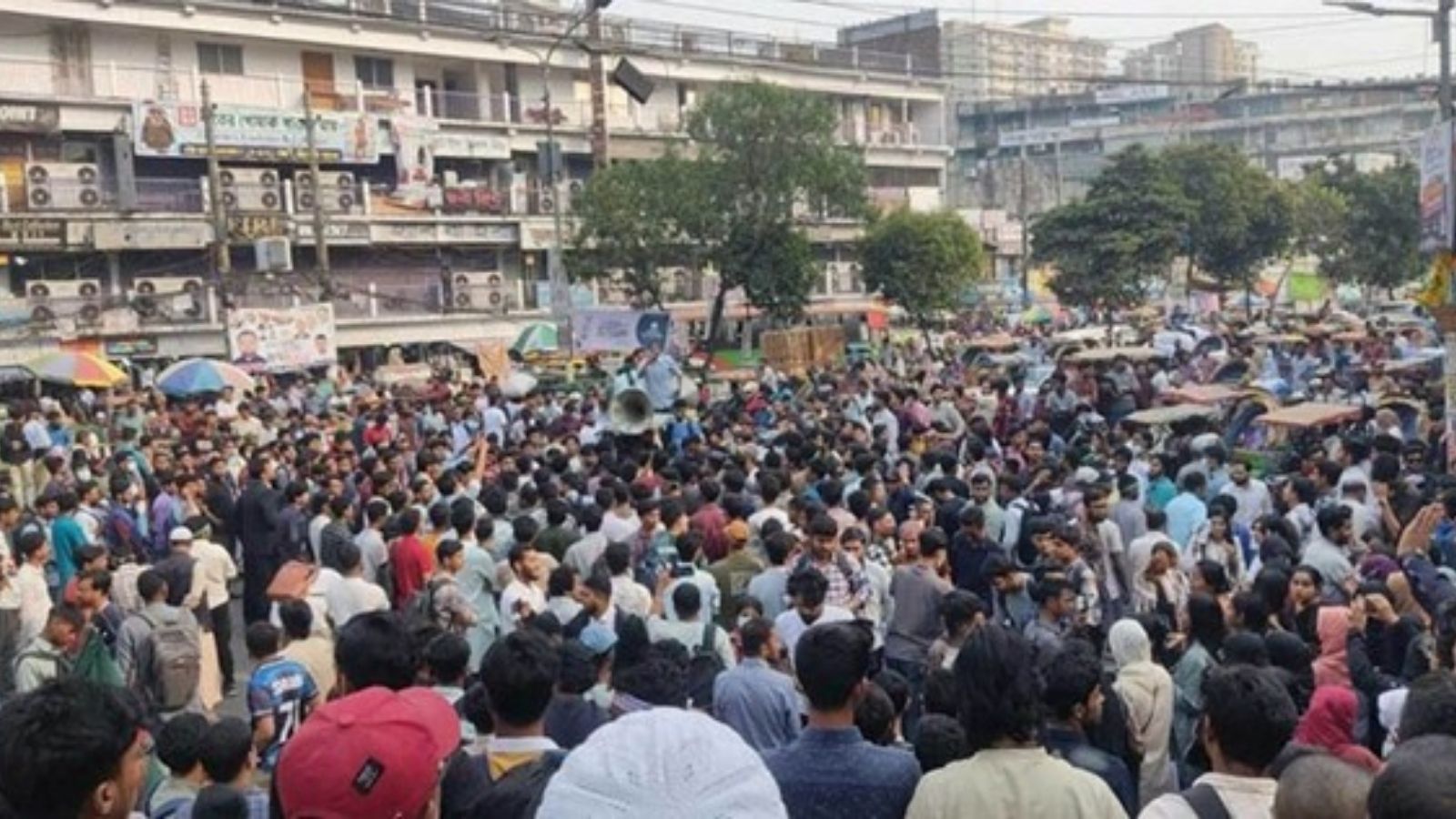
Operational Context
Dhaka has a well-documented history of student-led demonstrations that frequently concentrate around symbolic and high-traffic intersections such as Shahbagh, Science Lab and Farmgate. These locations function as critical transport nodes linking commercial, educational and administrative districts. Past student blockades have typically been short in duration but high in impact, causing rapid traffic paralysis and cascading delays across the city. Authorities usually respond with increased police deployment and negotiated dispersal rather than prolonged shutdowns, limiting long-term infrastructure damage but not short-term operational disruption.
Executive Summary
- Event Date: 14 January
- Location: Dhaka, Bangladesh
- Risk Category: Civil Disturbance
- Severity Level: 3 / 5
- Confidence Score: 70 %
Student groups have announced a blockade at multiple key intersections in Dhaka on Wednesday, 14 January. Based on historical precedent, the most likely impact window is four to 12 hours on the day, with a possibility of repeat actions within the following 72 hours if demands remain unmet. The risk is assessed as moderate, with high disruption to travel and mobility, localized business shutdowns and limited but recurring safety incidents. Large-scale violence or sustained infrastructure damage remains unlikely, though congestion, staff absenteeism and delivery delays are expected in affected corridors.
Current Updates
Local reporting indicates that organisers intend to mobilise students from colleges and universities to block central intersections. Authorities have not announced city-wide road closures but are expected to increase police presence near sensitive nodes from early morning.
Known Hotspots & Sensitive Zones
- High Impact Zones: Shahbagh, Science Lab/Curzon Hall, Farmgate, Education Building intersection and Satrasta.
- Medium Impact Zones: Feeder roads connecting these intersections to Karwan Bazar, Tejgaon and Dhaka University campuses.
- Low Impact Zones: Peripheral districts not directly reliant on these junctions.
A recurring pattern is escalation when protests spill onto intercity highways such as the Dhaka–Barisal and Dhaka–Sylhet routes, extending disruption beyond the capital.
Impact on Transportation & Services
Road transport will be the primary affected sector, with city buses, ride-hailing services and inter-district coaches facing suspensions or severe delays. Traffic gridlock at central intersections is likely to disrupt emergency vehicle movement and last-mile logistics. Rail, air and port services are not directly targeted but may experience indirect delays due to staff mobility constraints. Business operations in central Dhaka can expect reduced workforce attendance, postponed meetings and temporary retail closures.
Recommended Action
- Organizations should activate short-term continuity measures, including work-from-home arrangements for non-essential staff, staggered shifts and advance travel advisories.
- Logistics teams should reroute or defer non-critical deliveries and consolidate shipments.
- Engagement with local police and traffic authorities is advised to identify safe access routes for critical personnel.
- Continuous monitoring through local media, police advisories and risk intelligence platforms is recommended.
Multi-Dimensional Impact
The blockade may compound pressure on emergency services and interact with heightened pre-election security measures, potentially leading to stricter crowd control and broader mobility restrictions in central Dhaka.
Emergency Contacts
- National Emergency Helpline: 999
Situational Outlook
The most probable outcome is a one-day blockade with significant but temporary disruption, followed by gradual normalization once police disperse protesters. A moderate escalation could involve repeated actions over several days, particularly if negotiations stall, while a severe escalation remains low probability but would involve clashes and extended closures under heightened security operations.
Strategic Takeaway
The scheduled student blockade presents a manageable but disruptive civil disturbance risk for Dhaka. Businesses and institutions should prioritize staff safety, flexible operations and proactive communication. Leveraging early-warning and urban risk monitoring tools such as MitKat’s Datasurfr can enhance situational awareness and support timely decision-making during rapidly evolving protest activity.
Stay ahead of operational risks with real-time alerts, scenario modeling, and expert advisories with datasurfr’s Predict. Start your 14-day free trial of Datasurfr’s Risk Intelligence Platform today.