Operational Context
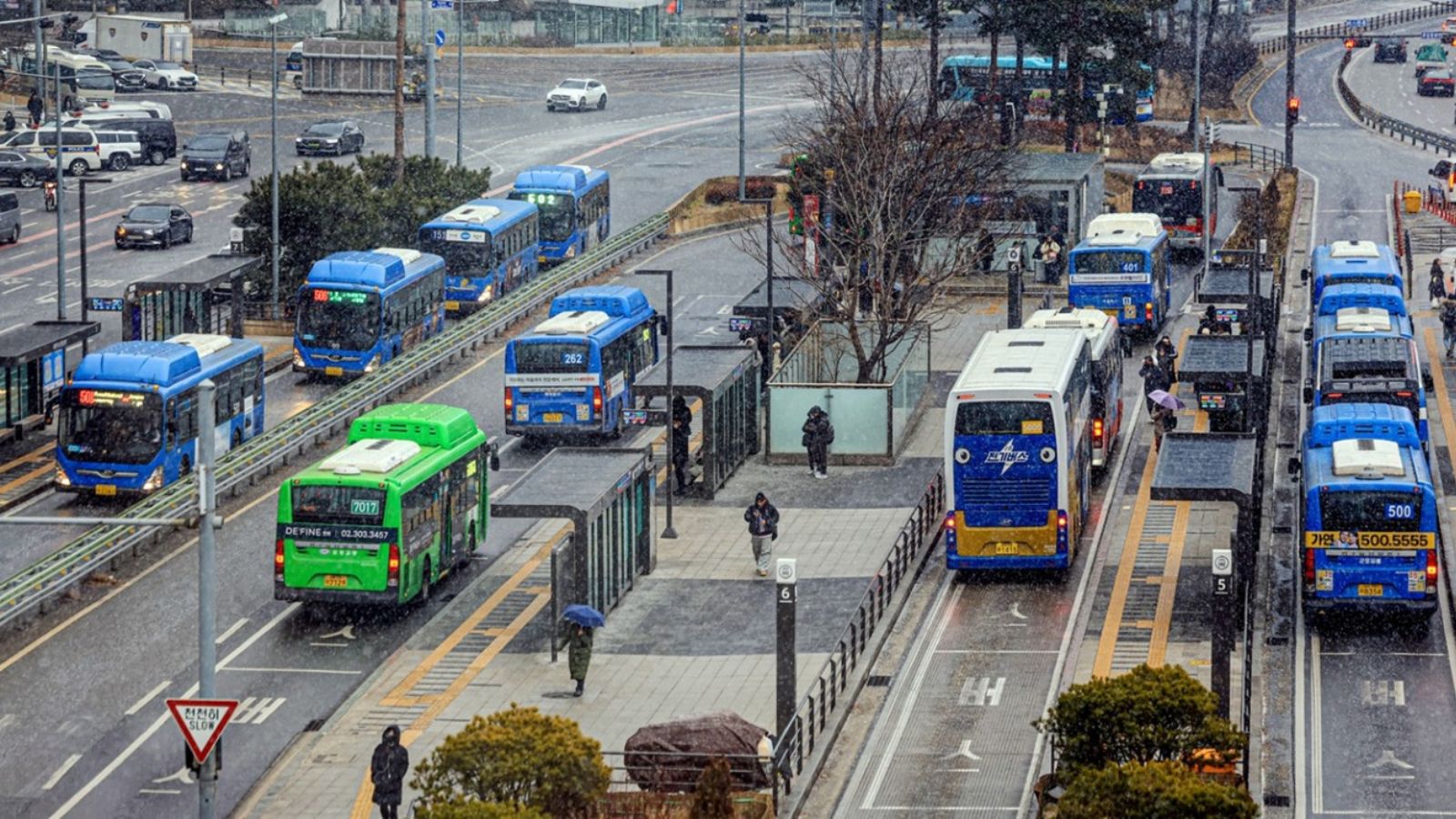
Seoul’s public transport system is heavily integrated, with city buses providing essential last-mile connectivity to subway lines and serving corridors not directly covered by rail. Labour disputes involving municipal bus unions have occurred periodically, most recently during 2024–2025 and have typically resulted in short-duration but high-impact disruptions during weekday peak periods. Municipal authorities generally deploy emergency buses, taxis and traffic management measures to limit systemic paralysis, reducing the likelihood of prolonged citywide shutdowns.
Executive Summary
- Event Date: 13 January
- Location: Seoul, South Korea
- Risk Category: Civil Disturbance
- Severity Level: 3/ 5
- Confidence Score: 75 %
A full-day city bus strike commenced in Seoul on 13 January, significantly reducing bus availability during peak commuting hours. Historical patterns suggest a most likely disruption window of one to three days, with a moderate probability of intermittent extensions if negotiations stall. The severity is assessed as moderate due to Seoul’s reliance on buses for intra-city travel, particularly for feeder routes, though impacts are partially mitigated by the extensive subway network and pre-existing municipal contingency plans. Key risks include commuter delays, congestion on major arterial roads, short-term productivity losses and reputational pressure on city authorities if resolution extends into critical economic or school periods.
Current Updates
Union-led strike action began during the morning peak on 13 January, with a substantial proportion of city buses taken out of service on selected routes. Demonstrations and picketing have been reported near Seoul City Hall and at major bus depots. The subway network remains operational but is experiencing elevated crowding at major transfer hubs such as Seoul Station, Gangnam Station and City Hall–Gwanghwamun. City authorities are monitoring negotiations and have activated initial contingency transport measures.
Known Hotspots & Sensitive Zones
- High-impact zones: Central Seoul corridors such as Sejong-daero, Jongno and Gangnam-daero, along with major transfer hubs and bus depots in Yeongdeungpo and Gangseo districts.
- Medium-impact areas: Olympic-daero and surrounding business and retail districts experiencing spillover congestion.
- Low-impact areas: Districts with direct subway access and limited reliance on bus-only routes.
Bus strikes in Seoul show a recurring pattern of peak disruption during weekday mornings and evenings, with pressure easing outside commuting hours.
Impact on Transportation & Services
Bus service reductions are causing increased reliance on subways, taxis and private vehicles, resulting in congestion on arterial roads and crowding at rail stations. No air, port or digital service disruptions are expected. Business operations are affected through delayed staff arrivals, reduced retail footfall and last-mile delivery delays, particularly for small logistics providers and service-sector firms in central districts. Communications and IT systems remain unaffected, though customer-service demand is elevated.
Recommended Action
- Organizations should implement flexible working hours, remote-work arrangements and emergency commute support such as shuttle services or taxi reimbursement for critical staff.
- Non-essential travel and deliveries within affected districts should be deferred or rerouted.
- Asset security around offices and depots near protest sites should be reviewed, and clear, proactive communication with employees, customers and partners is recommended.
- Continued coordination with municipal authorities and local police will support situational awareness and staff safety.
Multi-Dimensional Impact
Increased private vehicle usage may temporarily elevate congestion and local emissions, while public frustration and demonstrations near government buildings could intensify reputational pressure on municipal leadership if disruptions persist.
Emergency Contacts
- South Korea Emergency Services: 119
- Seoul Metropolitan Government: english.seoul.go.kr/
- Police: 112
Situational Outlook
The most probable outcome is a short-duration strike lasting up to 72 hours, with partial restoration of services following renewed negotiations and expanded emergency transport measures. A moderate escalation involving intermittent stoppages over the following week remains possible, while prolonged, multi-union action extending beyond two weeks is assessed as low probability.
Strategic Takeaway
The Seoul bus strike represents a contained but disruptive civil disturbance risk with immediate implications for mobility and business continuity. Close monitoring of negotiations, commuter conditions and protest activity is essential. Organizations should leverage early-warning and transport-disruption intelligence tools such as MitKat’s Datasurfr to anticipate impacts, protect workforce safety and maintain operational resilience during the disruption window. Stay ahead of operational risks with real-time alerts, scenario modeling, and expert advisories with datasurfr’s Predict. Start your 14-day free trial of Datasurfr’s Risk Intelligence Platform today.