Operational Context
Aomori and the broader Tohoku region are historically prone to significant seismic activity, regularly experiencing mid- to high-magnitude earthquakes. Events of this scale typically produce several days of operational strain: transport shutdowns, road collapses, utility outages and mandatory inspections at industrial and nuclear-adjacent facilities. Offshore epicentres near the Sanriku and Tsugaru coasts amplify tsunami risk and can damage ports and coastal settlements even when major waves do not materialise. Critical infrastructure such as the Tohoku Shinkansen, Aoimori Railway, regional highways, and the Rokkasho reprocessing facility remain sensitive to strong aftershocks. The present situation is consistent with earlier high-impact quakes in northern Honshu, with expected aftershock activity for days to weeks and a high probability of additional service disruption.
Executive Summary
- Event Date 09 December 2025
- Location: East Coast, Aomori Prefecture, Japan
- Risk Category: Natural Disasters
- Severity Level: 4 / 5
- Confidence Score: 70 %
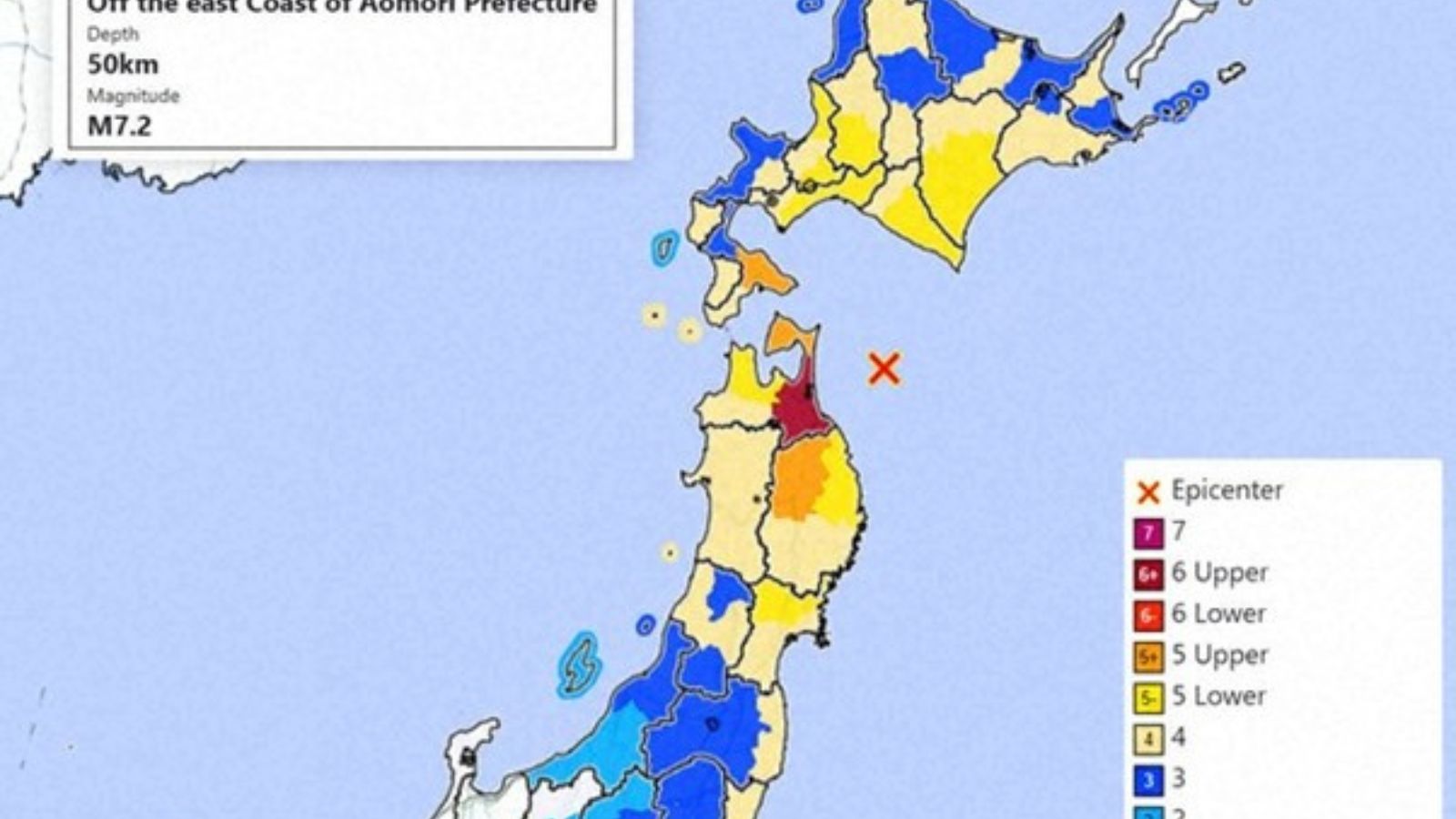
A magnitude 7.6 earthquake struck off Aomori’s east coast, causing widespread rail suspensions, road collapses, injuries and localized power outages. Elevated aftershock risk remains for seventy-two hours, with operational impacts expected across transport, utilities and coastal facilities.
Known Hotspots & Sensitive Zones
High-Impact Zones: Oirase Town (bridge cracks), Gonohe (structural damage), Rokkasho facility (reported water overflow), coastal towns along Tsugaru Strait, Shinkansen/JR rail corridors.
Medium-Impact Zones: Aomori City transport hubs, port areas under wave advisories, inland towns with older building stock.
Low-Impact Zones: Remote inland districts farther from the epicentre.
Seasonal patterns show winter seismic events complicate rescue and utility restoration due to cold weather and shorter daylight hours.
Impact on Transportation & Services
Tohoku Shinkansen and multiple JR lines remain suspended pending track inspection. Several highways and local roads are blocked due to cracking or collapse, restricting ground transport and emergency access. Ferry services and port operations face temporary precautionary limitations. Thousands of homes experience power and water disruptions, while some industrial sites have initiated shutdown protocols. Communications remain largely operational but may face intermittent congestion during peak emergency reporting.
Recommended Action
Immediate Measures:
• Activate emergency communication protocols and confirm personnel safety.
• Direct all sites to conduct structural checks and shut down hazardous equipment.
• Initiate backup power and IT failover systems; validate generator fuel levels.
• Suspend non-essential travel to and within Aomori region until transport clearance is issued.
Strategic Measures:
• Reroute supply chains through Hokkaido or Kanto distribution hubs.
• Maintain regulatory documentation for inspections at industrial and warehouse facilities.
• Enhance stock buffers for critical items to offset transport delays.
• Integrate JMA and local authority feeds into real-time monitoring dashboards.
Multi-Dimensional Impact
Emergency resources may be overstretched due to concurrent high-wave advisories and infrastructure damage. The Rokkasho water overflow event elevates regulatory scrutiny and may slow industrial operations. Public events across Aomori and Tohoku have been cancelled, amplifying community-level disruption.
Emergency Contacts
- Japan Meteorological Agency (JMA): jma.go.jp
- Fire and Disaster Management Agency (FDMA): fdma.go.jp
- Aomori Prefecture Disaster Hotline: 110
- Local Police (110) / Ambulance (119)
Situational Outlook
Baseline scenario suggests moderate aftershocks (M5.0–6.5), localized damage and service restoration within one to three days. Moderate escalation may result in stronger aftershocks extend rail closures and utility outages for up to one week, regulatory holds at industrial sites. Severe outcomes remain unlikely but could involve major aftershock causes widespread infrastructure failure, multi-week outages and significant economic disruption.
Strategic Takeaway
The event marks a high-impact seismic disruption requiring vigilant monitoring over the next 72 hours. Organisations should prioritise personnel safety, strengthen continuity measures and leverage early-warning platforms such as MitKat’s Datasurfr to enhance situational awareness and maintain operational resilience during ongoing aftershock risk.
Stay ahead of operational risks with real-time alerts, scenario modeling, and expert advisories with datasurfr’s Predict. Start your 14-day free trial of Datasurfr’s Risk Intelligence Platform today.