
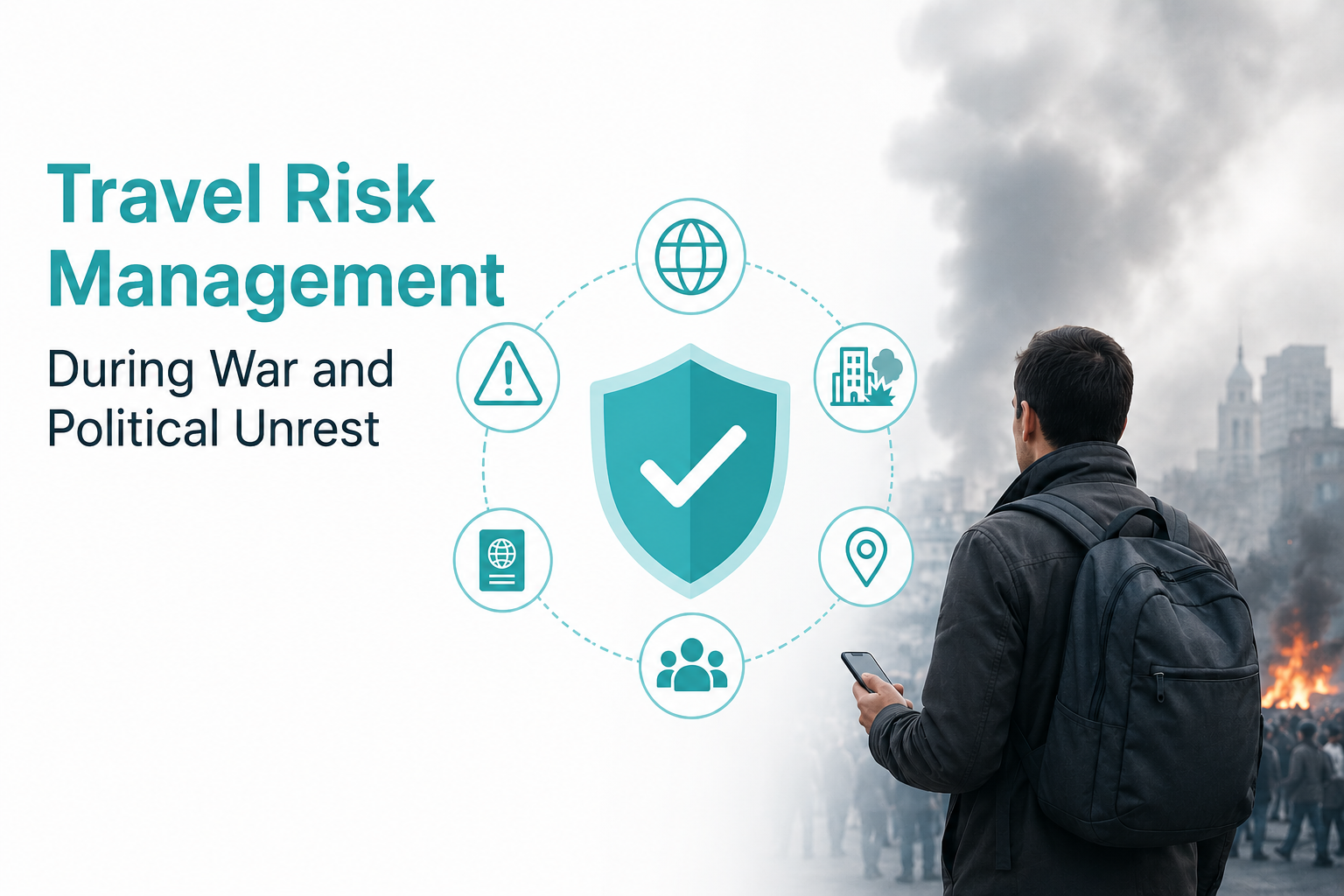
In today’s unpredictable global setting, businesses and travellers get hit by a growing list of obstacles because of wars, political unrest, civil demonstrations, and nearby regional clashes. International trips, that used to feel almost routine for corporate schedules, now means you need advanced preparation, real-time intelligence, and this kind of proactive risk approach, not just the usual checklists.
Travel Risk Management (TRM) has slowly turned into a key requirement for organizations that want to keep employees safe, keep operations running, and also meet their duty of care obligations.
Globalisation has boosted the amount of international travel, and with that, organisations can become more exposed to geopolitical disruptions. Even short-lived political instability can quickly affect transport routes, messaging and communications, room inventory at hotels, and of course the day-to-day safety picture for travellers.
Henceforth, companies really should build structured travel risk management programmes in order to react in a sensible way to situations that change fast. Whether people are going out for business discussions, project leadership tasks, humanitarian support, or broader international operations, having a solid travel risk plan is critical, for safety as well as operational staying power.
Understanding Travel Risk Management
Travel Risk Management refers to the process of identifying, assessing, and mitigating risks associated with travel. During periods of war or political instability, these risks increase significantly
It may include:
- Border closures and travel restrictions
- Violent protests or riots
- Terror threats and armed conflict
- Transportation disruptions
- Communication blackouts
- Cybersecurity threats
- Medical emergencies and evacuation challenges
Organizations must prepare for these situations before employees travel and continue monitoring risks throughout the journey.
Why Travel Risk Management Matters During Political Unrest
Political instability can escalate rapidly with little warning. A peaceful city can suddenly experience demonstrations, curfews, or violence that disrupt normal activities. Companies that fail to monitor geopolitical developments may expose employees to dangerous situations.
Effective travel risk management helps organizations:
- Protect employee safety and well-being
- Minimize operational disruptions
- Enable faster emergency response
- Maintain compliance with duty of care obligations
- Reduce financial and reputational damage
Businesses with global operations especially need real-time visibility into regional developments to make informed travel decisions.
Key Components of Travel Risk Management During Conflict Situations
1. Real-Time Risk Monitoring
Continuous monitoring of geopolitical events is critical during war or civil unrest. Organizations should use AI-powered intelligence platforms, government advisories, and security alerts to track developments in real time.
Monitoring systems can provide alerts related to:
- Armed conflict escalation
- Airport shutdowns
- Curfews and emergency regulations
- Protest hotspots
- Natural disasters occurring alongside unrest
This information allows companies to adjust travel plans immediately and avoid high-risk areas.
2. Pre-Travel Risk Assessments
Before approving travel, companies should conduct detailed risk assessments for the destination.
These assessments evaluate:
- Political stability
- Crime levels
- Health risks
- Transportation reliability
- Emergency medical facilities
- Local security infrastructure
Travelers should also receive destination-specific briefings covering safety protocols, emergency contacts, and evacuation procedures.
3. Traveler Tracking and Communication
During emergencies, organizations must know where employees are located. Traveler tracking systems help security teams monitor employee movements and provide immediate assistance if conditions deteriorate. Reliable communication tools are equally important.
Businesses should establish multiple communication channels, including:
- Mobile alerts
- Satellite communication backups
- Emergency messaging systems
- Dedicated crisis response hotlines
Quick communication can significantly improve response time during emergencies.
4. Crisis Response and Evacuation Planning
War zones and politically unstable regions may require emergency evacuations. Companies should develop clear evacuation plans before travel begins.
A strong evacuation strategy includes:
- Safe evacuation routes
- Partnerships with security providers
- Emergency transportation arrangements
- Alternative accommodation options
- Coordination with embassies and local authorities
Prepared organizations can respond faster and reduce confusion during critical situations.
5. Employee Training and Awareness
Travelers should understand how to respond during political unrest. Training programs can help employees recognize risks and make safer decisions.
Training topics may include the following:
- Situational awareness
- Avoiding protest areas
- Cybersecurity precautions while traveling
- Emergency response procedures
- Cultural and political sensitivities
Well-informed travelers are more capable of protecting themselves during uncertain situations.
The Role of Technology in Modern Travel Risk Management
Technology has transformed how organizations manage travel risks. AI-powered platforms now provide predictive intelligence, helping companies anticipate disruptions before they escalate.
Modern TRM solutions offer the following:
- Real-time geopolitical intelligence
- Automated travel alerts
- GPS-based traveler tracking
- Predictive risk analytics
- Integrated crisis management dashboards
These tools help organizations make faster, data-driven decisions during rapidly evolving events.
Best Practices for Organizations
To strengthen travel safety during wars and political unrest, organizations should follow these best practices:
- Continuously monitor global geopolitical developments
- Restrict non-essential travel to high-risk regions
- Maintain updated traveler databases
- Develop detailed crisis management plans
- Conduct regular emergency response drills
- Partner with travel security and intelligence providers
- Provide travelers with 24/7 support access
A proactive approach can significantly reduce exposure to travel-related threats.
FAQ’s
1.How often should companies update travel risk policies?
Companies should review and update travel risk policies regularly, especially when geopolitical conditions, security threats, or travel regulations change.
2. What are the biggest travel risks during war or civil unrest?
The biggest risks include armed conflict, terrorism, transportation disruptions, communication blackouts, border closures, cyber threats, and limited access to medical assistance.
Conclusion
Travel risk management is essential for organizations operating in today’s uncertain global environment. Solutions like datasurfr and GoSafe help businesses stay prepared with AI-powered real-time risk monitoring, traveler tracking, crisis communication, and actionable intelligence. By combining advanced technology with proactive planning, organizations can better protect employees, reduce disruptions, and maintain business continuity during war, political unrest, and other global crises.
Share on WhatsApp