
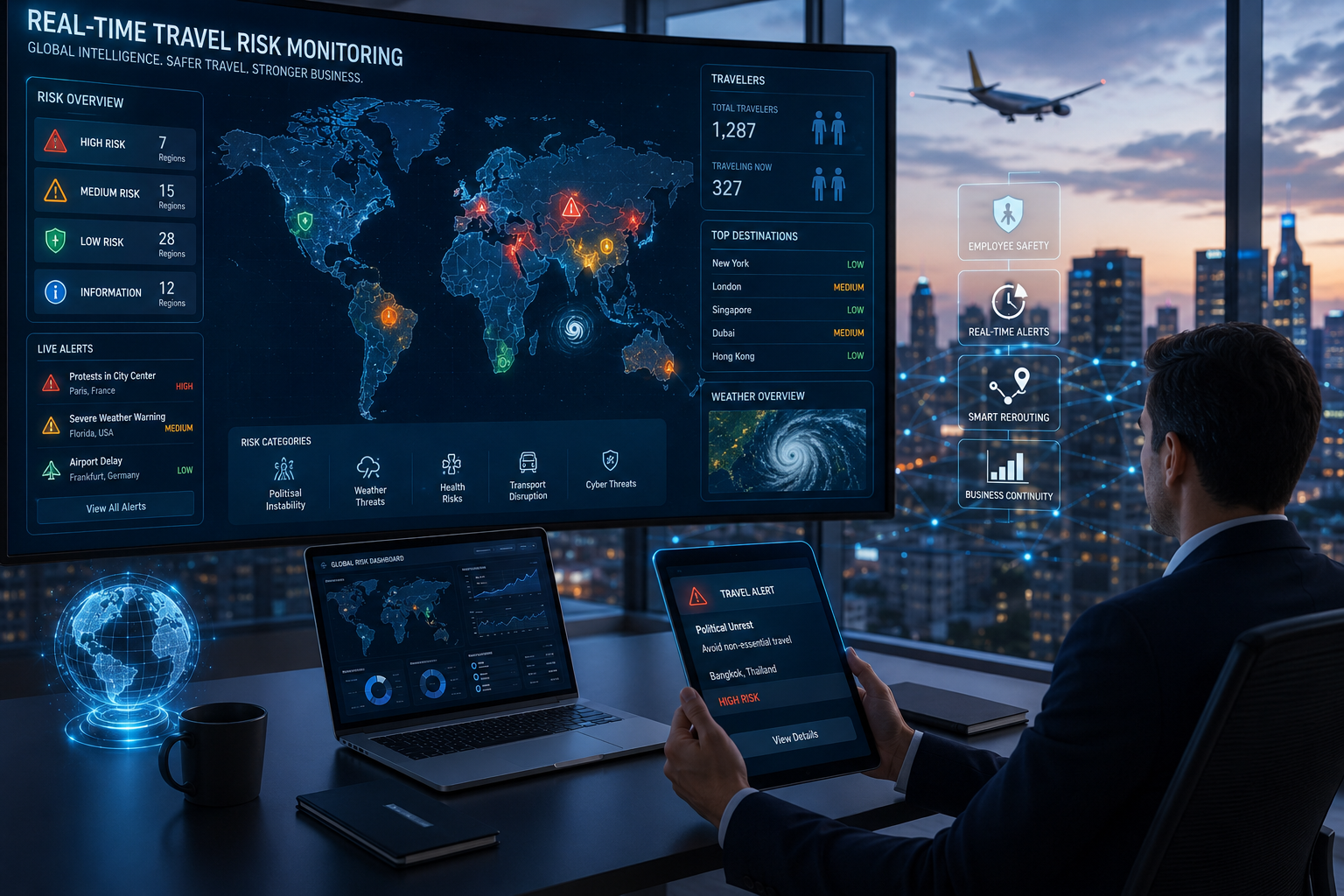
In 2026, global business travel is no longer just about booking flights and managing schedules. Companies now operate in an environment shaped by geopolitical tensions, climate-related disruptions, cyber threats, transportation strikes, and rapidly changing security conditions. For global enterprises, real-time travel risk monitoring has become a critical component of business continuity and employee safety.
Organizations with international operations are increasingly recognizing that traditional travel management systems are not enough to handle modern risks. Real-time travel intelligence helps businesses monitor disruptions as they happen, protect employees, and maintain operational stability in an unpredictable world.
The Growing Complexity of Global Travel Risks
Corporate travel today involves much more than moving employees from one location to another. Business travelers may face sudden flight cancellations, civil unrest, severe weather events, health emergencies, or even cyberattacks targeting transportation infrastructure.
In recent years, global disruptions have demonstrated how quickly travel conditions can change. Airports can shut down within hours, protests can block major city routes, and extreme weather can delay logistics operations across entire regions. Without live monitoring systems, organizations may struggle to respond effectively.
This is why travel risk management in 2026 focuses heavily on real-time visibility and rapid decision-making.
What Is Real-Time Travel Risk Monitoring?
Real-time travel risk monitoring refers to the continuous tracking of travel-related threats and disruptions using live data, AI-powered analytics, and global intelligence feeds.
These systems help organizations monitor:
- Flight and airport disruptions
- Political instability and protests
- Natural disasters and severe weather
- Health advisories and border restrictions
- Transportation strikes and road closures
- Cyber incidents affecting travel infrastructure
By receiving instant alerts and updates, companies can quickly adjust travel plans and protect employees before situations escalate.
Why Global Enterprises Need Real-Time Monitoring
1. Employee Safety and Duty of Care
One of the biggest responsibilities of any organization is ensuring employee safety. Companies have a legal and ethical duty of care toward employees traveling for work.
Real-time travel monitoring allows security teams to identify risks early and communicate directly with travelers during emergencies. Whether it is rerouting an employee away from protests or providing evacuation support during a natural disaster, fast action can significantly reduce exposure to danger.
2. Business Continuity and Operational Resilience
Travel disruptions can directly impact meetings, project timelines, executive mobility, and supply chain operations. A delayed executive team or disrupted field workforce can affect revenue and client relationships.
By using real-time travel intelligence, organizations can proactively manage disruptions, reduce downtime, and maintain business continuity during unexpected events.
3. Faster Crisis Response
In critical situations, response time matters. Real-time monitoring systems provide instant alerts that help organizations make informed decisions quickly.
Instead of reacting after disruptions occur, businesses can take preventive action such as changing routes, delaying travel, or activating emergency protocols.
4. Better Risk Visibility Through AI and Automation
Modern travel risk platforms use artificial intelligence and predictive analytics to identify emerging threats before they become major incidents.
AI-driven monitoring can analyze global news, weather patterns, transportation data, and security alerts in real time, giving organizations a more accurate understanding of potential risks.
This helps enterprises move from reactive security management to proactive risk prevention.
Key Industries Benefiting From Travel Risk Monitoring
Several industries heavily depend on secure and uninterrupted employee mobility, including:
- Technology and IT services
- Logistics and supply chain companies
- Manufacturing and engineering firms
- Energy and infrastructure sectors
- Consulting and professional services
- Healthcare and pharmaceutical organizations
For these industries, even short-term travel disruptions can create significant operational and financial consequences.
The Role of Technology in Travel Risk Management
Technology is transforming how businesses manage travel security in 2026. Advanced platforms now combine:
- Real-time GPS traveler tracking
- AI-powered threat intelligence
- Automated emergency notifications
- Integrated crisis communication systems
- Predictive travel analytics
These tools provide centralized visibility for security and operations teams, enabling faster coordination during emergencies.
Companies are also integrating travel risk monitoring into broader business resilience and crisis management frameworks.
Best Practices for Enterprises in 2026
To strengthen travel risk management, organizations should:
- Implement real-time travel monitoring platforms
- Create centralized travel security dashboards
- Develop employee emergency response protocols
- Conduct regular travel risk assessments
- Maintain updated communication channels with travelers
- Integrate travel intelligence into business continuity planning
A proactive approach helps enterprises minimize disruption while improving employee confidence and operational resilience.
The Future of Corporate Travel Security
As global risks continue to evolve, travel risk monitoring will become even more important for multinational organizations. Businesses that invest in real-time intelligence and predictive risk management will be better prepared to handle disruptions and protect their workforce.
In 2026, successful enterprises are not just managing travel — they are building resilient systems that can adapt to uncertainty in real time.
Conclusion
Real-time travel risk monitoring is no longer optional for global enterprises. In a world where disruptions can escalate within minutes, businesses need live intelligence, rapid communication, and proactive response capabilities to ensure employee safety and operational continuity.
Organizations that embrace modern travel risk management strategies will gain a competitive advantage by improving resilience, reducing disruptions, and protecting both their people and their business operations in an increasingly unpredictable global environment.
Share on WhatsApp