What is Ramadan 2026 in MENA and when does it start?
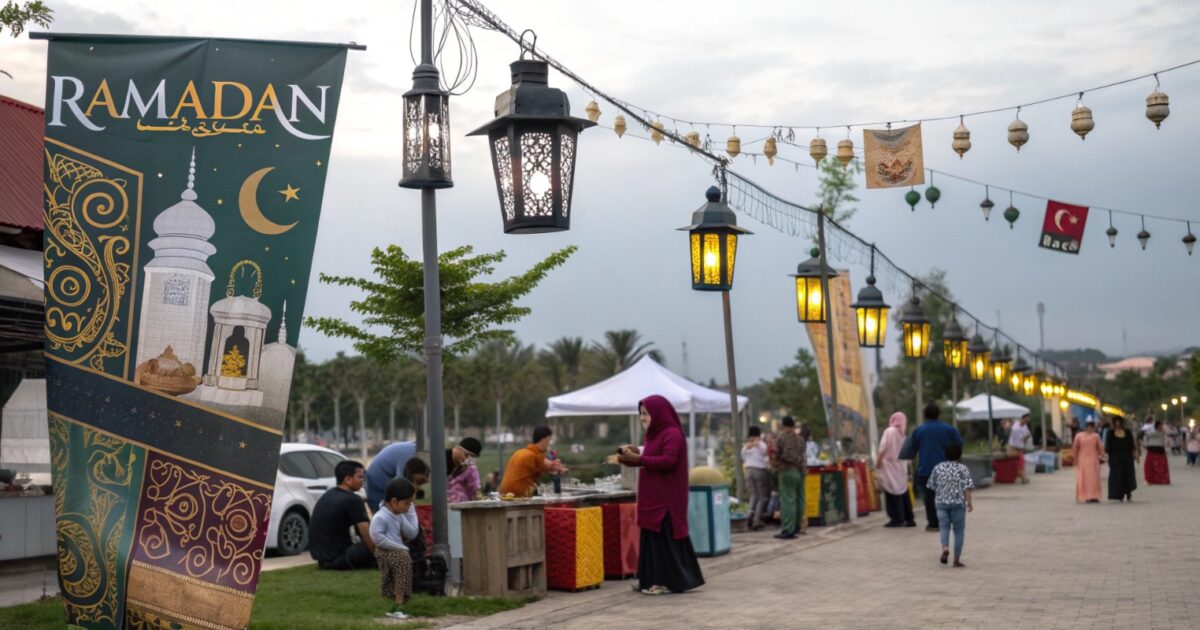
Ramadan is the ninth month of the Islamic lunar calendar, a sacred period of fasting from dawn (Fajr) to sunset (Maghrib), with iftar at sunset, suhoor before dawn and special nightly tarawih prayers. In 2026, most MENA countries begin on 17 February, with Jordan, Kuwait, Syria and Türkiye starting on 18 February and Iraq, Morocco and Oman on 19 February; observance ends on 19 or 20 March, when Eid al-Fitr is marked by communal prayer, family gatherings and zakat al-fitr. Dates remain tentative because many communities rely on new-moon sighting or local religious authority calculations, so the start and finish can vary by country and even by city. The practical effect is later peak activity, with shopping, dining and public movement increasing after sunset and continuing into the night.
Which Gulf countries have shortened working hours during Ramadan?
Bahrain’s public sector works from 0800 to 1400 hours local time, and Qatar’s civil service works five hours a day from 0900 to 1400 hours, with remote work reportedly permitted for up to 30 percent of the workforce. Kuwait has set a 4.5-hour public-sector workday starting between 0830 and 1030 hours, with evening shifts beginning no earlier than 1845 hours. Oman’s Royal Oman Police administrative divisions work from 0730 to 1230 hours, Sunday to Thursday, while police stations that normally operate 24/7 continue as usual. In the private sector, Oman limits Muslim employees to six hours a day and 30 hours a week, Saudi Arabia to six hours a day or 36 hours a week, and the UAE reduces working hours by two hours per day, with flexible or remote schedules allowed within that limit. Dubai’s RTA has revised paid parking to two windows, 0800 to 1800 hours and 2000 to 0000 hours, Monday to Saturday, and Saudi Arabia’s Ministry of Islamic Affairs has banned live broadcasting of prayers and cash donation collection for iftar programmes at mosques.
What about Egypt, the Levant, Morocco, Iran and Türkiye?
Egypt’s Central Bank has set bank staff hours at 0900 to 1400 hours, with in-branch customer service from 0930 to 1330 hours, and the first Cairo Metro trains leave terminals at 0515 hours. Jordan’s public sector works 0900 to 1500 hours, with bank customer service from 0930 to 1430 hours. Lebanon has cut official hours to 0900–1400 hours from Monday to Thursday and 0900–1200 hours on Fridays, while Syria’s state institutions work 0800 to 1400 hours and Iraq has shortened public-sector hours by one hour. Israel applies no national reduction, but access to Al-Aqsa Mosque and the Temple Mount may be restricted, and protest risk is elevated around Jerusalem’s Old City. Morocco suspends daylight saving time for Ramadan, with clocks moving forward again at 0200 hours on 22 March. Türkiye has no decree reducing hours, though restaurants and businesses stay open later for iftar. In Iran, checkpoints and mobility controls may tighten, with internet throttling possible in heightened-security situations.
What are the business continuity risks?
Ramadan 2026 in MENA rarely closes operations outright, but shorter official service windows can delay banking, licensing, customs and other in-person approvals, and labour-rule compliance becomes more complex where reduced-hours regulations apply, with overtime exposure if capacity is not rebalanced. Customer demand moves to post-iftar hours, so retail and hospitality see late-evening spikes while daytime productivity and meeting availability fall. Road congestion builds before iftar and again in the late evening, affecting logistics, field service and last-mile delivery, so collection cut-offs and same-day commitments need earlier planning to avoid missed SLAs. Security presence around major mosques, religious districts and large gatherings adds screening time and occasional movement restrictions, and travellers in conservative jurisdictions must avoid eating, drinking or smoking in public during fasting hours.
What should organisations and individuals do to prepare?
Organisations should rebase SLAs and operational cut-offs, coordinate revised routing and timing with suppliers and logistics partners, and schedule time-sensitive approvals and transactions around the shorter official service windows. Staggered shifts, flexible schedules and remote work where permitted, with customer-facing coverage extended into the evening where demand warrants, are recommended, alongside contingency plans covering alternate transport routes, backup vendors and communications redundancy. Individuals should complete errands, banking and government tasks earlier in the day, confirm opening hours and courier cut-offs in advance, and allow buffer time for traffic, metro and bus crowding and security screening before iftar and in the late evening. Use public transport or designated pick-up zones, expect longer ride-hailing waits, stay hydrated outside fasting hours, and keep emergency and escalation contacts to hand.
Frequently asked questions
When does Ramadan start and end in 2026?
Most MENA countries begin on 17 February 2026, Jordan, Kuwait, Syria and Türkiye on 18 February, and Iraq, Morocco and Oman on 19 February, with observance ending on 19 or 20 March, subject to moon sighting.
Is there a nationwide reduction in working hours during Ramadan?
In many countries, yes. Reduced hours apply to public-sector staff in Bahrain, Kuwait, Qatar, Jordan, Lebanon, Iraq and Syria, and to private-sector staff in Oman, Saudi Arabia and the UAE. Israel and Türkiye apply no national reduction.
What are the emergency contact numbers for the UAE, Saudi Arabia, Egypt and other MENA countries?
UAE: Police 999, Ambulance 998, Fire 997. Saudi Arabia: Emergency 112, Police 999, Ambulance 997, Fire 998. Egypt: Emergency 112, Police 122, Ambulance 123, Fire 180. Qatar and Bahrain: 999. Kuwait: 112. Oman: 9999. Jordan: 911.
Download the full advisory now
datasurfr’s Special Advisory on Ramadan 2026 across MENA carries the complete country-by-country working-hour tables, the full impact assessment, and a detailed contacts directory. Download the full advisory now to brief your travel and continuity teams.
Filed under: EMEAThreat Intelligence Advisories