What are the No Kings protests and when are they taking place?
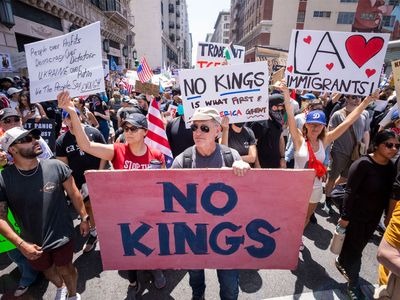
The ‘No Kings’ protests are a coalition-led national resistance movement spearheaded by Indivisible and the 50501 Movement, formed in early 2025 in opposition to what organizers characterize as authoritarian overreach under President Donald J. Trump. The first No Kings protest took place on 14 June 2025, drawing an estimated five million participants. The second, on 18 October 2025, grew to seven million participants across 2,700 events in all 50 states. The third wave is scheduled for 28 March 2026, with over 3,000 demonstrations across every US congressional district. Organizers, including Indivisible co-executive director Ezra Levin, state: “This will be the largest protest in American history.” The flagship event will be held in Minneapolis, which has emerged as a national symbol of anti-ICE sentiment following the killing of US citizens by federal immigration officers.
Which cities and states are affected by the No Kings protests?
Protests are scheduled in all 50 states. Major events include Montgomery, Alabama (South Lawn, State Capitol, 1200–1400); Scottsdale and Phoenix, Arizona; San Jose, Palo Alto, Oakland, San Diego, San Francisco, and Santa Monica, California; Tampa, Florida; Atlanta, Athens, and Macon, Georgia; Chicago, Illinois; Indianapolis, Bloomington, and Fort Wayne, Indiana; Kansas City, Topeka, Wichita, and Lawrence, Kansas; Louisville, Lexington, and Frankfort, Kentucky; New Orleans, Baton Rouge, and Shreveport, Louisiana; Baltimore and Annapolis, Maryland; Boston, Massachusetts; Detroit, Michigan; St. Paul and Minneapolis, Minnesota; St. Louis, Missouri; Las Vegas, Nevada; Albuquerque, New Mexico; New York City, Albany, and Bronx, New York; Raleigh, Durham, Charlotte, and Greensboro, North Carolina; Columbus, Cleveland, and Cincinnati, Ohio; Oklahoma City and Tulsa, Oklahoma; Portland and Bend, Oregon; Philadelphia, Harrisburg, and Pittsburgh, Pennsylvania; Columbia and Summerville, South Carolina; Houston, El Paso, San Antonio, Dallas, Denton, Fort Worth, and Lubbock, Texas; Memphis and Nashville, Tennessee; Salt Lake City, Utah; Richmond and Alexandria, Virginia; Seattle, Washington; Milwaukee and Madison, Wisconsin; and many more. A full list is available in the advisory.
What are the security risks during the No Kings protests?
Previous protests have resulted in violent clashes with security forces, involving stone pelting, fires, graffiti, water cannons, tear gas, and mass arrests. Security setups may include barricades, checkpoint screening, and enhanced surveillance. With multiple demonstrations occurring simultaneously, policing resources will be stretched thin, and any extended period of unrest could limit law enforcement’s ability to respond to other crimes or public safety issues. Residents near protest zones are especially vulnerable to property damage, violence, and limited mobility. Emergency services may become overburdened, particularly if there are incidents involving injuries, arson, or looting. The deployment of federal and state security forces may be expanded, and authorities may impose curfews or declare additional restricted zones. There is also a risk of injuries during such protests, which may overburden health emergency services. The possibility of National Guard deployment cannot be ruled out.
What are the business and travel disruptions?
Warehouses and logistics centers near protest locations may face entry restrictions, affecting deliveries and inventory movement. E-commerce hubs and courier services that rely on same-day delivery may suffer delays and cancellations. Businesses near protest locations may experience reduced footfall and early shutdowns. Many employees may refuse to report to work due to safety concerns or disruptions in public transport, affecting restaurants, offices, and warehouses. Millions of participants will likely cause road closures around protest locations, government buildings, and public places. Parking restrictions and transit adjustments are expected in most urban areas. Urban transit systems may experience schedule changes, detours, or temporary station closures. Public transport services, including metro bus and rail lines, face the risk of rerouting, delays, or temporary suspension. Overcrowding can be expected in metros, trams, and buses before and after protest timing. Commuters may experience extended delays. Buildings near planned protest routes may implement access controls, reduced staffing, or early closures.
What should organisations and individuals do to prepare?
Businesses should implement emergency and continuity protocols, including staff communication chains, remote working arrangements, and security procedures. Ensure all employees are aware of protest hotspots and transportation disruptions. Retailers and offices in protest-affected areas should consider boarding storefronts, reinforcing entry points, and removing valuables from display areas. Engage private security services if feasible. Ensure all insurance policies are current and comprehensive, including coverage for civil unrest and vandalism. Document any property damage, looting, or disruptions for claims and police reporting. Prepare for disruptions by mapping alternate supply chains, enabling remote work setups, and implementing flexible operational protocols. Permit remote or staggered shifts for employees in high-risk zones. Maintain consistent communication with employees, customers, and partners. Individuals should regularly check reliable news platforms and official government channels for updates on protest developments, road closures, and security alerts. Use updated navigation apps like Google Maps and Waze for live traffic diversions. Avoid routes near protest zones. Consider postponing non-essential appointments, public gatherings, or travel through protest routes. Public transit users should check updates from travel operators and city transit authorities. Avoid parking near demonstration zones. Enable emergency alerts on mobile devices. Comply promptly with law enforcement directions and dispersal orders. Reserve 911 calls strictly for emergencies. Avoid spreading unverified information on social media. Remain compliant with all local regulations concerning public gatherings.
Frequently asked questions
When are the No Kings protests in 2026?
The third wave of No Kings protests is scheduled for 28 March 2026, with over 3,000 demonstrations across all 50 US states.
Which cities are most affected by the No Kings protests?
Major protests are scheduled in Minneapolis (flagship), New York City, Los Angeles, Chicago, Houston, Phoenix, Seattle, Portland, Atlanta, and many others. A full list is available in the advisory.
What are the emergency contact numbers for the US?
Police, Fire, and Medical: 911. Non-emergency police: 311 (in many cities). National Suicide Prevention Lifeline: 988.
Download the full advisory now
datasurfr’s Special Advisory on the No Kings Protests in the US carries the complete city-by-city protest locations and timings, the full security and travel guidelines, and a detailed contacts directory. Download the full advisory now to brief your travel and continuity teams.
Filed under: EMEAThreat Intelligence Advisories