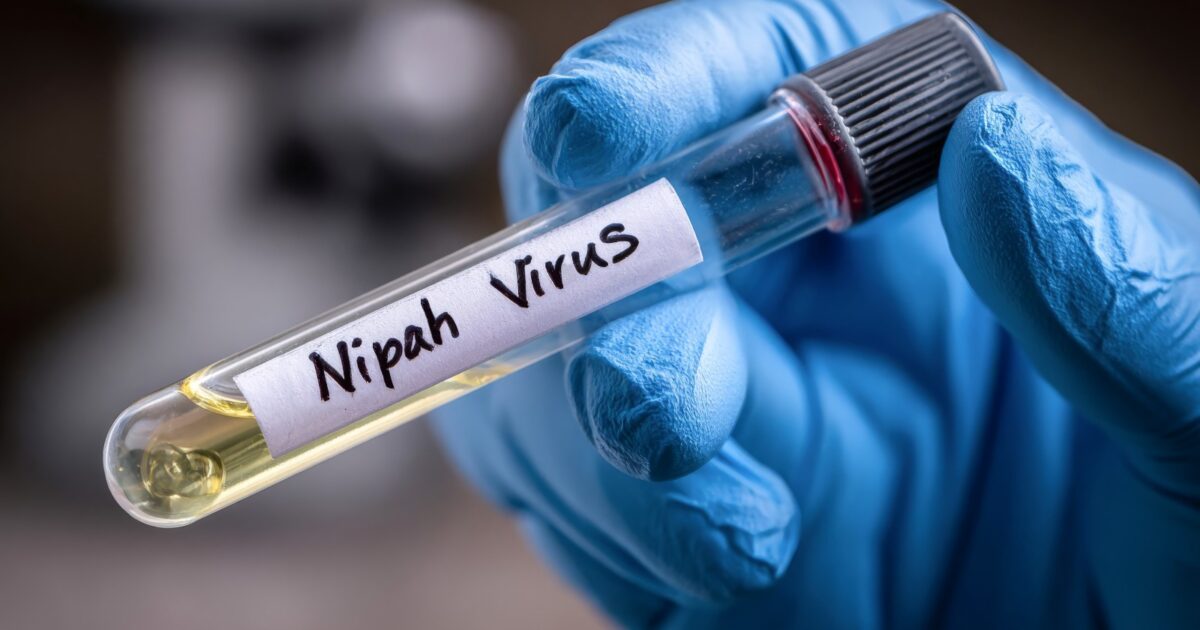
Nipah virus (NiV) is a zoonotic Henipavirus carried by Pteropus fruit bats, classified by the WHO as a priority pathogen due to its high fatality rate, potential for human-to-human transmission and the absence of a licensed vaccine or specific antiviral treatment. MitKat’s Special Advisory for January 2026 captured a period in which the West Bengal outbreak remained epidemiologically contained even as governments across South and Southeast Asia moved to tighten surveillance and travel screening as a precaution.
A contained outbreak in West Bengal
Only two Nipah cases have been confirmed in West Bengal to date, with all 196 identified contacts traced, quarantined and tested without any additional positive results. Indian health officials have not introduced further internal travel restrictions or airport screening, citing no evidence of wider community transmission, though the virus’s incubation period of up to 45 days means monitoring of contacts continues nationwide.
National and state guidelines
The Ministry of Health and Family Welfare deployed a National Joint Outbreak Response Team from ICMR, NIV Pune, AIIMS and NCDC to West Bengal, while the state mandated 21-day home quarantine for contacts of confirmed cases. Jharkhand, Odisha and Kerala have all issued precautionary advisories despite reporting no cases, reinforcing screening, IPC protocols and public messaging against consuming raw date palm sap or bat-contaminated fruit.
Travel screening tightens across Asia
Thailand, Hong Kong, Vietnam, Malaysia and Singapore have introduced temperature checks and health advisories for arrivals from India, with Phuket and Kolkata direct-flight routes under particular scrutiny. Taiwan is considering classifying Nipah as a notifiable disease, while Nepal, Sri Lanka and Pakistan have heightened alert levels and border screening despite assessing their own risk of spread as low.
Recommendations for organisations and individuals
Businesses are advised to brief employees on Nipah symptoms and high-risk exposures, enforce strict stay-home guidance for anyone symptomatic, and reinforce food-safety practices around fruit handling in cafeterias. Individuals should avoid raw date palm sap and fallen or bite-marked fruit, practise frequent handwashing, and seek immediate medical attention for fever accompanied by confusion or respiratory distress, coordinating with local health authorities as needed.
Download the full special advisory
The MitKat Special Advisory on the Nipah virus update and APAC travel restrictions covers symptom tables, country-by-country travel measures, and detailed guidance for organisations and individuals. Download the full advisory now for the complete analysis.
What is inside
- As of 30 January, Indian health authorities confirmed the Nipah virus situation in West Bengal remains contained, with only two confirmed cases and no expansion beyond the roughly 196 identified contacts who have been traced, quarantined and tested.
- The WHO stated on 30 January that the risk of the virus spreading from India is low and does not recommend any travel or trade restrictions, while cautioning that further exposure from bat populations in the region cannot be ruled out.
- Central and state authorities, including MoHFW, ICMR, NIV Pune, AIIMS and the West Bengal, Jharkhand and Odisha health departments, have activated nationwide surveillance, contact tracing and infection-control protocols under the IDSP network.
- Hong Kong, Thailand, Vietnam, Malaysia, Singapore, Nepal, Sri Lanka and Pakistan have introduced enhanced airport screening, thermal checks and health advisories for travellers arriving from India, particularly West Bengal
Filed under: APACThreat Intelligence Advisories