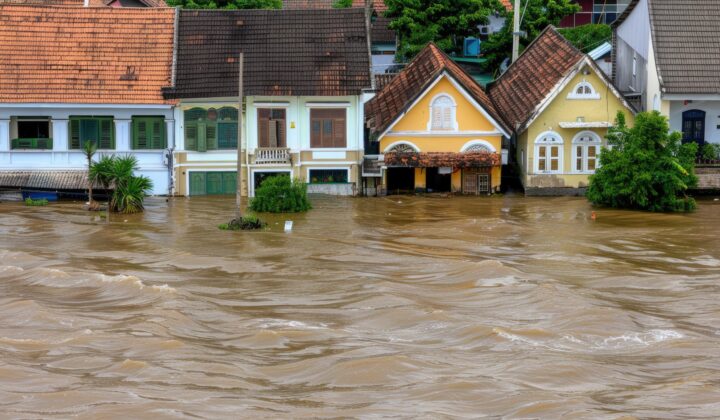
What is the Bengaluru monsoon 2026 outlook and when does the rainy season start?
The southwest monsoon is expected to reach Bengaluru between 5 and 10 June, with initial showers followed by gradual intensification across South Interior Karnataka. The season typically runs from June to September, peaking in July and August before tapering off. IMD’s outlook points to below-normal rainfall for South Interior Karnataka, including Bengaluru (Long Period Average 678.5 mm), attributed to emerging El Niño conditions and a developing positive Indian Ocean Dipole. Even so, Bengaluru is increasingly experiencing concentrated, short-duration rainfall rather than prolonged seasonal accumulation, and recurring waterlogging has been reported at rainfall of just 50–100 mm in low-lying, drainage-constrained areas. The city is largely insulated from cyclones and riverine flooding, so urban flooding is its primary monsoon hazard.
Which areas of Bengaluru are most prone to flooding and waterlogging?
Bengaluru has around 134 flood-prone areas identified in 2011, including Ejipura, Koramangala, BTM Layout, Shivajinagar, KR Market, Rajajinagar, Magadi Road, Mathikere, Airport Road, Vasanth Nagar and K.R. Circle. As of May 2026, 101 flood-prone locations were identified across the five city corporations: 48 in Bengaluru West, 24 in South, 20 in East, six in North and three in Central; 49 are monsoon-ready while 52 still await intervention. Corridors frequently hit by waterlogging include Whitefield, Mahadevapura, Electronic City, KR Puram, Bellandur, Panathur, Hosur Road and Silk Board Junction. The KR Circle underpass, Majestic and Silk Board Junction regularly gridlock, with the Outer Ring Road particularly affected, while Namma Metro Purple and Green Line delays and flight delays at Kempegowda International Airport have been reported in thunderstorms. The underlying driver is lost drainage capacity: an estimated 65 percent of lakes and nearly 80 percent of historic water bodies have been degraded or encroached. Unapproved construction without adequate stormwater drainage, encroached floodplains and siltation compound the problem, and the 2024 pre-monsoon floods showed how overflowing lakes and blocked drains can paralyse the city.
How are Bengaluru authorities preparing after recent floods?
During 18–19 May 2025, several locations recorded nearly 130 mm of rain in about 12 hours, led by Kengeri at around 132 mm, putting Bellandur, Varthur and Hulimavu lakes under overflow pressure. On 29–30 April 2026, hailstorms and intense rainfall hit the city, with central Bengaluru reportedly receiving more than 110 mm in just over an hour, flooding Church Street, Shivajinagar and Silk Board and causing fatalities linked to electrocution and drowning. Ahead of the 2026 monsoon, agencies including the BBMP, the Greater Bengaluru Authority and KSNDMC desilted drains, positioned high-capacity dewatering pumps, ran anti-encroachment drives and expanded IoT flood monitoring, and works at most of the 209 flood-prone locations BBMP identified in 2020 are complete. A World Bank-supported stormwater drainage project valued at about INR 2,000 crore includes roughly 173 km of lined drains, though official reviews flag execution delays, land acquisition constraints and coordination gaps.
What are the business continuity risks during the Bengaluru monsoon 2026?
The principal operational risk is sudden, localised disruption on heavy-rain days. Flooded roads, waterlogged underpasses and fallen trees can paralyse the Outer Ring Road and the technology corridors around Whitefield, Electronic City, KR Puram and Bellandur, delaying staff and deliveries, while falling branches and debris cause localised power outages. Metro slowdowns and station overcrowding push more commuters onto roads, and delays at Kempegowda International Airport affect business travel. Commercial areas are also exposed: the April 2026 flooding inundated retail establishments on Church Street and left underpasses submerged, vehicles stalled and trees and walls down across central and southern zones, with repeated Yellow and Orange alerts giving little notice. Stagnant water raises the risk of mosquito breeding and diseases such as dengue and malaria around office campuses, and the 52 flood-prone locations still pending mean waterlogging is likely to recur.
What should organisations and individuals do to prepare?
Organisations should review emergency protocols, evacuation procedures and business continuity plans before the peak monsoon, inspect rooftop outlets, basement pumps and drainage systems, and maintain generators, backup power and communication networks. Critical documents, servers and equipment should be stored above ground-floor level in vulnerable facilities, flexible working should be activated during severe waterlogging, and teams in Whitefield, Electronic City, the Outer Ring Road, KR Puram and Bellandur should monitor rainfall and traffic advisories. Individuals should follow NDMA flood guidelines, allow extra travel time, avoid flooded roads, keep drains and gutters clear, stay away from trees and electric poles during lightning, use mosquito repellent, keep valuables in waterproof or elevated storage, prepare for power cuts with emergency lights and serviced inverters, and identify alternate routes in advance.
Frequently asked questions
When is the monsoon expected to reach Bengaluru in 2026?
Between 5 and 10 June 2026, with rainfall peaking in July and August and tapering off in September; IMD expects below-normal rainfall.
Are there flood-prone locations in Bengaluru still awaiting repair?
Yes. As of May 2026, 52 of 101 identified flood-prone locations across the five city corporations were pending intervention, while 49 were monsoon-ready; Bengaluru West has the most, with 48 identified locations.
What are the emergency contact numbers for Bengaluru during the monsoon?
Nationwide: All-in-One Emergency 112, Police 100, Fire 101, Ambulance 102. Bengaluru: BBMP helpline 1533 (toll free), 080-22660000, WhatsApp 9480685700; BWSSB 1916; Bengaluru Traffic Police on X @blrcitytraffic; BESCOM via bescom.co.in.
Download the full advisory now
datasurfr’s Special Advisory on the Bengaluru monsoon 2026 carries the complete flood-prone area lists and maps, transport disruption analysis, government measures and a detailed contacts directory. Download the full advisory now to brief your travel and continuity teams.
Filed under: India-South AsiaThreat Intelligence Advisories